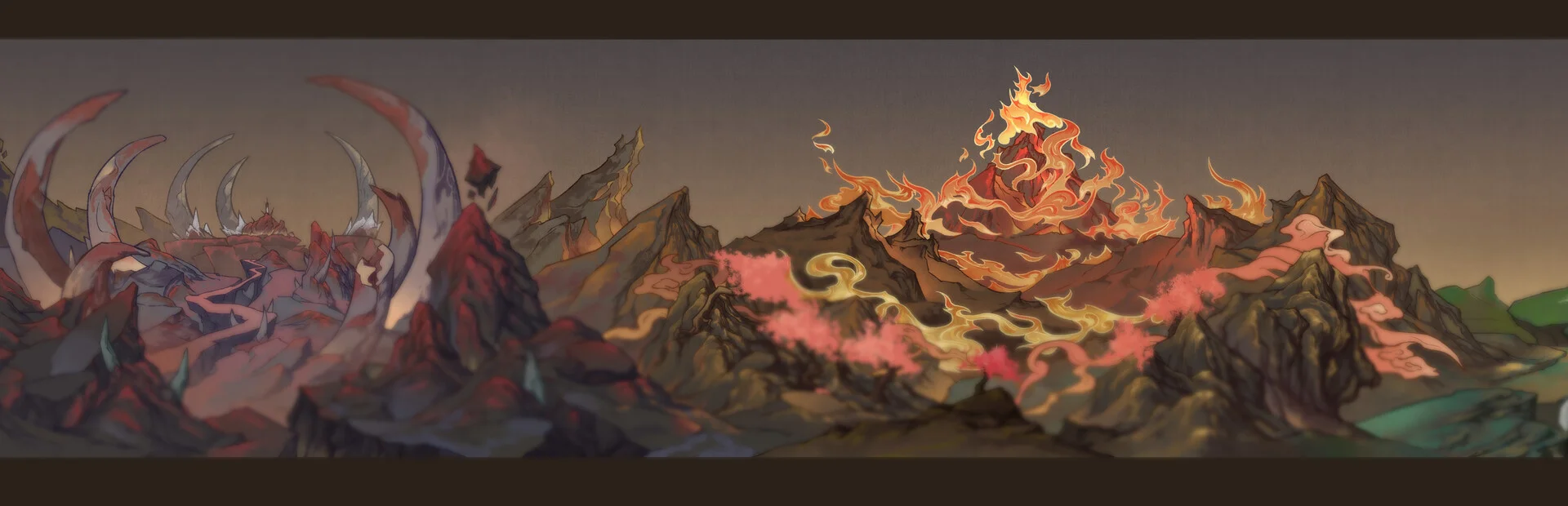
Light spoilers: This article discusses the existence and cultural logic of Taiwu's hereditary enemy arc without naming late-game plot twists. You already know from our lineage primer that you play successive Taiwu heirs (太吾氏). Official copy adds the other half: a clan-level vendetta that waits across generations while you farm, study, marry, or flee. This article explains what that feud means in wuxia tradition — and why it pairs naturally with Roguelike succession.
The Taiwu name as burden
In genre terms, inheriting a surname is inheriting a ledger:
Techniques
Manuals, partial training, stolen styles
Debts
Who saved you; who you humiliated
Enemies
Names that remember slights longer than individuals live
Taiwu is not a blank adventurer class. Steam describes a mysterious heir confronting a hereditary enemy while building life in the jianghu. Mystery is part of the brand — forums debate what Taiwu means because the clan feels ancient without being a Wikipedia entry. Culturally, you are playing inside the trope of the house with a curse and a manual.
Hereditary enemy (世仇 / 宿敌)
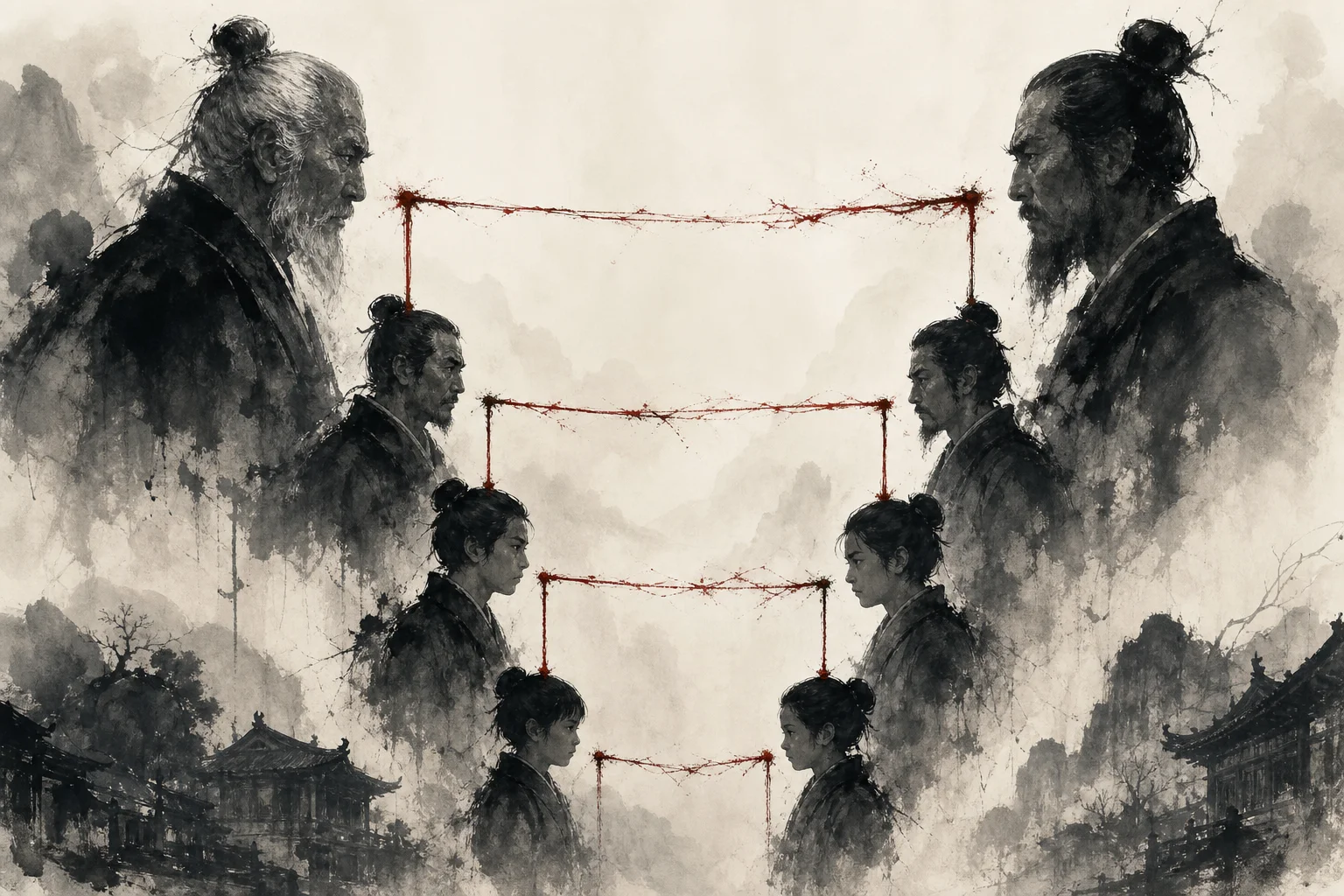
Shìchóu (世仇) means a vendetta that passes between generations. Wuxia uses it when:
- A grandfather's duel left a child orphaned — the child trains for decades
- A stolen manual humiliated a sect — the sect hunts any bearer of the technique
- A political purge branded a clan traitor — descendants inherit the label
Taiwu's hereditary enemy is the game-scale version: a conflict larger than one heir's mood board. You can spend an entire generation farming and still belong to a story that demands escalation eventually. Sandbox freedom does not erase the scroll's spine — it delays which page you write first.
Father's debt, son's sword (父债子偿)
A related trope: the son repays the father's debts — martial, financial, or moral. Generational play makes this literal. An heir may inherit:
- Half-finished revenge against the enemy line
- Alliances the last heir ruined with one banquet insult
- A village the clan founded — and the tax collector who now owns the deed
Failure of one heir becomes prologue for the next. That is emotionally different from reloading a checkpoint — it is family chronicle logic wearing Roguelike clothes.
Spoiler boundary: We do not name the enemy faction, their leader, or v1.0 finale beats here. For endgame myth, see the major spoiler article on Tianmu and Santu later in this series.
Clan honor vs personal life
| Tension | Genre example | Taiwu sandbox echo |
|---|---|---|
| Marry for love vs alliance | Sect politics demand a political match | Heir builds family while enemy line watches |
| Hide vs confront | Hero pretends to be a farmer | Generations delay vendetta — but names remember |
| Break cycle vs escalate | Rare righteous heir forgives | Player choice; genre expects temptation to escalate |
Reading the feud without a main-quest arrow
Taiwu does not always point a golden marker at the enemy. Culturally, that matches jianghu stories where the feud surfaces through:
- Rising prices in a town after your clan name is spoken
- A sect master refusing to teach you — or teaching you too eagerly
- NPCs who flinch at Taiwu before they know your face
Treat those moments as vendetta weather, not random hostility.
Where to go next
Sects supply techniques; clans supply why techniques matter socially. The next article maps the everyday relationship web — alliances, betrayals, en and yuan — that makes NPCs remember your house between heirs.