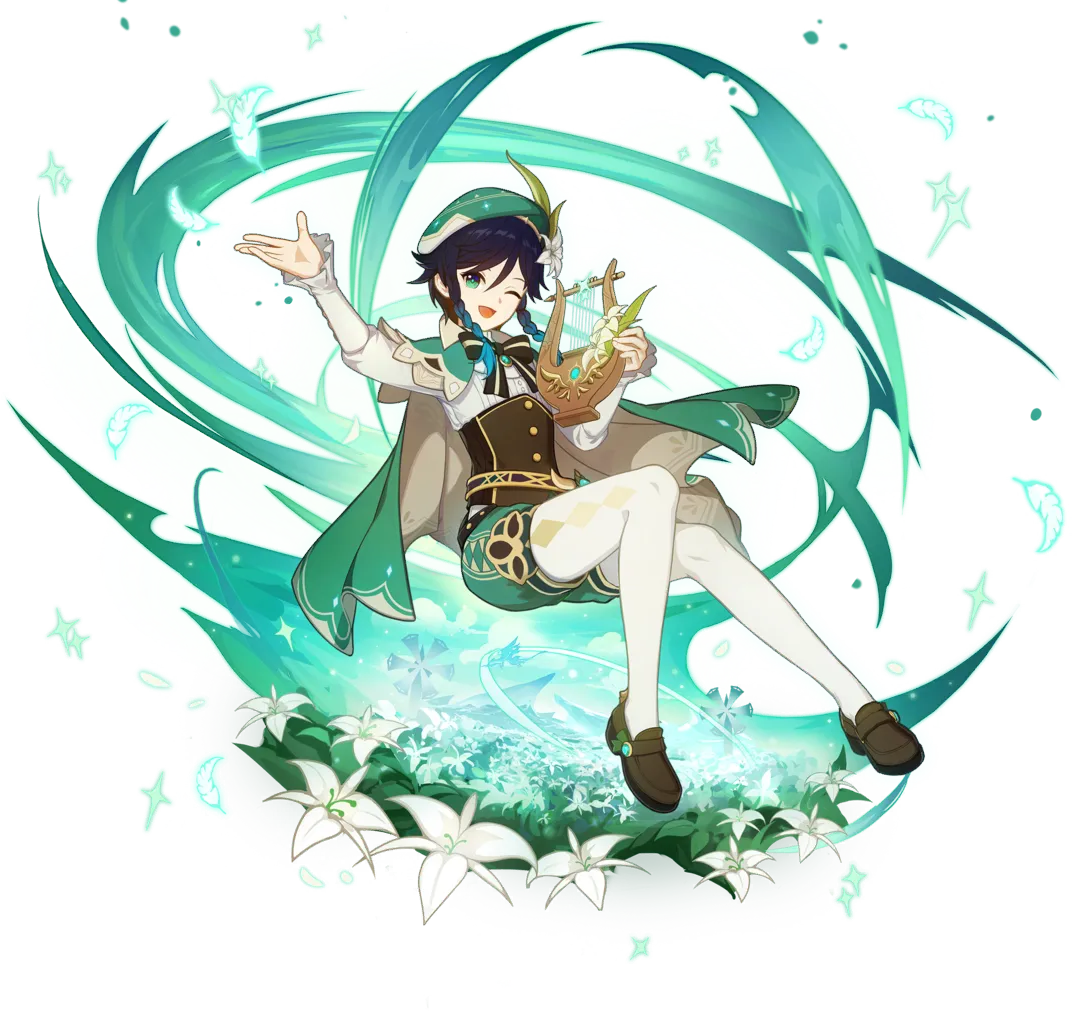
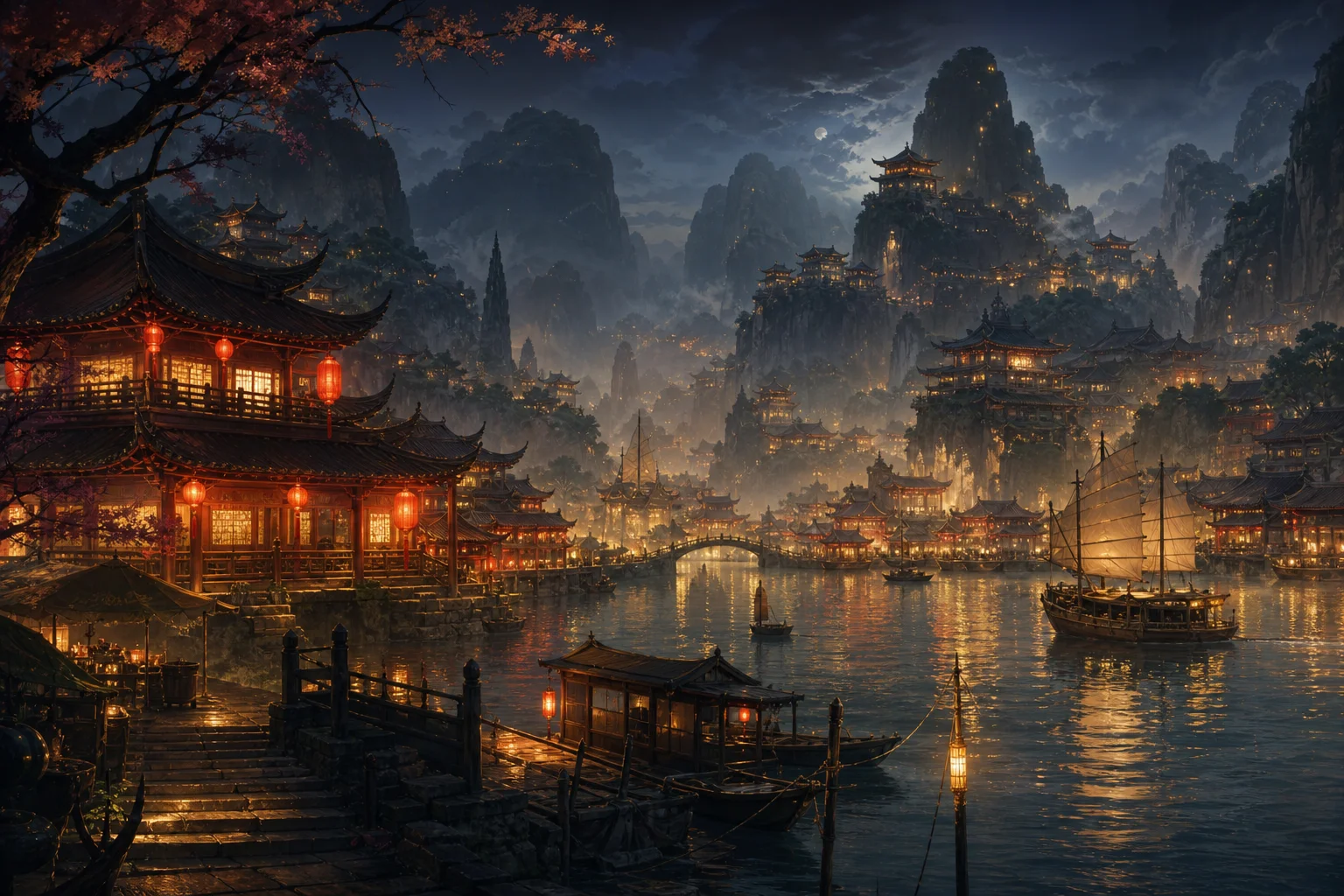
When you first sail into Liyue Harbor (璃月港, Líyuè Gǎng), the stacked roofs, red lanterns, and jade merchants tell you immediately: this is Teyvat's China-inspired nation. This ten-minute primer explains what Liyue is, who runs it, and why it feels different from Mondstadt or Inazuma — no lore homework required.
What is Liyue?
Liyue (璃月) is one of the seven nations of Teyvat in Genshin Impact. The name suggests "glass moon" or "glazed moon" — a poetic image that fits a harbor city lit by lanterns at night. In-game, Liyue is a wealthy trading port backed by mountain ranges, ancient contracts, and beings called adepti (仙人).
HoYoverse did not copy a single Chinese dynasty. Liyue blends Tang–Song merchant culture, classical mountain poetry, folk religion, and fantasy game design into one nation. Think of it as China-shaped inspiration, not a history textbook map.
Nation
Liyue — Teyvat's eastern trade hub
Element
Geo — stone, contract, endurance
Real-world echo
Chinese architecture, festivals, immortal lore, and landscape aesthetics
Who governs Liyue?
Two powers share the stage. The Geo Archon, worshipped as Rex Lapis (岩王帝君) or Morax (摩拉克斯), is the god of contracts and the creator of Liyue's currency, Mora (摩拉). Human merchants and officials form the Liyue Qixing (璃月七星) — the "Seven Stars" who manage daily trade and policy.
Early in the main story, Rex Lapis appears to die during the Rite of Descension. The Qixing and the Wangsheng Funeral Parlor scramble to keep order. You do not need to know how that arc ends to understand Liyue's culture — but you will hear these names everywhere.
The Liyue Qixing at a glance
Commerce
Ningguang 凝光
A jade magnate who built the floating pavilion Tianheng. Her name evokes clarity and polished stone — fitting for Liyue's wealthiest trader.
Administration
Keqing 刻晴
The Yuheng star — a reform-minded planner who questions whether mortals still need a god. Her title comes from a star in the Big Dipper.
Maritime
Beidou 北斗
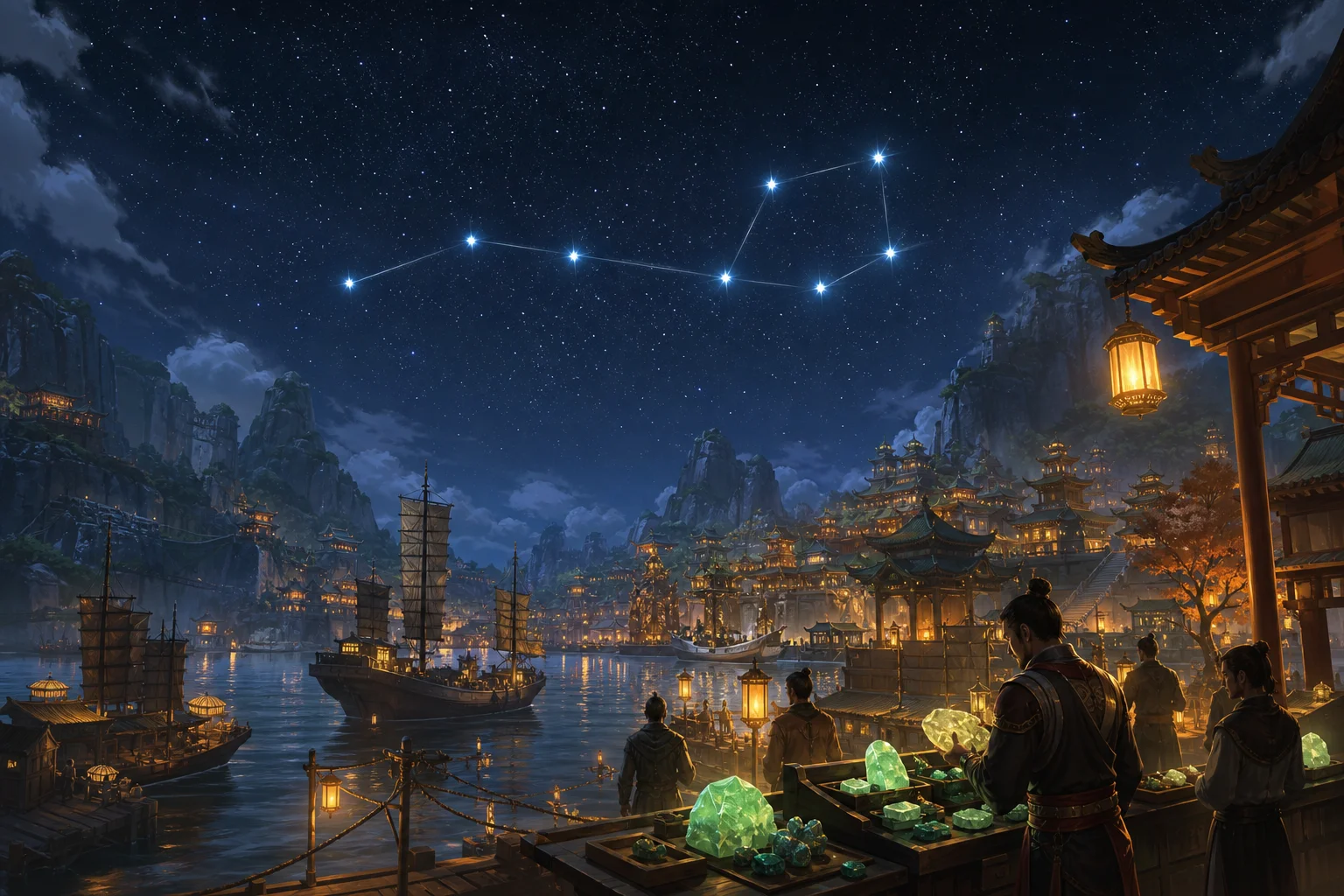
Captain of the Crux fleet. "Beidou" is the Chinese name for the Big Dipper constellation — a navigator's star map made into a person.
The adepti and the mountains
Above the harbor, Liyue's peaks hide adepti — immortal sages who signed contracts with Rex Lapis to guard the land. Cloud Retainer, Mountain Shaper, and Madame Ping are among the names you meet in story quests and festivals. Below them serve half-immortal stewards like Ganyu (甘雨), whose bloodline traces to the qilin, a Chinese auspicious beast.
Liyue also remembers the yaksha (夜叉) — fierce guardian spirits who fought demonic corruption during ancient wars. Xiao (魈), the last yaksha still on active duty at Wangshu Inn, is the face of that tradition in-game.
How Liyue compares to other nations
| Nation | Real-world echo | Liyue connection |
|---|---|---|
| Mondstadt | Medieval Germany / wind romance | Your first nation — free-spirited contrast to Liyue's contracts |
| Liyue | Chinese tradition (multi-layered) | Focus of this Culture hub |
| Inazuma | Edo-period Japan | Visited after Liyue; different aesthetic and legal themes |
What you will keep seeing in Liyue
- Lanterns and festivals — especially Lantern Rite and Moonchase, which mirror real Chinese holidays
- Contracts and Mora — business deals treated almost like sacred oaths
- Opera and exorcism — Yun Jin's stage performances and Hu Tao's funeral parlor customs
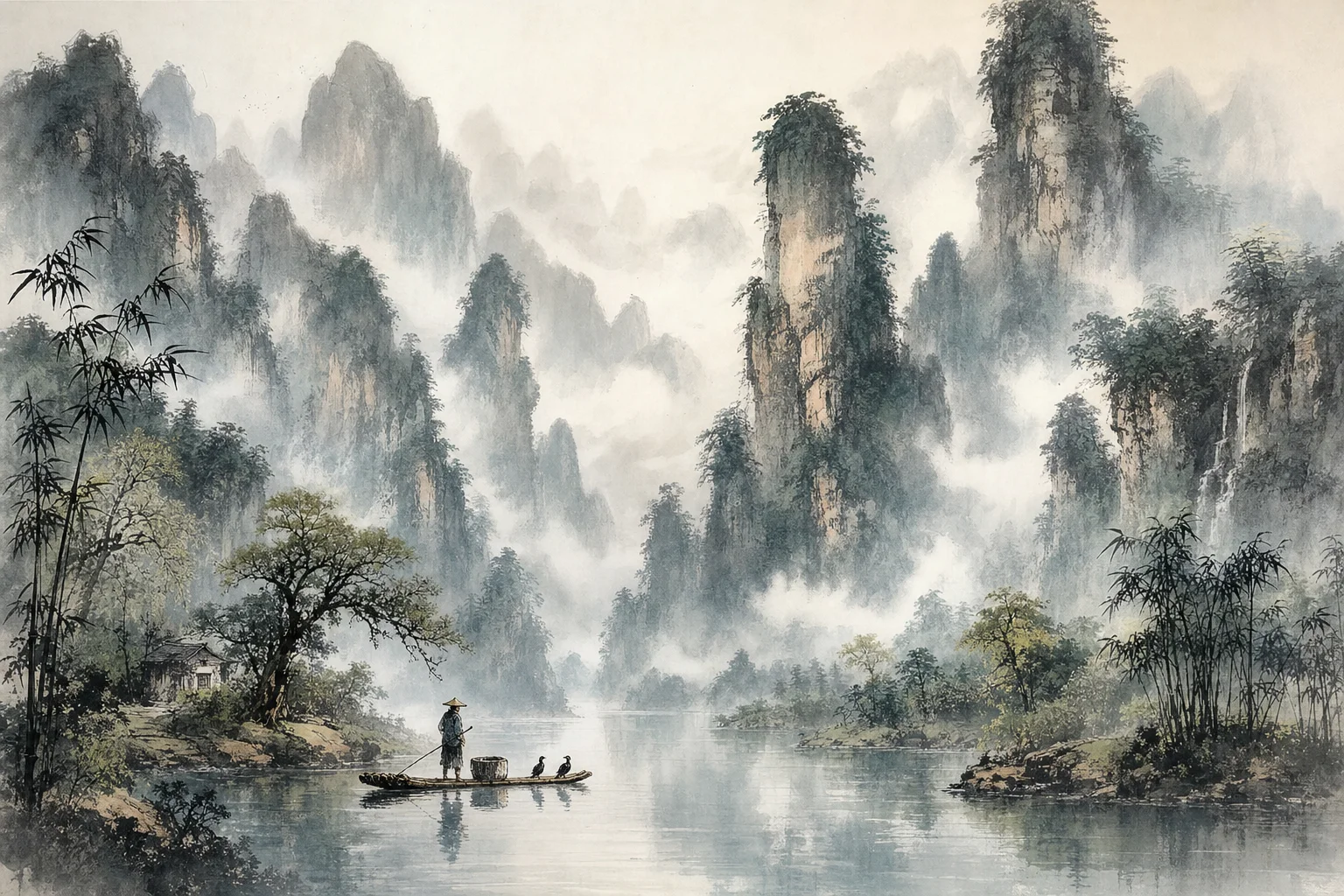
- Mountain landscapes — karst peaks and misty rivers inspired by Zhangjiajie and Guilin
- Tea and cuisine — from Wanmin Restaurant to Chenyu Vale's tea terraces
Scope note
This Culture hub focuses on Liyue — the nation where Chinese tradition is most visible. Other Teyvat regions draw on different cultures; we cover them only when useful for comparison.
Where to go next
Continue the primer series with Adepti, Yaksha & Chinese Immortals, or bookmark the Liyue glossary for quick term lookups while you play.