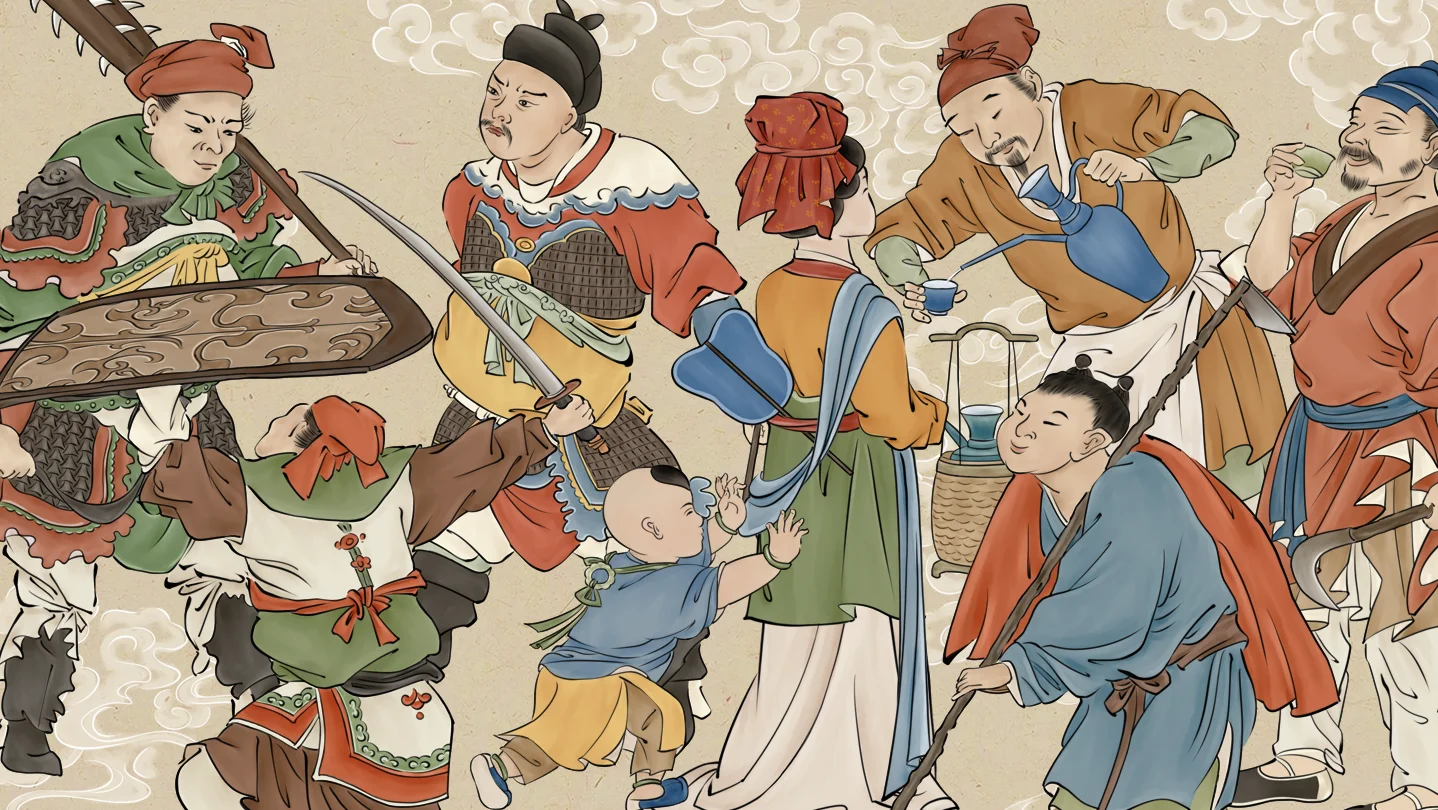
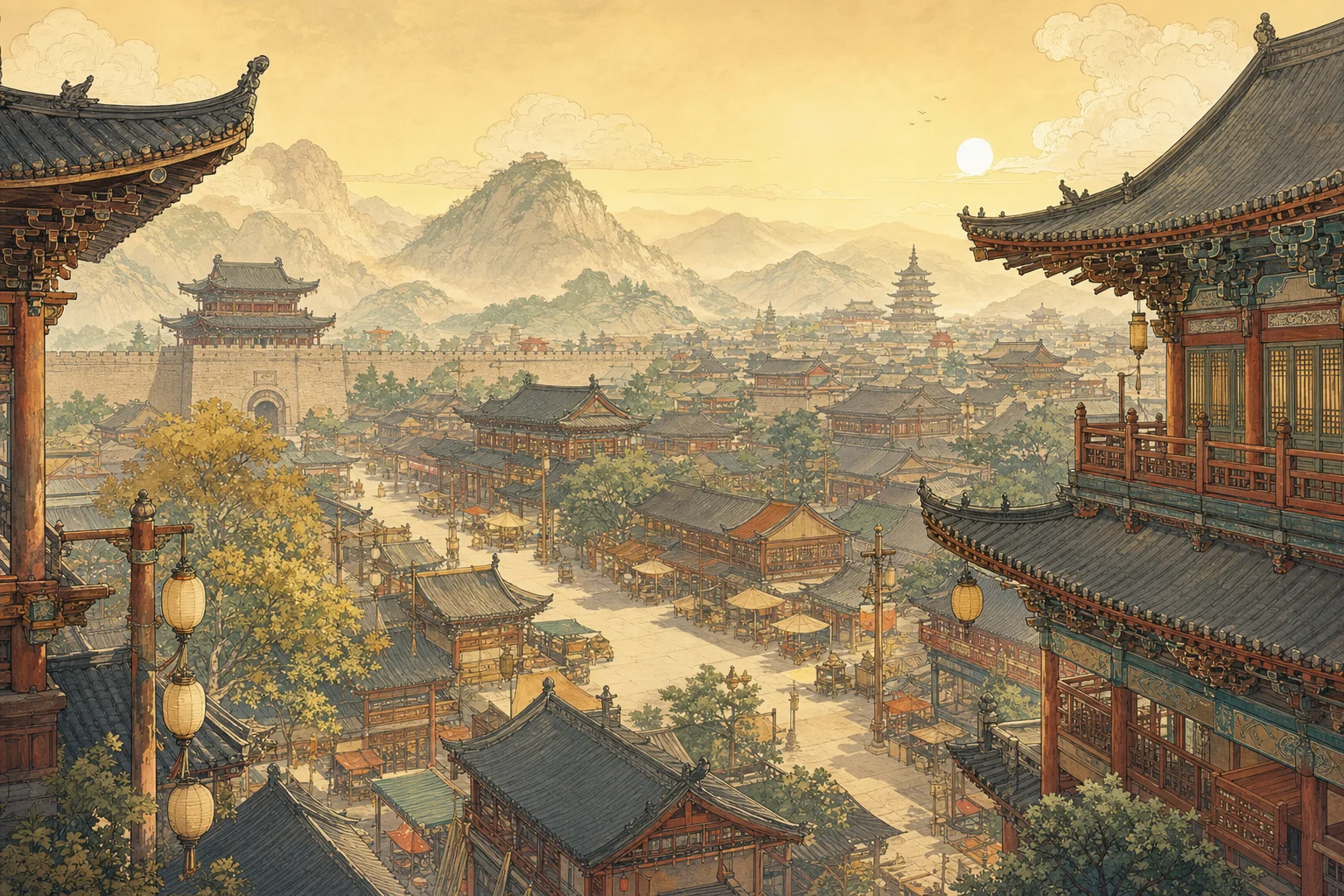
When Western players see another game labeled "ancient China," the first question is usually: Which dynasty? The Bustling World (Chinese title: 烽火与炊烟, Fēnghuǒ yǔ Chuīyān) deliberately refuses that answer. FireWo Games built an imaginary realm — no emperor's reign year on the loading screen, no textbook chapter you can open to page 247. What you can trace are the sources underneath: paintings and manuals from the Song (960–1279) and Tang (618–907) traditions and earlier, plus the daily-life logic of pre-modern Chinese society. This ten-minute primer explains why that design choice matters — and how to read the world without mistaking it for a history simulator.
The world in one paragraph
The Bustling World is an open-world sandbox where you might farm, run a teahouse, wander the jianghu (江湖, the martial underworld), or raise armies and rewrite borders. Official materials describe a fictional ancient dynasty with war in the background — atmosphere reminiscent of periods like the An Lushan Rebellion (755–763), when central authority collapsed and the map fractured — but the game does not claim to be set in 755, or 960, or any single year. Instead, the developers cite Song–Tang paintings and classical texts as the visual and material backbone: roughly 2,000 architectural components, nearly 1,000 furniture and artifact pieces, and more than 5,000 hand-painted textures referencing historical art. You are not walking through a labeled museum diorama. You are walking through a composite — fiction wearing real clothes.
Setting
Fictional ancient China; no fixed dynasty name or calendar year in official materials
Visual anchor
Song–Tang paintings & texts; gongbi-style hand-painted 3D; ~5,000+ textures completed
Material anchor
~2,000 build components; ~1,000 furniture & props from documented forms
Why no dynasty name?
Chinese history spans millennia. Players outside East Asia often collapse that into one aesthetic — "dynasty skin pack" — and lose the distinctions that matter: a Tang woman's high-waisted robe is not a Ming official's square-collared gown; a Song market stall is not a Qing banner garrison. A sandbox that lets you farm, craft, fight, and govern needs freedom from one reign's politics while still feeling recognizably Chinese.
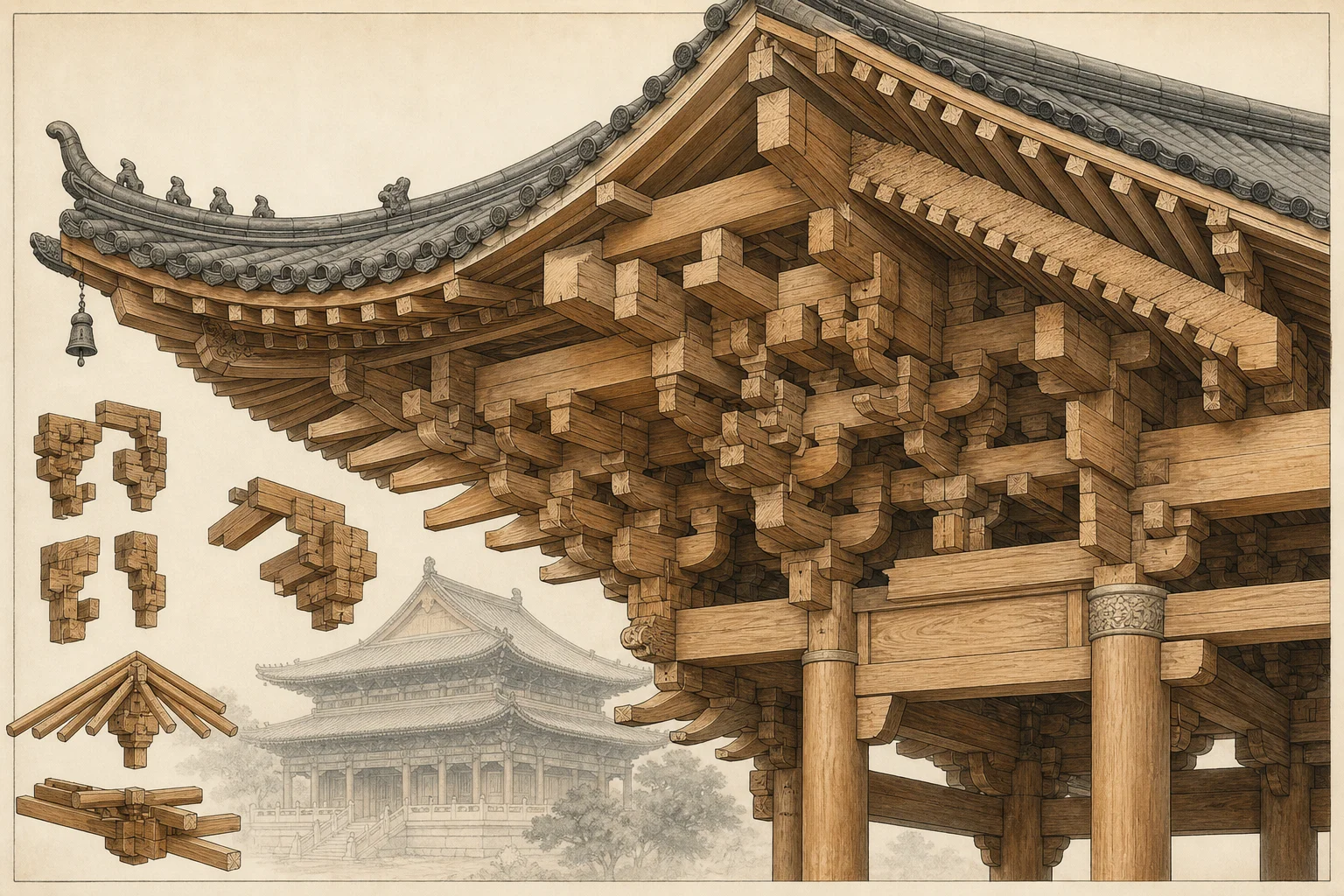
FireWo Games' solution is structural: invent a realm where your story is not pre-scripted to the fall of the Ming or the rise of the Song, yet borrow the material culture that players and artists already associate with "classical China at its most readable" — the busy streets of Song urban life, the cosmopolitan Tang, the building vocabulary preserved in texts like the Yingzao Fashi (营造法式, Yíngzào Fǎshì, "Treatise on Architectural Methods," 1103). The war in the background supplies tension; the absence of a dynasty label supplies room to play.
Remember for the game: When a trailer shows rebels, burned villages, or frontier armies, treat that as atmosphere, not a pinned historical scenario. The developers have compared the mood to periods of breakdown — not announced a playable "An Lushan campaign."
What "Song–Tang sources" actually means
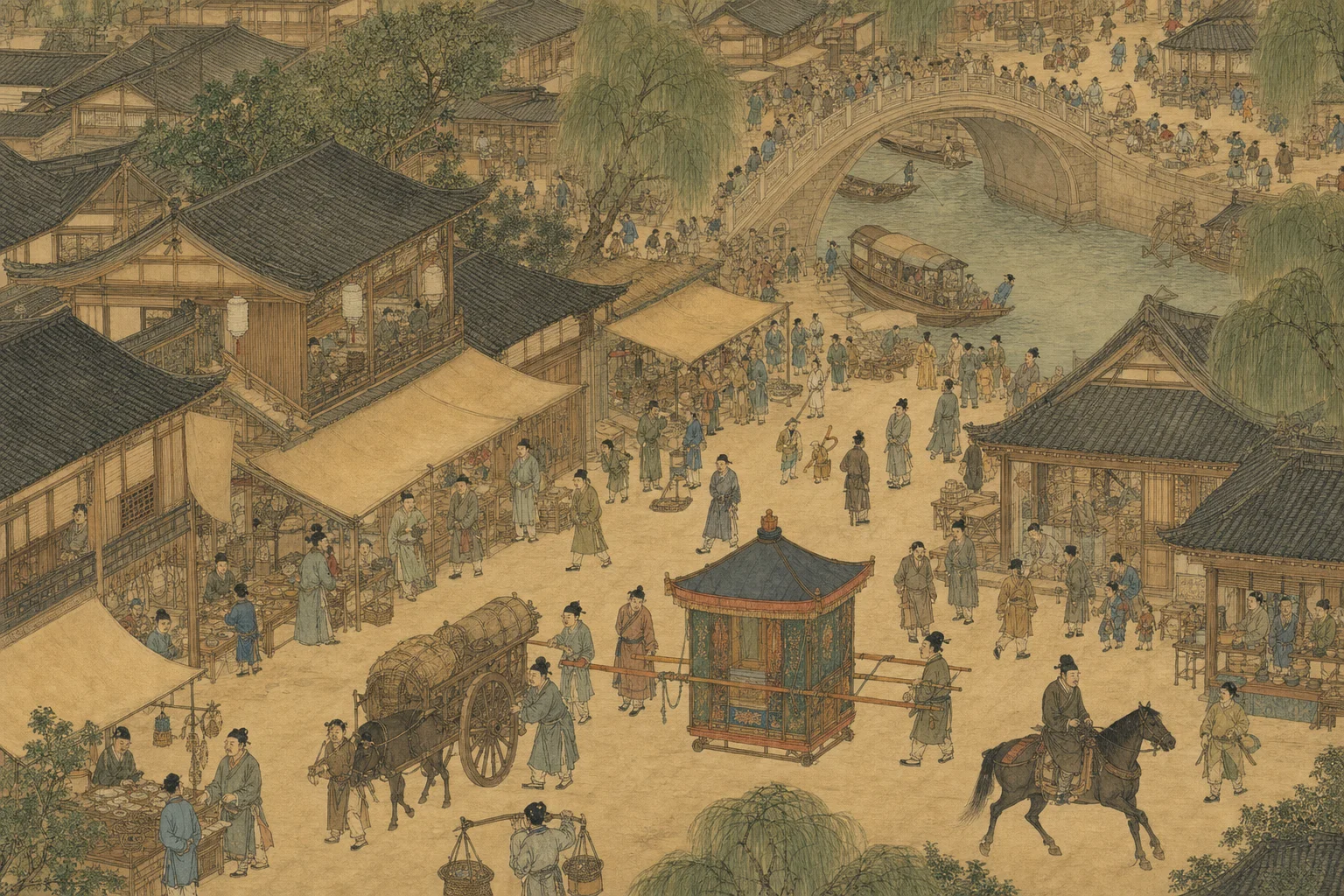
Saying "Song–Tang" is not the same as saying "the game is set in the Song dynasty." It means the art team looked to a cluster of sources where Chinese visual culture is richly documented:
- Urban and rural life in Song painting — especially the genre scenes that show shops, bridges, carts, and crowds (the most famous example is Along the River During the Qingming Festival, 清明上河图)
- Tang cosmopolitan style — broader silhouettes, international trade motifs, and the high classical look still echoed in later art
- Technical manuals and encyclopedias — building modules, joinery, and ritual spaces described in Song state standards and illustrated encyclopedias
- Later commentaries and Ming-Qing reprints — many "ancient" forms survived because later books copied earlier ones; developers often work from this layered record
The result is a world that behaves like a living pre-modern society — farmers, merchants, yamen runners, escort agencies — while looking like the paintings players have seen in documentaries, minus the scroll format. Producer interviews explicitly cite field research, book collections, and on-site study to validate details.
Three layers: practice, source, fiction
Culture articles on this site use a simple filter. For The Bustling World, apply it constantly:
| Layer | What it is | Example |
|---|---|---|
| Historical practice | Documented social or economic patterns in real pre-modern China | Four-occupation society (士农工商); teahouses as social hubs; corvée and tax pressure in wartime |
| Artistic & textual source | Surviving paintings, manuals, and literature that show how things looked | Yingzao Fashi bracket sets; Qingming scroll shop fronts; Tang tomb figurines |
| Game fiction | Rules, factions, and geography invented for sandbox play | Unnamed dynasty; player-built states; policy cards; mythic sites shown in later trailers |
A teahouse in the game might use rooflines and interior props traceable to Song visual sources (source), serve the social functions teahouses really had (practice), and sit in a city whose name and war you invented yesterday (fiction). None of those layers cancel the others.
What the developers have confirmed
Scoped from first and second gameplay trailers, Steam store text, and interviews through 2025.
- Fictional setting — ancient China without a specified real dynasty or release-year calendar
- Song–Tang material basis — buildings and objects "restored" from paintings and classical records since the Tang–Song period
- Gongbi-inspired art — meticulous line and color sensibility; 3D with hand-painted textures rather than photoreal scanning
- Sandbox without a forced main quest — civilian life, jianghu adventure, and state-building are parallel paths
- Living simulation — NPCs with families, migration, grudges; cities evolve without a fixed script
- Mythic layers in later materials — trailers have shown sites such as Xiaoxitian (小西天) and underworld imagery; these sit atop the grounded street life
What is not confirmed: a pinned historical start date, a playable real emperor, or a campaign locked to one documented war. Treat those as fan speculation until official materials say otherwise.
How this differs from other games on Game World
If you have read our Culture hubs for other titles, the contrast is useful:
- Blood Message / 归唐 — one true year (848 AD), one documented event; fiction fills gaps around real couriers
- WUCHANG: Fallen Feathers — pinned to 1647 Sichuan, layered with archaeology and myth
- Black Myth: Wukong — one novel as spine; bosses map to chapters
- The Bustling World — no pinned year; paintings and daily-life logic are the spine instead
That makes this Culture series closer to a material-culture guide than a timeline primer. You will get more mileage from knowing what a yamen (衙门) is for, or why market paintings matter, than from memorizing reign titles.
What to watch for as you play or follow trailers
Useful questions when a new scene drops:
- Does this building module echo a known painting or manual illustration — or is it fantasy pagoda filler?
- Does the costume read as a rank or occupation (official, farmer, child) — or generic "oriental" dress?
- Is the conflict local (bandits, price wars, family revenge) or epic (armies, policy, diplomacy)? Both are intentional paths.
- When mythology appears, does it interrupt the street or grow out of it? Early materials suggest both layers coexist.
Our Quick Reference (coming in a later article) will track confirmed game elements against sources. For now, hold the frame: fiction on top, Song–Tang material culture underneath, real social logic in the middle.
Next in this series: What the title Beacon Fire & Cooking Smoke means — and why the game asks you to choose (or mix) war and hearth.