
Review info: Post–Cortex Depths update (June 2026 Steam build) · PC (Steam app 1839810, RTX 4070 / Ryzen 7 7700, 1440p) · ~28 hours played (main story, multiple endings, Cortex Depths runs) · Light spoilers (dream-region names only) · Tested with English UI and subtitles
Read this first: Store links, platforms, and tags live on the Game Hub. This review covers the base game plus the free Cortex Depths roguelike update.
When Out of Hands (万手一体) landed on Steam in April 2025, the store page sold a psychological horror curio — a protagonist whose face is rearranged from human hands, stitched together from live-action footage and hand-drawn frames. Solo developer Yang Zeyu and Game River delivered something sharper underneath: a story-first card RPG where exploration, branching inner monologue, and turn-based deck combat all serve the same question — can you survive your own grief long enough to learn what broke you? Western players who buy expecting Slay the Spire pacing will bounce. Players who want Inscryption-level weirdness with a more honest emotional through-line, and who can tolerate FMV collage horror, will find one of 2025's most distinctive indies — especially now that the free Cortex Depths update gives deckbuilder die-hards a reason to stay after credits.
From IndieCamp Prototype to Collage Nightmare
Yang Zeyu built the first playable version of Out of Hands in thirty days for the 2021 TapTap IndieCamp, winning Best Game and Best Innovation. The project picked up awards at IndiePlay 2022, GWB 2022, IndieCade 2024, and BitSummit 2024 before Game River shipped the full PC release on April 21, 2025 (Steam app 1839810). Yang has been clear in interviews that the design target is card game × exploration × story — not a roguelike loop with lore taped on afterward. That framing matters when you evaluate the game fairly: the campaign is authored, the map is node-based, and deck variance serves set-piece fights rather than infinite procedural floors — at least until Cortex Depths arrives.
We tested on Steam (app 1839810) with a Ryzen 7 7700, 32 GB RAM, and an RTX 4070 at 1440p. Copy was self-purchased; no review code was provided by the publisher. Premium pricing holds at $17.99 USD on Steam — no microtransactions, no season pass, no premium currency. English, Simplified Chinese, Traditional Chinese, Japanese, French, German, and Korean are supported on Steam as of the 2026 updates. Full store links: Game Hub.
Hands, Cards, and Organs
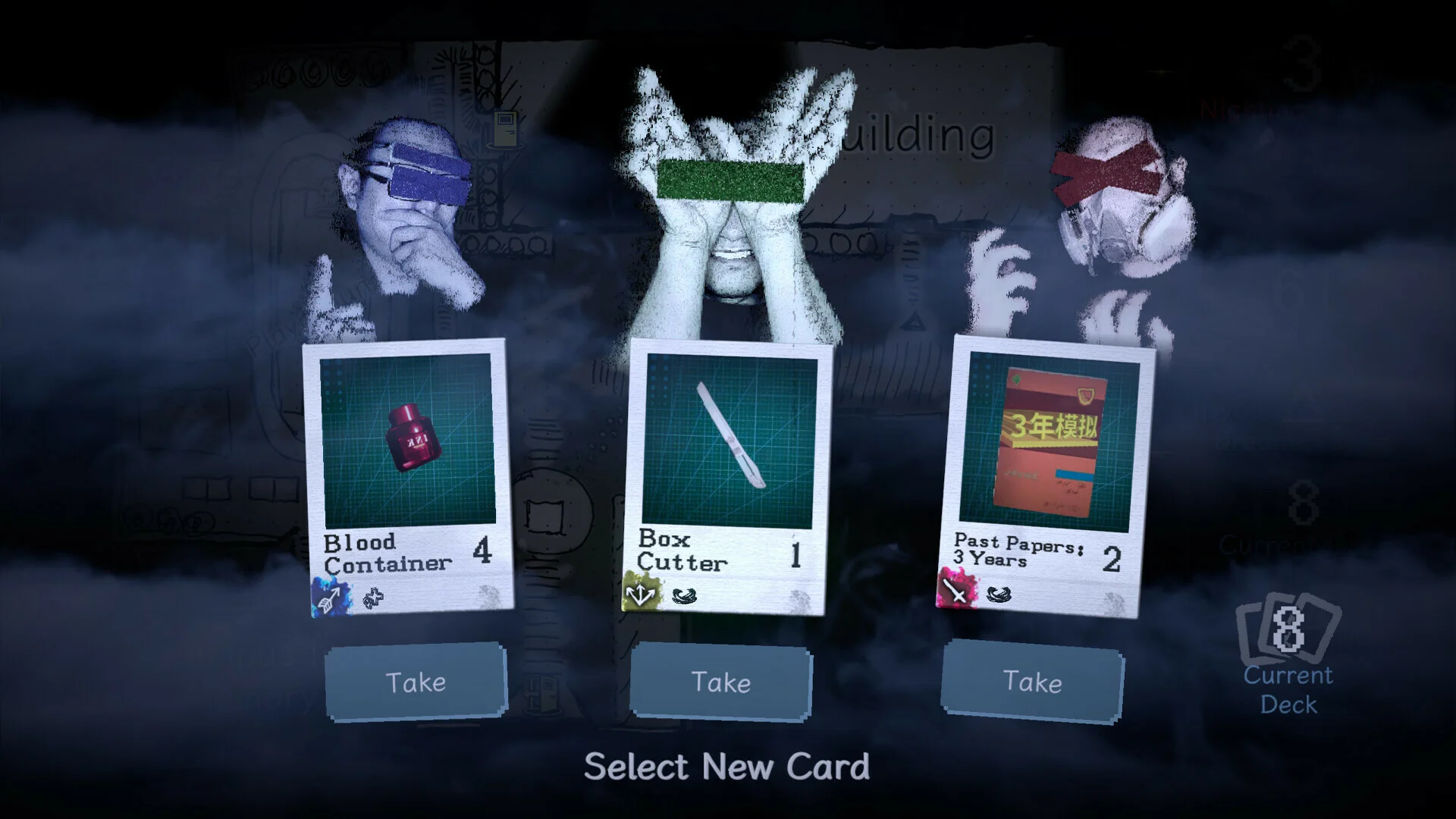
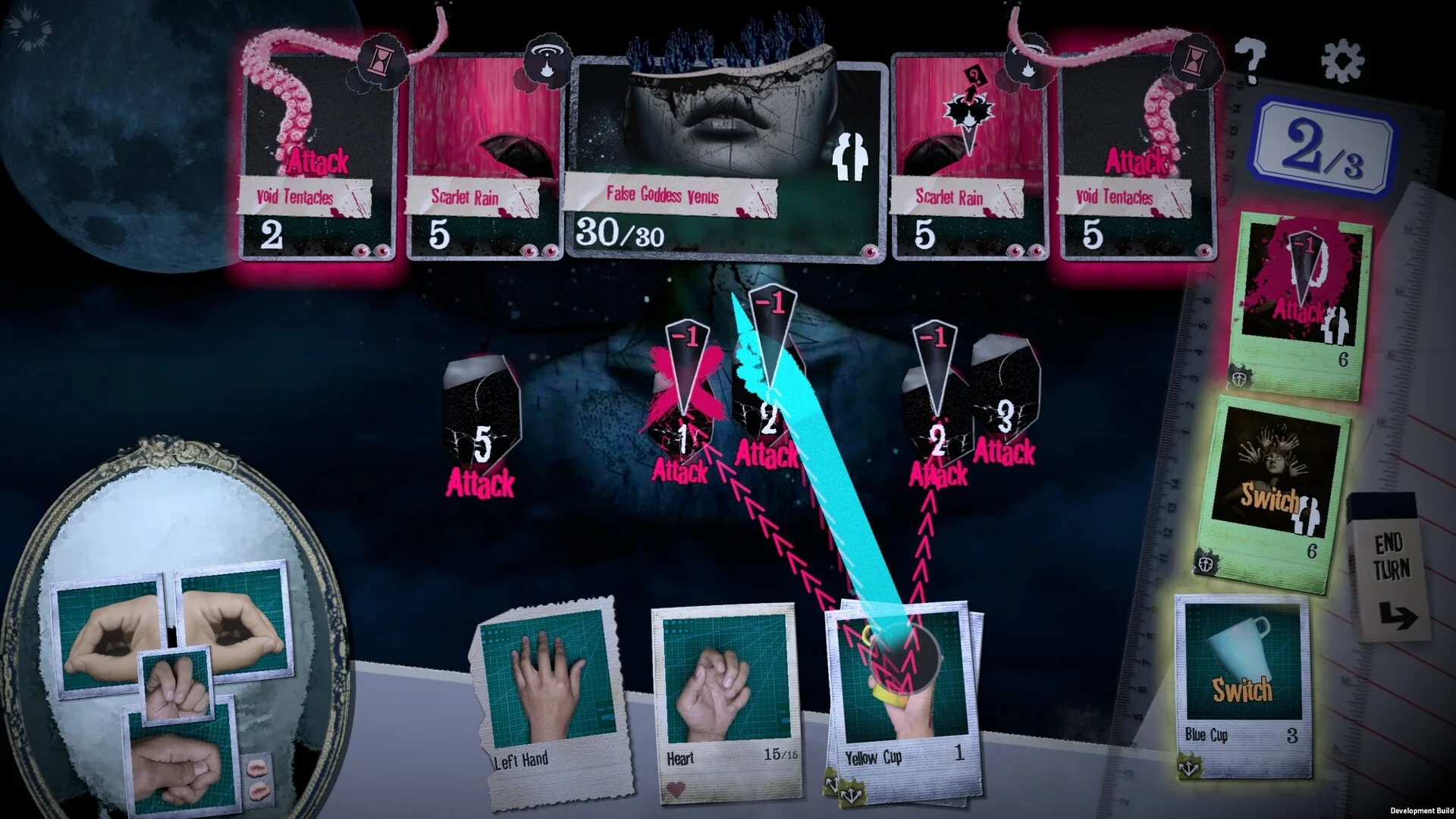
Combat is turn-based and immediately readable if you have touched any modern deckbuilder. Each round deals a fresh hand; you drag cards onto hand slots — literal appendages on your warped body — to attack, block, heal, or trigger item effects. Enemies occupy multiple positions; telegraphs and timers tell you when a strike lands, when a debuff ticks, and when you can safely greed for damage. Everyday objects become weapons: scissors, pills, kitchen tools — the mundane turned grotesque, which fits the dream logic better than generic fantasy swords ever would.
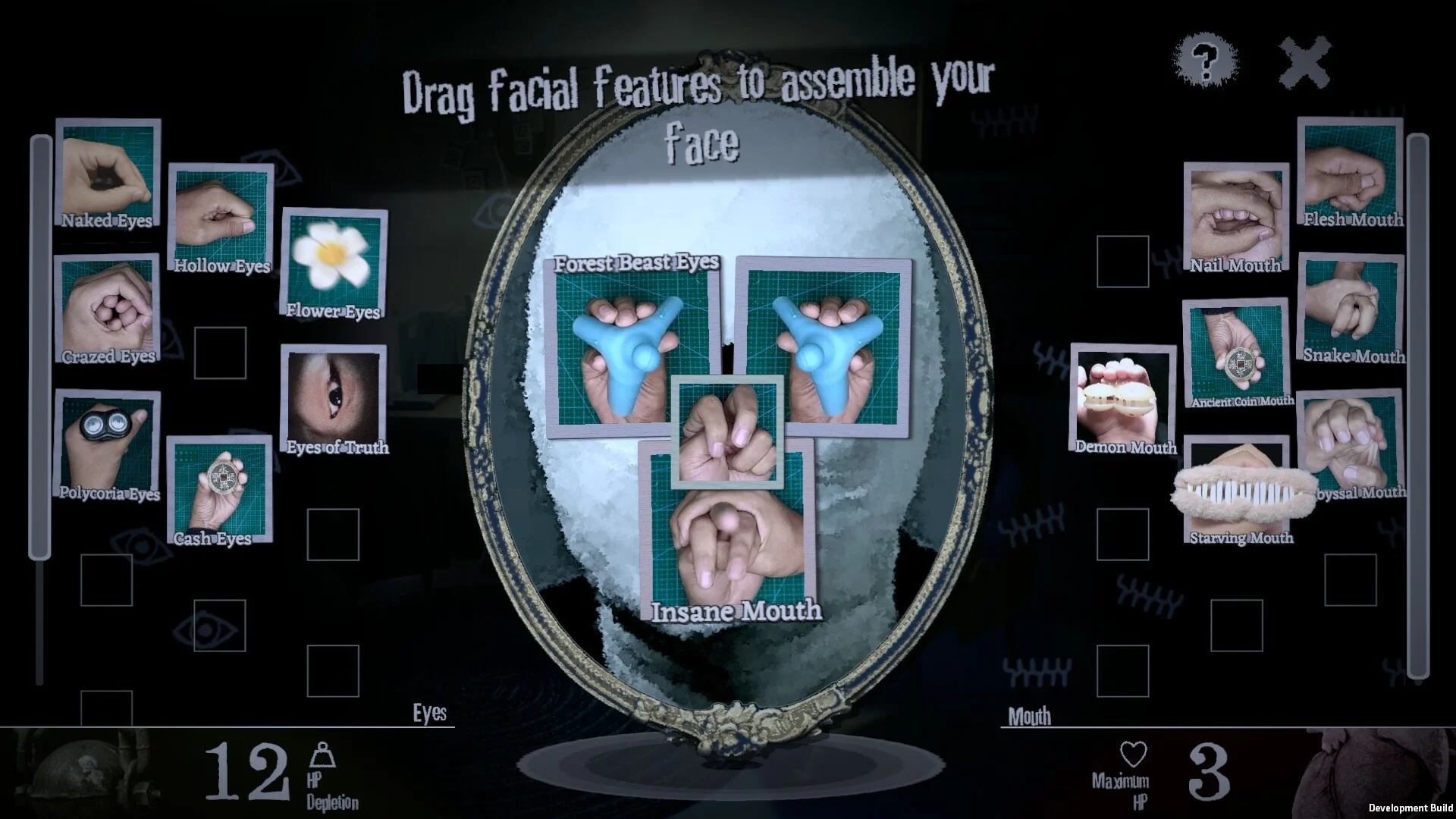
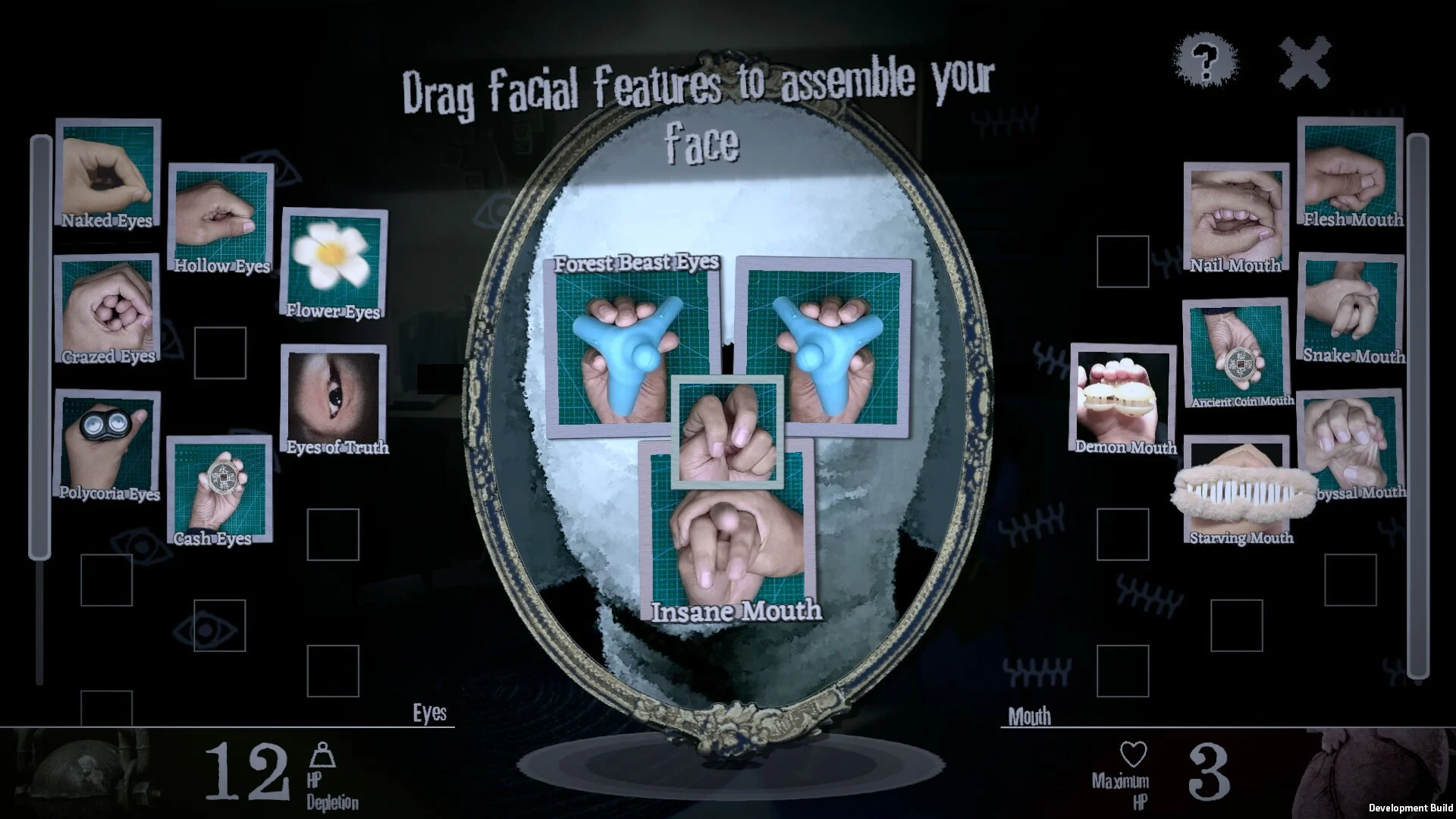
Deck growth comes from exploration rewards, shop purchases, battle drops, and story milestones. The Face system is the other half of buildcraft: swap eyes, mouths, and organ passives that alter how cards behave — bonus bleed on nail-teeth mouths, defensive triggers from certain eyes, synergies that reward playing safe versus going all-in. We leaned defensive in our main campaign run — block chains, healing trinkets, attrition against memory-born enemies — and the game supported that without forcing a single DPS checklist. Hardcore deckbuilder players will still find the main story's RNG gentler than Balatro or Slay the Spire; Cortex Depths (covered below) is where the screws tighten.
Map the Nightmare
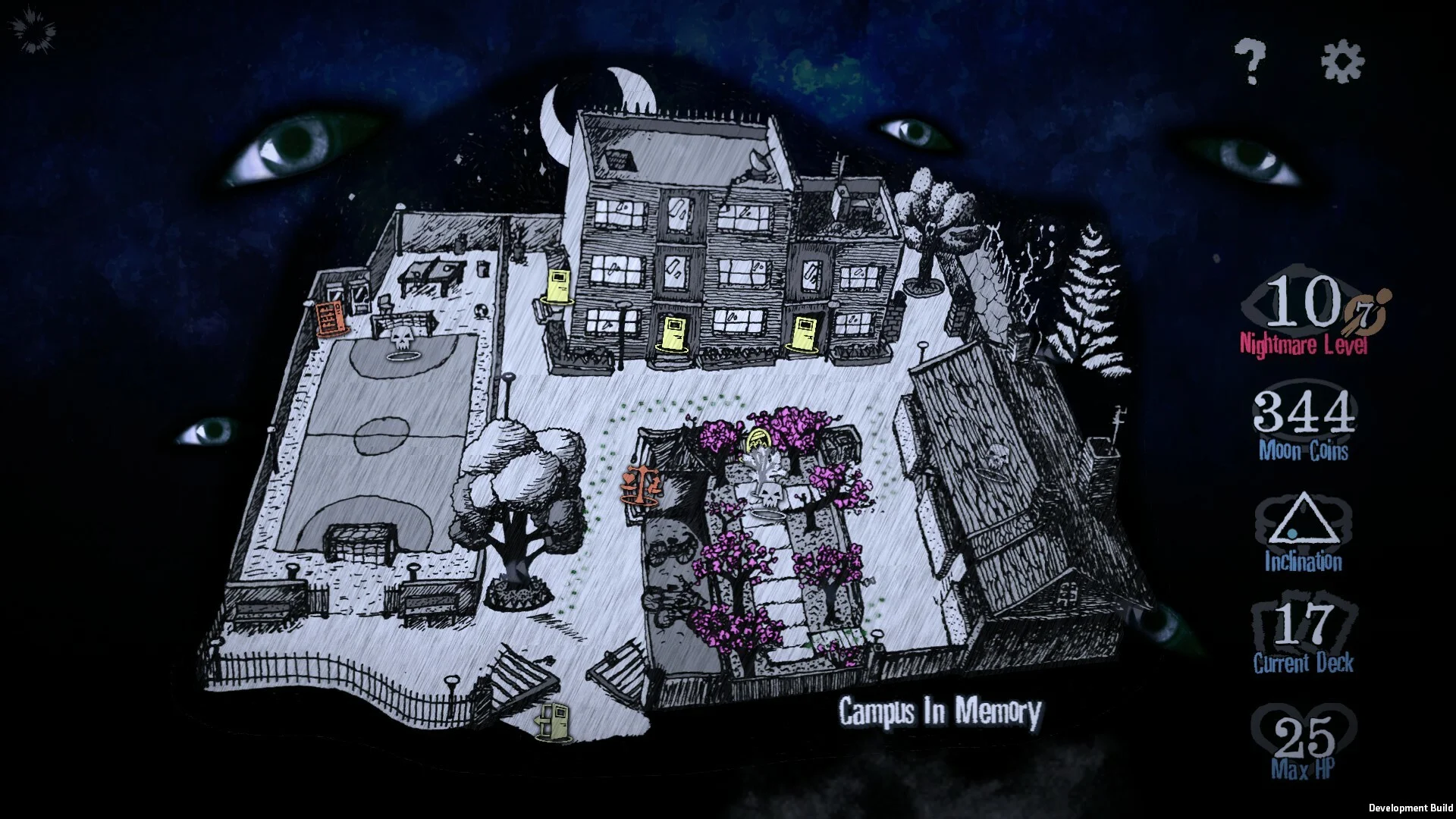
Between fights, each dream region plays like a surreal point-and-click map. Icons mark battles, events, shops, and story beats; you click through collage environments built from real footage, rotoscoped figures, and hand-drawn overlays. Four major dream worlds structure the campaign — each with its own visual dialect and emotional palette — without the open-world sprawl of a CRPG. Pacing is deliberate: you are meant to read, listen, and sit with discomfort, not sprint to the next elite fight.
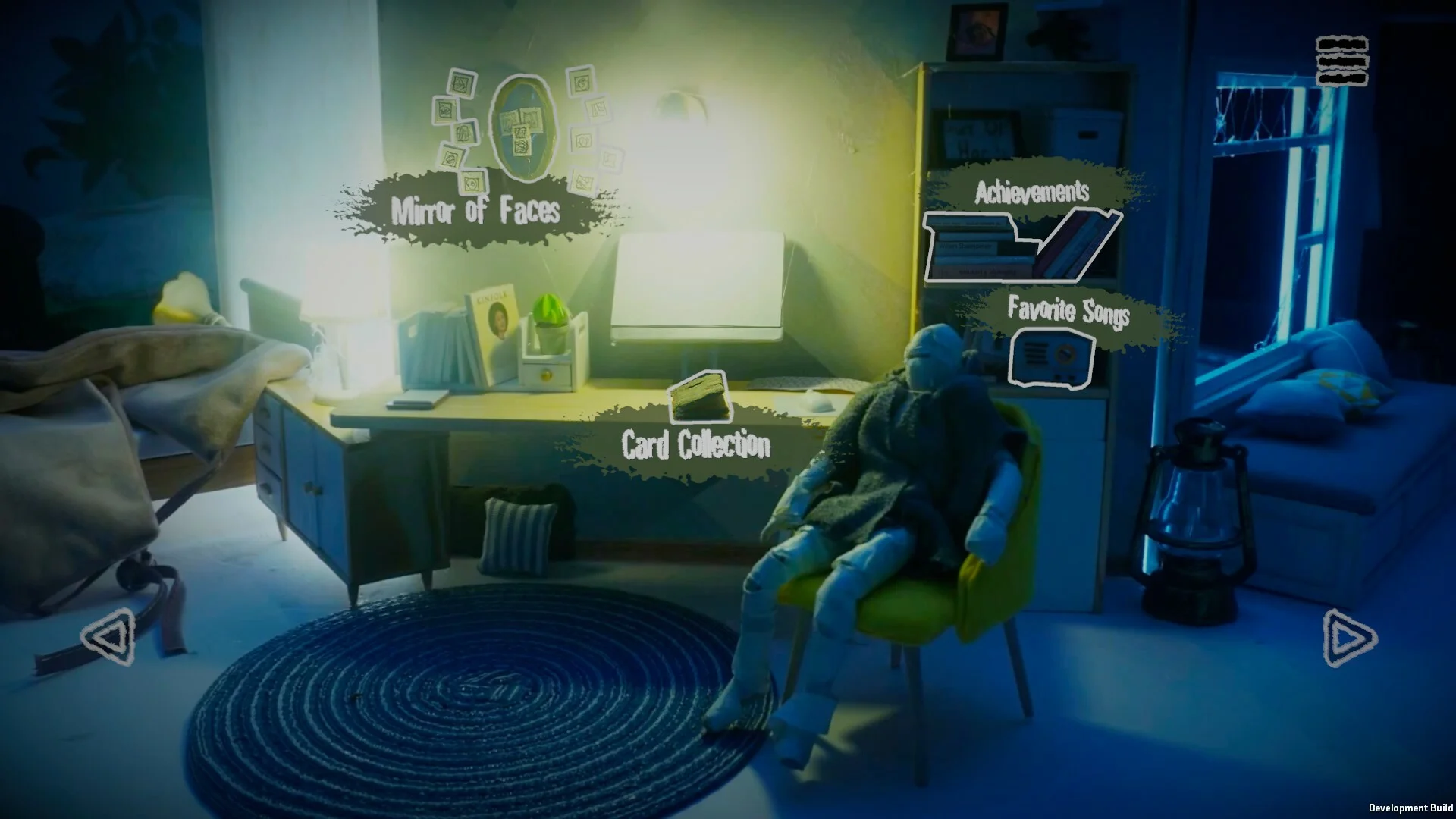
Three inner voices — Mystery, Logic, and Action — comment on what you see and sometimes force branching choices. Mystery pushes intuition and risk; Logic demands evidence and restraint; Action wants forward motion at any cost. Those choices ripple into which scenes you unlock, which allies and items appear, and which ending path stays open. We will not spoil the finale beats here, but the system works because it is not cosmetic — the voices genuinely disagree, and the game respects all three perspectives enough that multiple playthroughs feel justified.
Grief Wearing a Thousand Hands
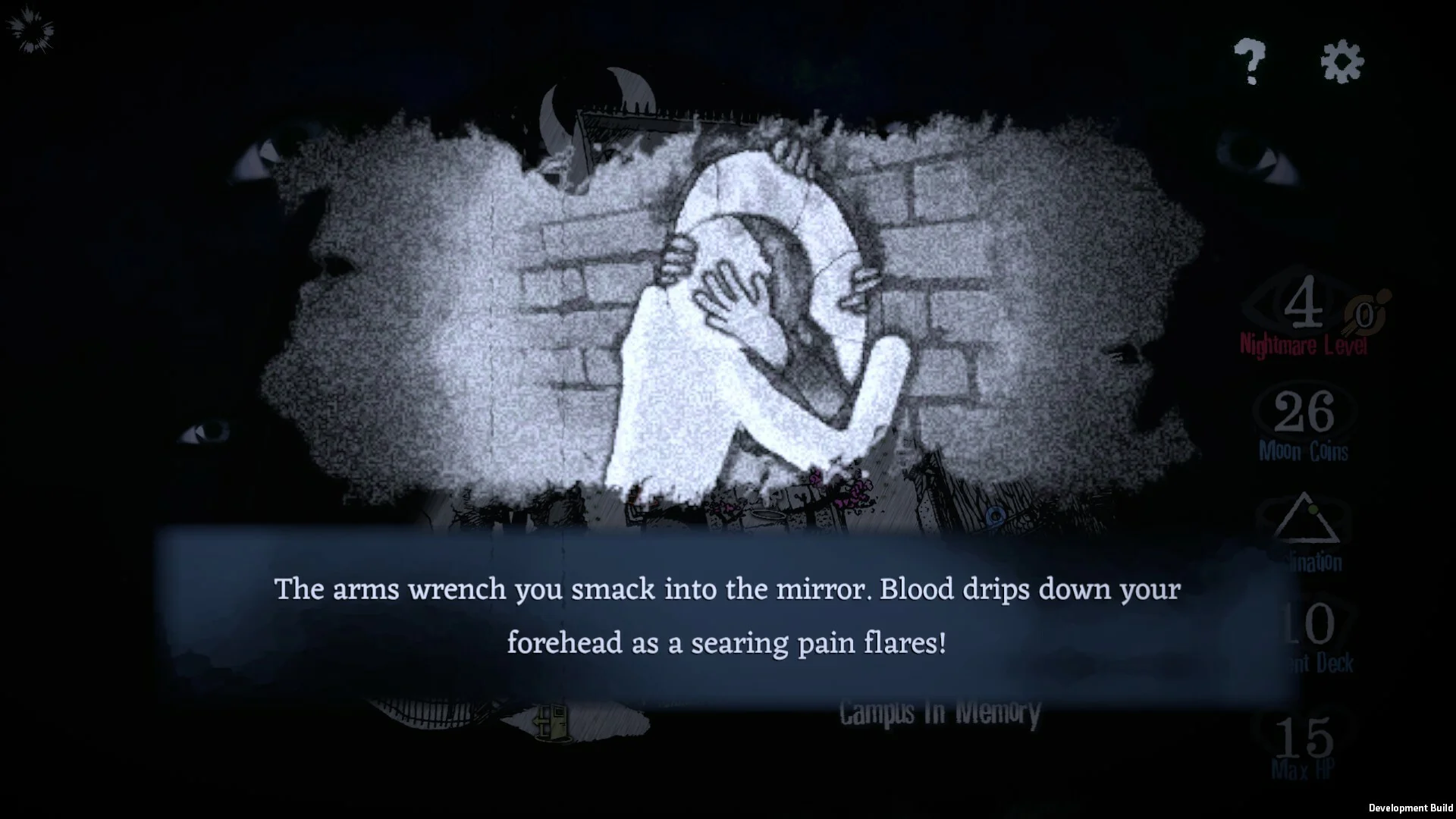
The premise is blunt: after losing someone close, you wake inside a looping nightmare, your body reshaped into a creature of hands and borrowed organs. Enemies are memories, guilt, and negative emotion given card-battle form — not random fantasy mobs. The writing stays poetic and fragmented rather than expository; environmental text and item descriptions carry as much weight as cutscenes. We will name dream regions and emotional themes because they appear in marketing materials, but we will not reveal who you lose, what caused the loop, or how each ending reframes the truth.
Four endings reward players who engage with the voice system and optional side content. A single rush playthrough will deliver a complete arc; completionists chasing every route should budget extra hours and accept some repeated map traversal. If you need constant voiced dialogue and cinematic set-pieces every ten minutes, the middle chapters may feel quiet. If you treat the game as an interactive grief fable — where silence and imagery do the work — the story hits far harder than its $17.99 price suggests. Compared to systemic sandboxes like The Scroll of Taiwu, Out of Hands is authored and linear; compared to pure horror walking sims, it asks you to fight your feelings with mechanics, not just walk past them.
Collage Horror You Cannot Look Away From
Visually, Out of Hands sits in a lane of its own. Live-action footage, stop-motion fragments, and hand-drawn 2D layers are cut together inside the game engine — these are in-game scenes you navigate, not pre-rendered movies bolted onto a menu. Each dream shifts palette and texture: domestic spaces rot into clinical halls; outdoor memories dissolve into psychedelic static. The hand-face protagonist is unforgettable — unsettling, yes, but also expressive in how eyes and mouths swap during customization.

Audio matches the oppressive mood: layered ambient drones, sharp UI clicks when cards snap into hand slots, and combat stingers that feel like someone tuning a radio inside your skull. English voice acting is serviceable; Simplified Chinese is the reference performance for tone and pacing. Subtitles are clear in both languages we tested. This is not a rhythm-game or audiophile showcase — it is atmosphere-first sound design that rarely breaks immersion with generic stock cues. Developer disclosure on Steam notes limited AI assistance for some in-game assets; in practice the collage art direction still feels authored and intentional rather than procedurally mushy.
Steam PC Performance
Out of Hands is not a ray-tracing flex test. FMV playback, UI overlays, and 2D collage layers dominate the pipeline; a mid-range GPU from the last decade is enough for 60 fps at 1080p and 1440p in our June 2026 re-test.
Steam PC at a glance
Frame rate: Locked 60 fps at 1440p on our RTX 4070 during exploration and combat; FMV transitions occasionally dip briefly during heavy collage crossfades but never stuttered into slideshow territory.
1080p / budget GPUs: Steam lists GTX 750-class hardware as recommended baseline — credible for this title. Integrated graphics may struggle during full-screen video layers; discrete GPUs from the GTX 1050 era onward should be fine.
Loading: Scene hops between map nodes load in one to three seconds on NVMe; HDD installs add noticeable FMV startup delay but remain playable.
Stability: No crashes across ~28 hours post–Cortex Depths update; occasional UI focus quirks when alt-tabbing during FMV, resolved by clicking back into the window.
Steam Deck: Not officially verified on Steam as of June 2026; community reports suggest Proton playability at 30–60 fps with readable text — treat as workable but unverified.
Minimum practical spec (1080p / 60 fps): GTX 750 or equivalent, Core i3-4130 / Ryzen 3 1200, 8 GB RAM, 4 GB storage. Treat 8 GB RAM as a floor — close background tabs during long sessions with FMV heavy chapters.
Recommended spec (1440p / 60 fps): GTX 1050 Ti or better, Core i5-6600 / Ryzen 5 3600, 8–16 GB RAM, SSD. Our RTX 4070 rig had massive headroom; this is a game you buy for art and systems, not for GPU stress tests.
Cortex Depths — Roguelike After Credits
The free Cortex Depths update (rolled out across late 2025 and early 2026 after the originally announced June arcade mode schedule slipped) adds the roguelike layer many deckbuilder fans wanted from day one. Pick from nine exclusive characters, dive through five randomized levels, stack curses and mutators, and fight escalating dream enemies with far less authored safety than the main campaign provides. Builds snowball harder; mistakes end runs; synergies get weird in the way only a curse-heavy roguelike can manage.
Cortex Depths does not replace the main story's emotional arc — it complements it. If you bounced off the campaign because map clicking felt slow, this mode may still convert you. If you loved the story but wanted Spire-grade build chaos, this is where the game finally flexes that muscle. We spent roughly eight hours in Cortex Depths after clearing the main routes — enough to confirm the mode is substantial, not a three-run novelty — though hardcore infinite-run players may still exhaust its ceiling faster than a dedicated roguelike.
Hours, Price, and Replay
Our main-story clear with side content and two ending routes took roughly eighteen hours; chasing all four endings and optional events pushed toward twenty-five hours before we touched Cortex Depths. Add five to fifteen more hours for roguelike mode depending on how deep you chase high-difficulty clears and character mastery. At $17.99 — often discounted to the $13–15 range on Steam seasonal sales — the hourly value is strong for narrative horror fans and solid for deckbuilder players who engage both modes.
There is no multiplayer, no daily shop, and no FOMO battle pass. Premium only, full stop. Steam Workshop support arrived in the 2026 language-update wave for basic mod hooks; our review focuses on the retail campaign and Cortex Depths, not community decks. Replay value is story endings first, roguelike mastery second — know which kind of player you are before checkout.
Who Should Buy, Wait, or Skip
Buy now (full price or modest sale): Psychological horror fans who want mechanics, not just walking; narrative RPG players who tolerate card combat; deckbuilder enthusiasts willing to explore a slow-burn campaign before Cortex Depths opens up; art-direction obsessives who collect games that look like nothing else on Steam.
Wait for a deeper sale: Pure roguelike grinders who will skip story entirely — you may get more hours per dollar from genre staples unless Cortex Depths hooks you; players sensitive to FMV uncanny valley or body horror; buyers who need voiced AAA production values throughout.
Skip: Anyone who hates turn-based card combat; players expecting open-world exploration or action horror; meme buyers who want two hours of hand jokes without emotional weight or deckbuilding homework.
Out of Hands earns its awards without pretending to be the next Slay the Spire. Yang Zeyu and Game River built a surreal collage nightmare where grief, guilt, and card tactics share one body — visually unmatched in the indie space, mechanically confident, and emotionally braver than most games at twice the budget. Cortex Depths fills the replay gap that launch-week deckbuilder fans complained about; the main campaign remains the reason to care. Start at the Game Hub for Steam links, then decide whether you are here for the hands, the cards, or the truth underneath — ideally, all three.