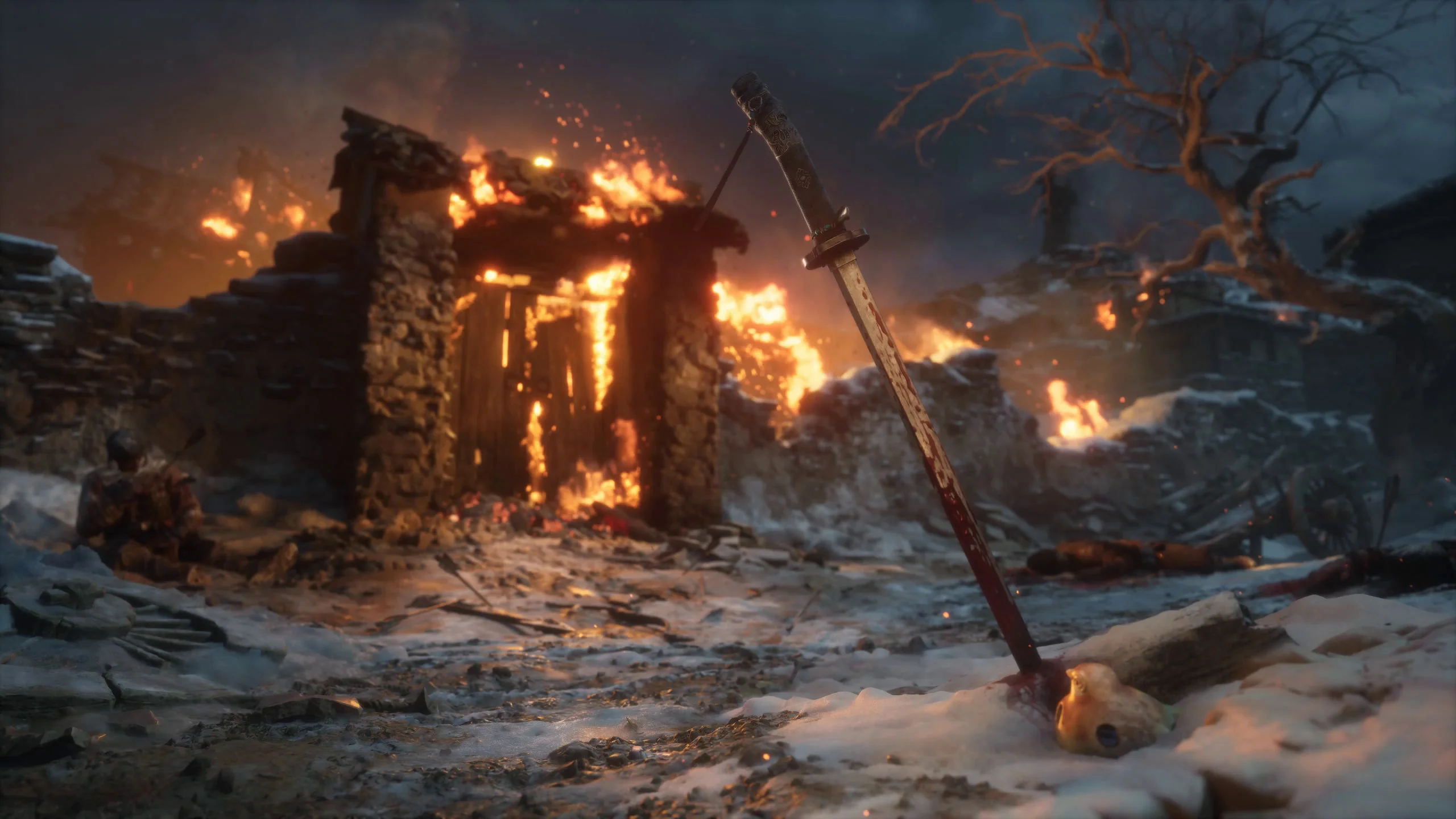
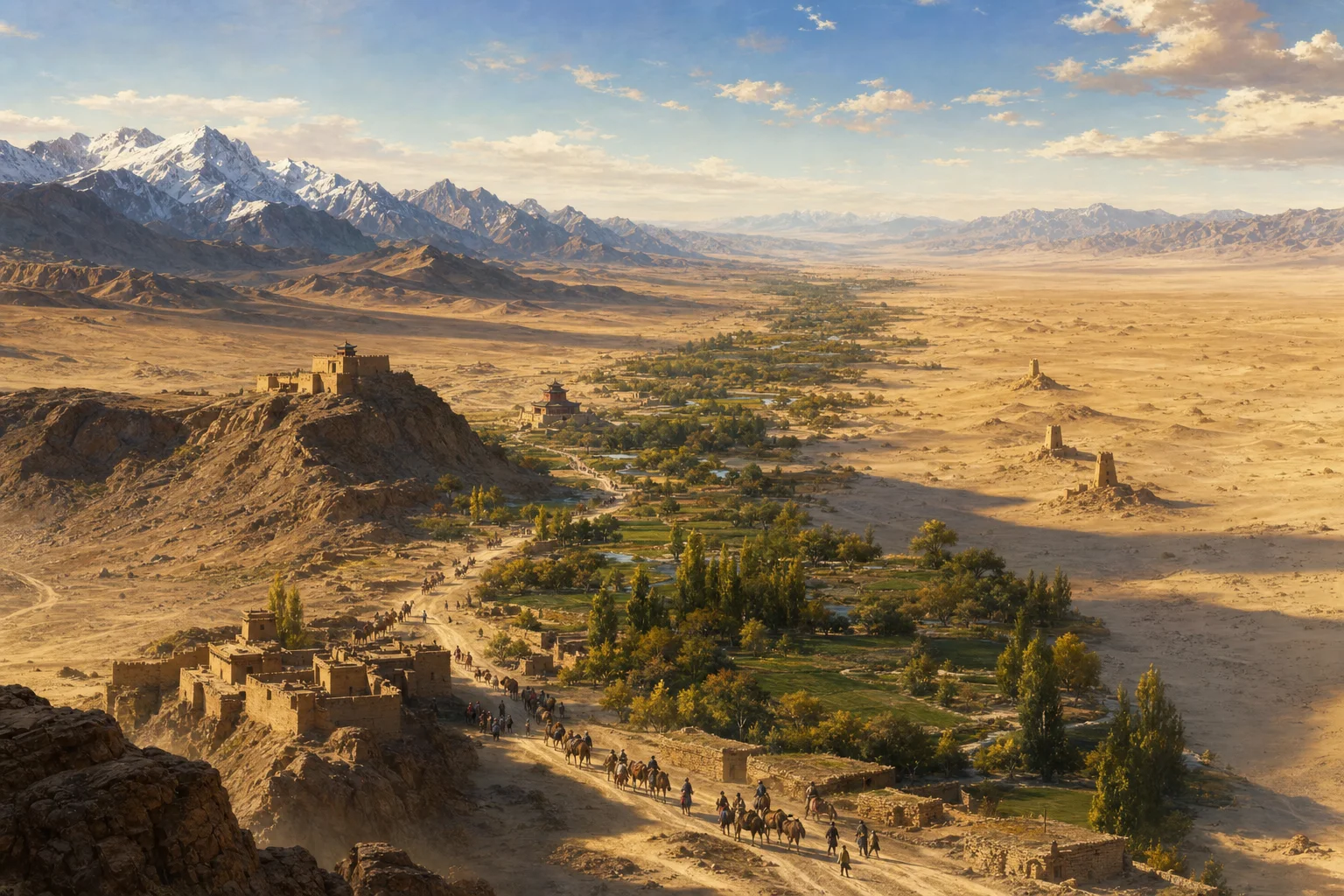
Before 848, the people of Dunhuang had spent more than sixty years under rule from the west — cut off from Chang'an, cut off from the empire they still called home. To understand why Zhang Yichao's messengers ran toward death in the desert, you need to understand how the Hexi Corridor fell — and why "return to Tang" was never guaranteed.
What is the Hexi Corridor?
The Hexi Corridor (河西走廊, Héxī Zǒuláng) is a narrow strip of fertile land and oasis towns wedged between the Gobi Desert and the Qilian Mountains — the main highway of the ancient Silk Road. Chang'an sat at its eastern mouth; Dunhuang (Shazhou) guarded its western gate toward Central Asia. Whoever controlled Hexi controlled trade, Buddhism, and armies moving between China and the west.
Key cities
Liangzhou, Ganzhou, Suzhou, Shazhou (Dunhuang), Guazhou — the "Hexi" chain
Strategic value
Silk Road trade, Buddhist pilgrimage routes, buffer against steppe powers
Game relevance
Every mile east in Blood Message crosses this historically contested zone
The Tang golden age — and the crack
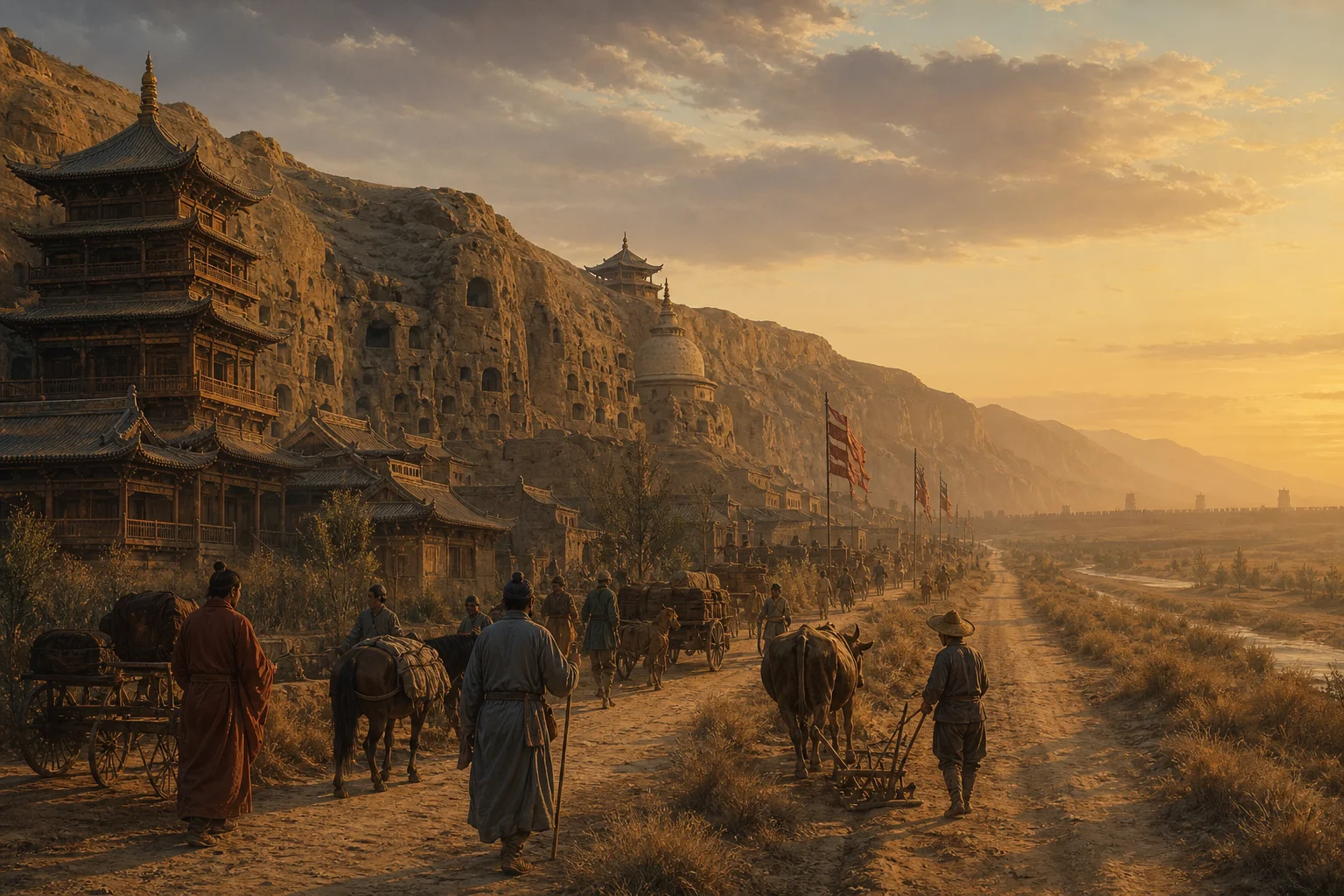
In the early Tang (7th–8th centuries), the empire projected power deep into Central Asia. Hexi was firmly Chinese; Dunhuang flourished as a hub where Han, Sogdian, Tibetan, and Central Asian cultures mingled. The Mogao Caves (莫高窟) near Dunhuang accumulated thousands of Buddhist murals and manuscripts — evidence of wealth and devotion.
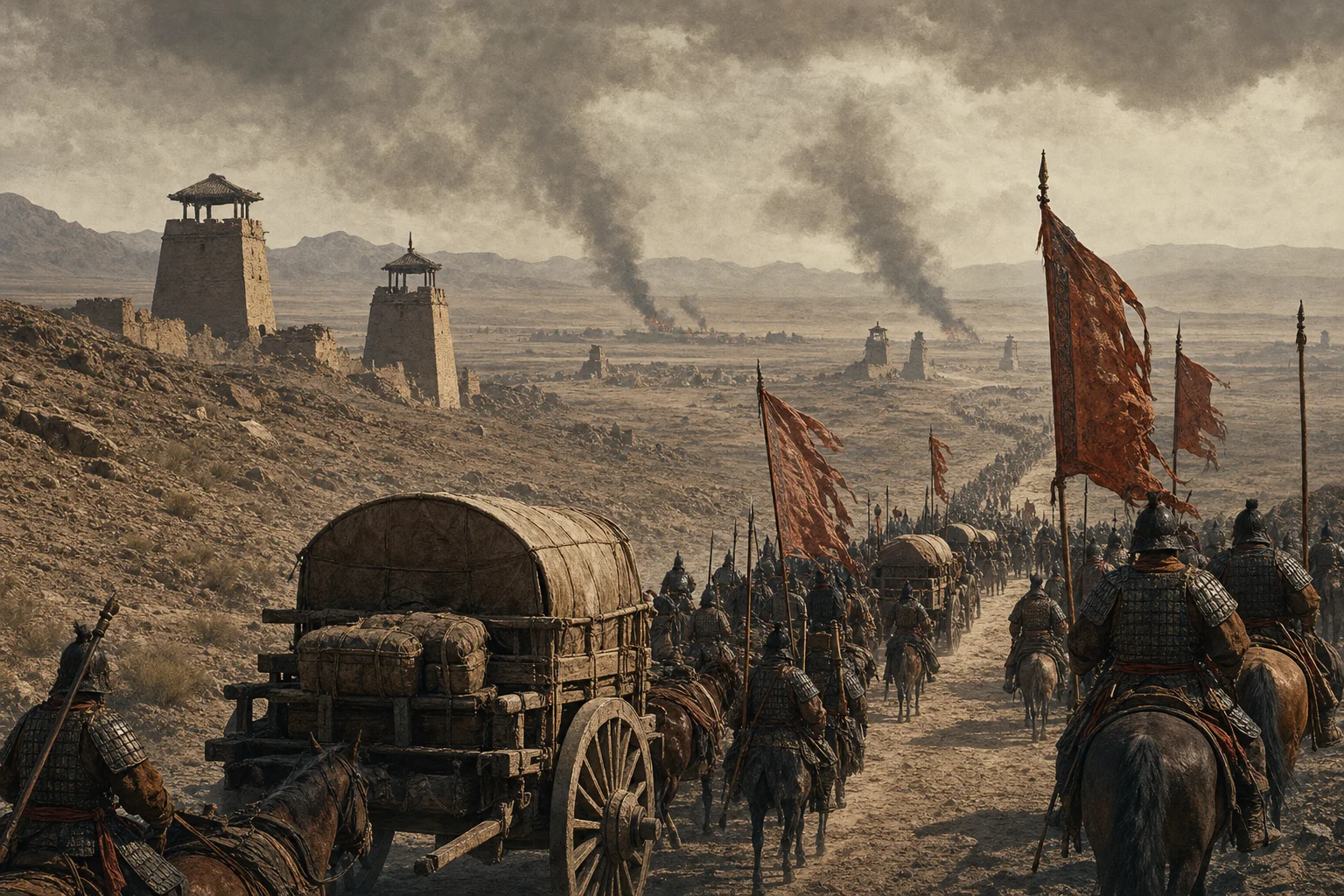
The catastrophe arrived in 755: An Lushan (安禄山), a frontier general, rebelled against Emperor Xuanzong. The An Lushan Rebellion lasted nearly eight years and killed millions. Tang armies were pulled east to save the capital; western garrisons emptied. Tibet (Tubo) seized the moment, advancing into Hexi. By the late 780s, Dunhuang and neighboring prefectures were under Tibetan administration.
Sixty years under Tibetan rule
Tibetan occupation was not a single uniform experience — records from Dunhuang show negotiation, local elites adapting, and continued Buddhist patronage. Yet for Han Chinese residents, it meant:
- Paying taxes and obeying laws set by a Lhasa-based empire
- Loss of direct connection to Tang appointments, examinations, and imperial mail
- Generations born who had never seen a Tang envoy — only heard elders speak of Chang'an
By the mid-9th century, the Tibetan empire itself was fraying — famine, civil war, and overextension weakened frontier control. Zhang Yichao's 848 uprising exploited that weakness. The Tang court, meanwhile, had partially recovered under capable emperors like Xuanzong II (唐宣宗, not to be confused with the earlier Xuanzong of the An Lushan era), but still lacked the resources to reconquer the west by force. Messengers were the only bridge.
Why isolation hurt
Political separation was only part of the wound. Hexi under occupation remained culturally productive — Dunhuang's cave temples continued — but the region lived in strategic limbo. Traders adapted; monasteries copied sutras; families recorded contracts in multiple languages on paper now famous as the Dunhuang manuscripts. Yet without Tang recognition, any local liberation could be dismissed as banditry. Sending word east was an act of legitimacy, not vanity.
For players: Blood Message's atmosphere of a "Tang city surviving in exile" draws directly from this period — grandeur remembered, connection lost, hope deferred for generations.
From fall to 848: a simplified chain
| Period | Hexi status |
|---|---|
| Early Tang (618–755) | Imperial prefectures; Dunhuang at peak cultural splendor |
| 755–763 | An Lushan Rebellion; Tang withdraws western troops |
| 763–848 | Tibetan control over Shazhou and much of Hexi; Dunhuang isolated from Chang'an |
| 848+ | Zhang Yichao uprising; Guiyi Army; gradual reattachment to Tang orbit |
Other powers watching
Hexi was never a two-player board. While Tibet held Shazhou, Uyghur (回鹘) confederations influenced northern routes; local Han elites, Buddhist monasteries, and Sogdian merchants all held partial autonomy. Any messenger heading east in 848 navigated not a clean "Tang vs Tibet" war, but a patchwork of checkpoints, warlords, and desert that killed indiscriminately. Blood Message's emphasis on survival, stealth, and environmental danger reflects this historical reality.
Next: Why Dunhuang's art and manuscripts make this setting visually unique — and why the game leans on mural aesthetics.