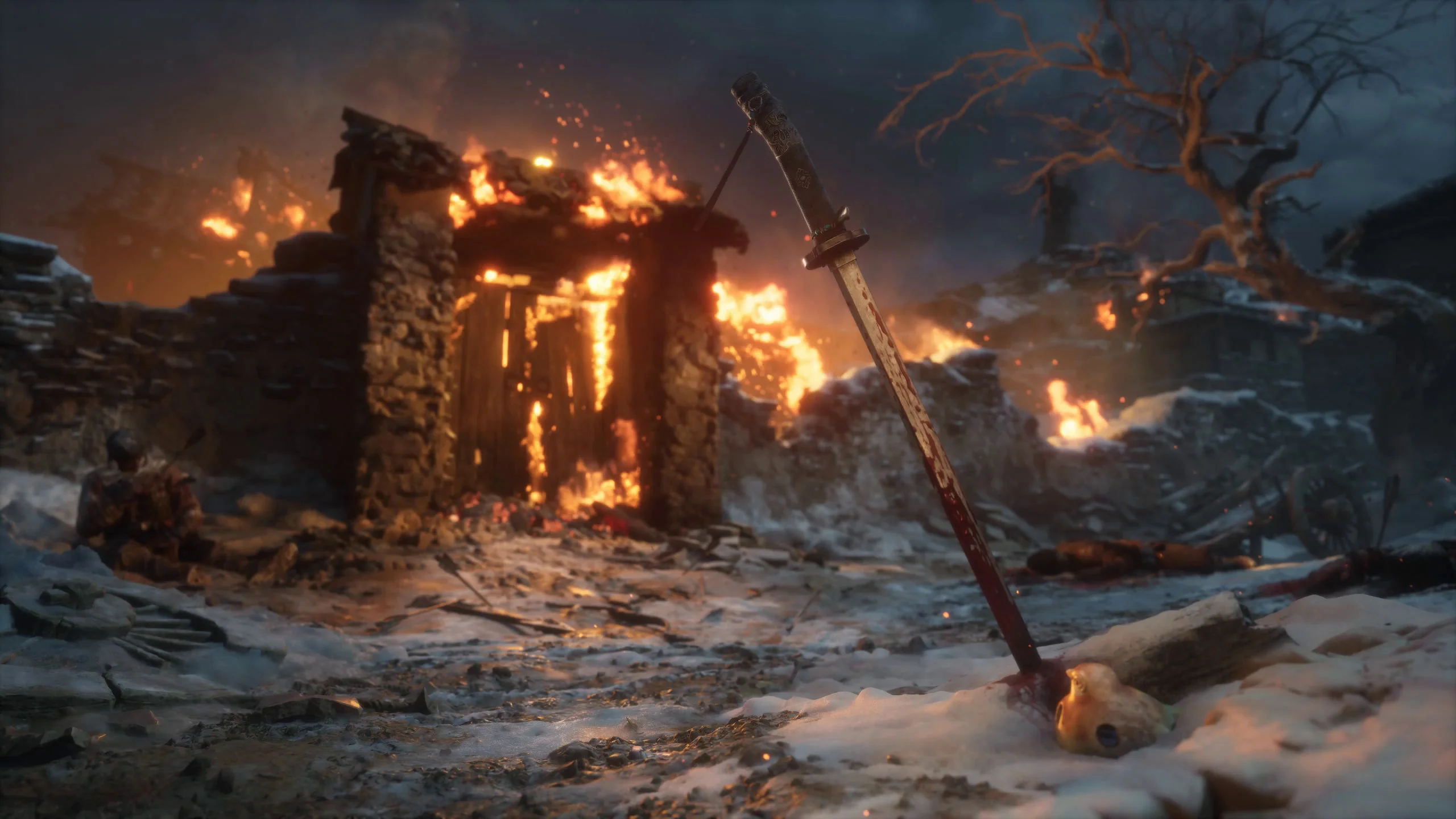
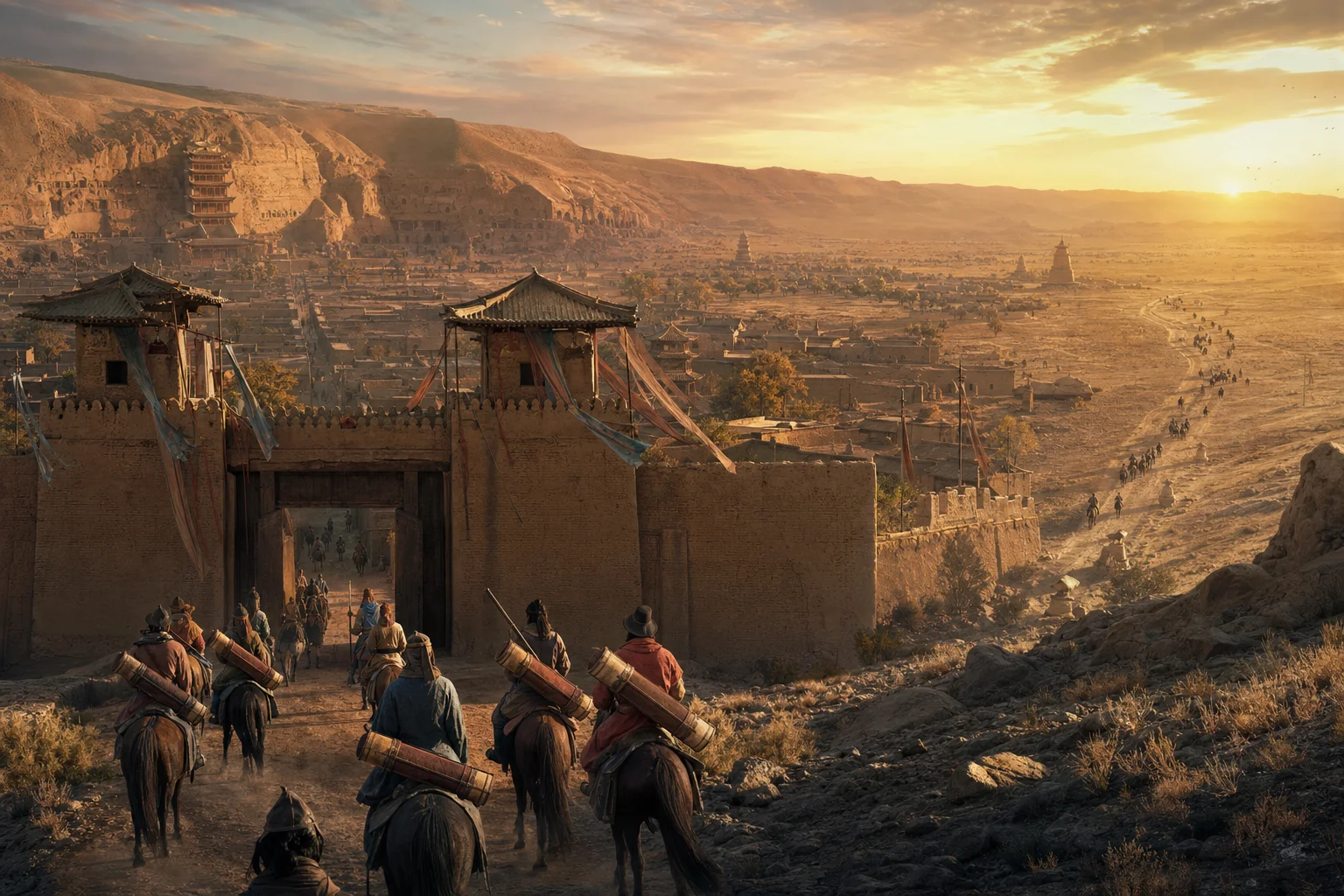
In 848 AD, the city of Shazhou (沙州) — modern Dunhuang — broke free from decades of foreign rule. The rebel leader Zhang Yichao (张议潮) then did something almost as dangerous as the uprising itself: he sent ten teams of ordinary couriers east toward Chang'an (长安), the Tang capital, to tell the emperor that the Hexi Corridor was Chinese again. Blood Message builds on this true story. This ten-minute primer gives you the timeline, the stakes, and the one messenger team that actually made it through.
The event in one paragraph
For more than sixty years after the An Lushan Rebellion (755–763), much of the Hexi Corridor (河西走廊) — the Silk Road gateway west of Chang'an — had slipped out of Tang control. Shazhou and its neighbor Guazhou (瓜州) lived under Tibetan (吐蕃, Tǔbō) occupation. In 848, Zhang Yichao led a local uprising, seized Shazhou, and immediately organized couriers to carry the news to the Tang court. Nine of the ten teams died or vanished on the road. Only the party led by the monk Wuzhen (悟真) reached Chang'an — after two years. The Tang emperor's response: establish the Guiyi Army (归义军), a frontier command loyal to the throne but governing locally. That is the historical spine behind the game's title: 归唐 — Return to Tang.
When
848 AD uprising; messengers depart immediately after; Wuzhen arrives Chang'an ~850
Where
Shazhou (Dunhuang) → east through deserts and enemy territory → Chang'an
Who
Zhang Yichao (leader); ten courier teams; Wuzhen's monks (survivors)
Who was Zhang Yichao?
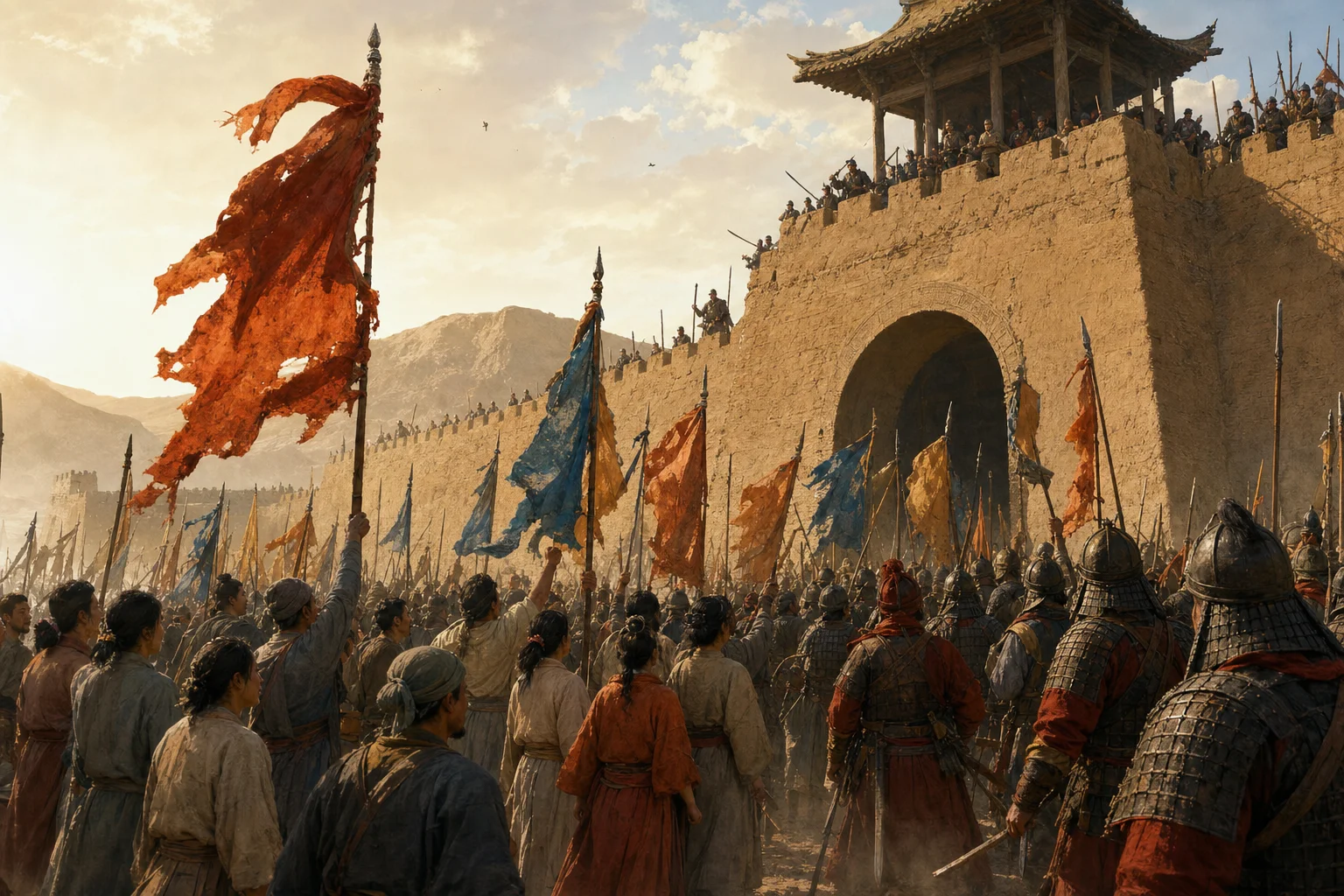
Zhang Yichao was not a Tang general sent from the capital. He was a local Han Chinese leader in Shazhou who organized resistance when Tibetan rule weakened. Tang records describe the uprising vividly: people donned armor and shouted at the city gates; Han residents helped; Tibetan garrison troops fled. Zhang moved fast — securing Shazhou was only step one. Without recognition from Chang'an, his victory would remain a isolated revolt on the edge of the map.
Over the following years Zhang expanded control, eventually recovering eleven prefectures in the region. The Tang court, astonished that western territories could be reclaimed without imperial armies, granted him the title jiedushi (节度使) of the newly formed Guiyi Army — literally the "Army that Returns to Righteousness." Zhang's older brother Zhang Yitan (张议潭) traveled to Chang'an as envoy and remained at court; Zhang Yichao himself eventually went east in his late years, honored as a loyal frontier hero.
Why ten messenger teams?
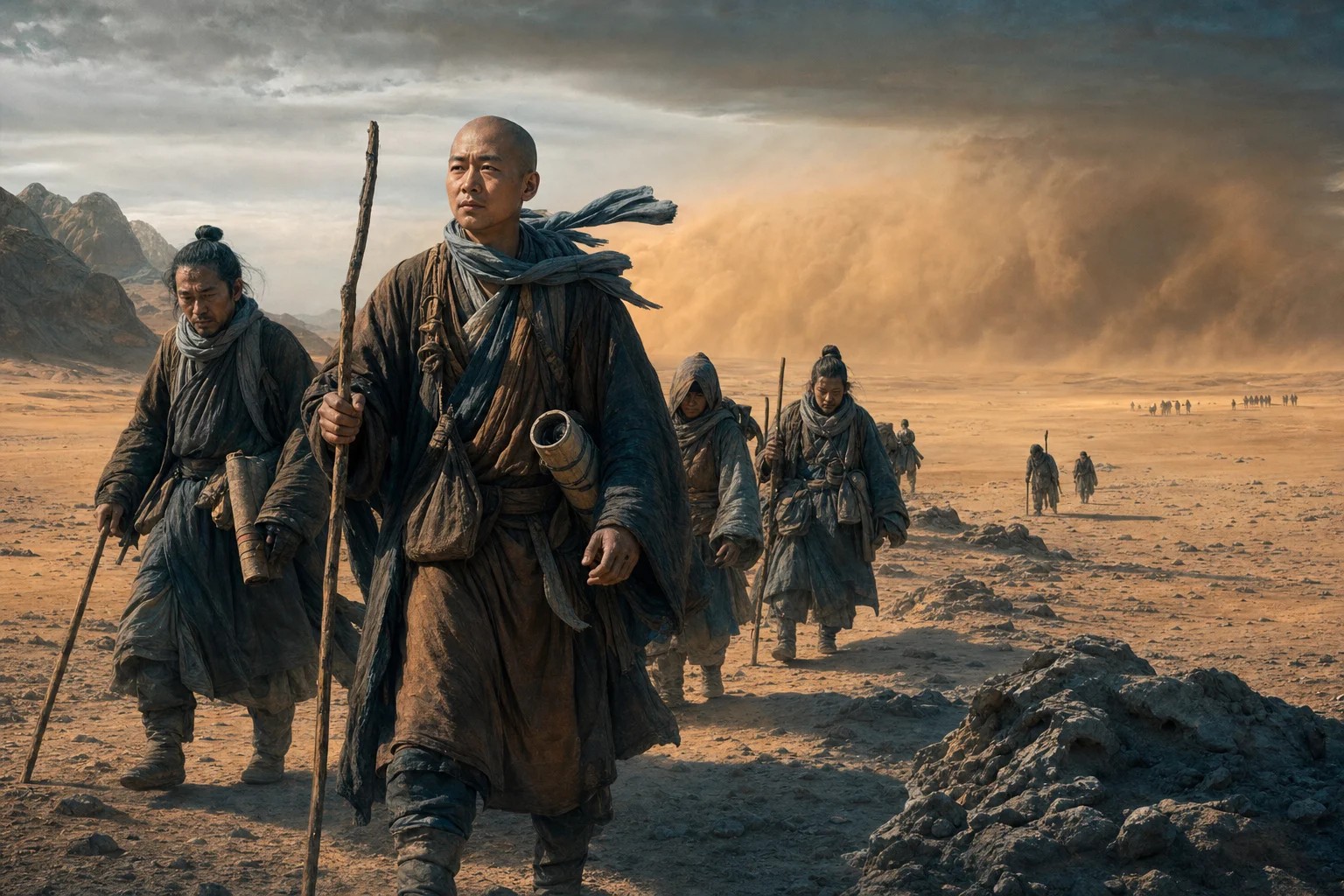
Shazhou sat roughly three thousand li (里, about 1,500 km) from Chang'an — and the direct route ran through territory still held or patrolled by enemies. Zhang Yichao could not afford to send one letter and hope it arrived. He dispatched ten separate teams, each carrying identical documents, traveling by different paths. If nine failed, one might survive.
Historical accounts emphasize the brutality of the journey: deserts (including the Badain Jaran, Tengger, and Kubuqi), freezing winter storms, and Tibetan patrols who would rather kill a courier than let news reach the Tang court. Several teams were composed largely of Buddhist monks — Tibetans at the time respected clergy, making monastic disguises a practical survival strategy.
The team that made it: Wuzhen
The monk Wuzhen (悟真, Wù Zhēn) led the only team confirmed to reach the capital. His route detoured north to Tianjun (天德军) garrison, where commander Li Pi (李丕) escorted them onward. They entered Chang'an in the first month of 850 — nearly two years after the uprising began. The city erupted. Emperor Xuanzong of Tang (唐宣宗, reign 846–859) reportedly exclaimed that heroes truly could emerge from the western frontier.
Remember for the game: Blood Message puts you in the shoes of a fictional messenger and his young son — not Wuzhen specifically. The ten-team structure and the "journey east to bring hope" frame are historical; your characters dramatize the unnamed majority who never returned.
What "Return to Tang" meant
To modern players, "return to Tang" might sound like a simple flag change. For people in Shazhou it meant:
- Legal identity — recognition as subjects of the Tang emperor, not a conquered frontier population
- Trade and mail — reopening routes to the east for goods, Buddhist texts, and family ties severed for generations
- Hope — proof that the center still existed, that isolation was not permanent
The Tang dynasty itself was a shadow of its former glory in 848 — weakened, fragmented, and unable to send armies to reclaim the west. Zhang Yichao's messengers were not carrying news to a mighty empire; they were carrying news to a surviving one, asking it to acknowledge what ordinary people had already accomplished with their own hands.
Timeline at a glance
| Year | Event |
|---|---|
| 755–763 | An Lushan Rebellion cripples Tang; Hexi Corridor gradually lost to Tibet |
| ~787–848 | Shazhou under Tibetan rule; Dunhuang remains a cultural crossroads but politically isolated |
| 848 | Zhang Yichao uprising; Shazhou and Guazhou liberated; ten messenger teams dispatched |
| 850 | Wuzhen's team reaches Chang'an; court celebrates |
| 851 | Tang establishes Guiyi Army; Zhang Yichao appointed military governor of eleven prefectures |
| 861 | Guiyi Army captures Liangzhou — last major Tibetan stronghold in Hexi |
Why this story matters for Blood Message
NetEase's 24 Entertainment Lin'an studio (creators of Naraka: Bladepoint) chose this episode because it is inherently cinematic: ordinary people, impossible geography, a message more important than survival. Official materials describe the game as a tribute to unnamed heroes — stonemasons, farmers, monks, elders, and children who volunteered as couriers. Understanding the real 848 uprising helps you see what the developers are amplifying: not a war of generals, but a war of words arriving on foot.
Next in this series: How the Hexi Corridor fell in the first place — and why sixty years of separation made 848 inevitable.