Review info: Season 19 / mid-2026 patch build · PC (Steam app 1203220, RTX 4070 / Ryzen 7 7700, 1440p) · ~82 hours played (trios ranked, solo BR, Showdown PVE, Rift Traversal) · No spoilers
Read this first: Naraka Game Hub · Blood Message (same 24 Entertainment studio)
Most battle royales teach you to track recoil and armor plates. Naraka: Bladepoint teaches you to read a charged Focus strike, bait a parry, and decide whether that third party on the roof is worth the grapple. Hangzhou-based 24 Entertainment, published by NetEase, dropped the global Steam version in August 2021, went fully free-to-play worldwide in July 2023, and has spent the years since turning a melee novelty into one of the deepest PvP combat sandboxes on PC. The question in 2026 is not the sticker price — the game is free — but whether you are willing to invest twenty punishing hours before the rock-paper-scissors loop clicks, and whether live-service cosmetics noise is a fair trade for the best wuxia BR on the market.
From Dota Modders to Mask of Immortality
24 Entertainment emerged from the Chinese PC action community with a clear obsession: readable melee exchanges at BR scale. Up to sixty players drop onto maps shaped by Far Eastern legend — Morus (聚窟洲) remains the signature battleground — and fight for the Mask of Immortality. Victory is last squad standing, but the path there runs through looted weapons, hero kits, Souljades, and the kind of stamina-managed duels you normally find in arena fighters, not open-field shooters.
If you wanted another Apex Legends with Eastern window dressing, adjust expectations. Naraka sits closer to a tag-team fighting game stretched across a mountain temple — except the ring closes, teams third-party your reset, and your "round" can end because someone hit a Vajra transformation at the wrong moment. The studio is also building toward premium single-player territory with Blood Message; Naraka is where they stress-tested movement, weapon timing, and spectacle combat at live-service scale.
We tested on PC via Steam (app 1203220) with a Ryzen 7 7700, 32 GB RAM, and an RTX 4070 at 1440p. Copy was self-installed from the free client; no review code was provided. PC entry points include Steam, Epic Games Store, and NetEase's official launcher — all route through a NetEase account layer that adds friction compared with pure Steam-native titles, but none gate ranked play behind a paywall. Store links for every platform live on the Game Hub.
Light, Heavy, Focus, Parry
Naraka's combat triangle is the reason the game still has no real genre peer. Light attacks are fast and interruptible. Heavy attacks trade speed for reach and stagger. Focus (blue) strikes armor through lights but telegraph long enough to bait. Parries (振刀) punish committed heavies and Focus — and get punished in turn when you guess wrong. Add stamina, weapon durability, and swap timing, and every duel becomes a short negotiation instead of a DPS race.
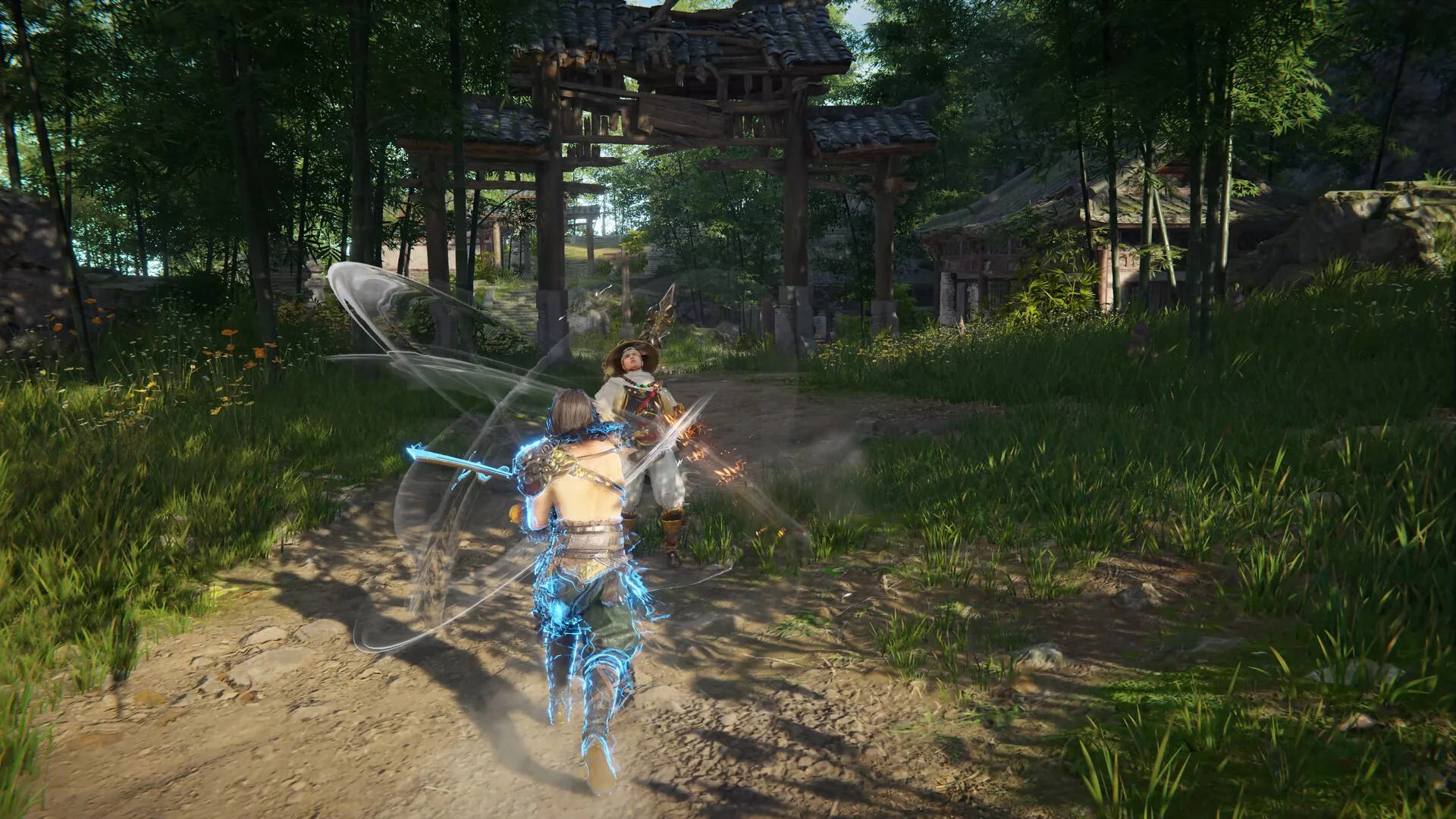
Compared with gun BRs, time-to-kill is longer but time-to-outplay is shorter: you can lose a full health bar to one mis-timed blue, then win the rematch because you recognized the same chain. That readability is a feature for spectators and a wall for newcomers. The training range is not optional garnish — plan to spend real hours on bots before ranked trios feel fair.
Heroes, Weapons, and Season Builds
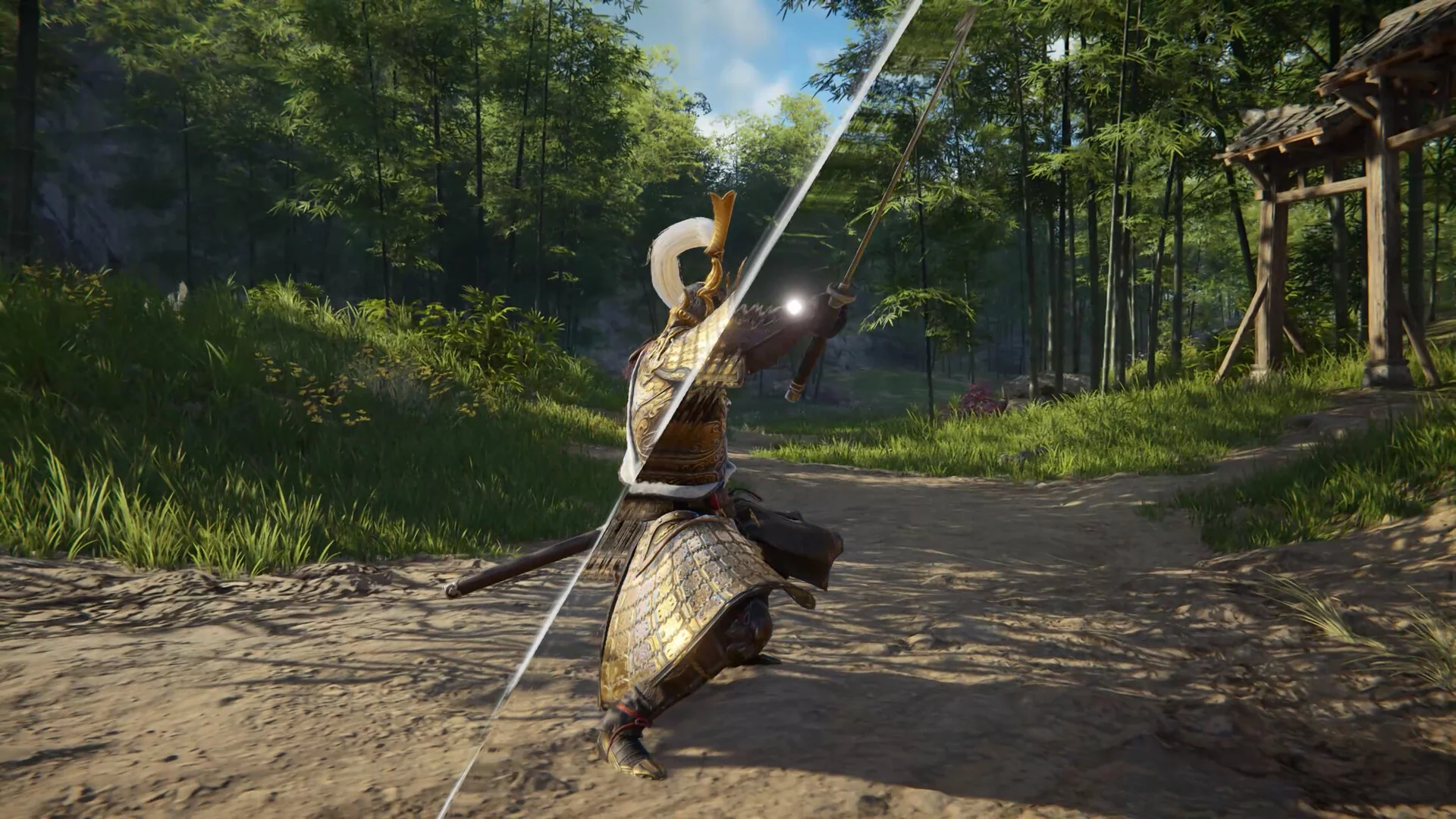
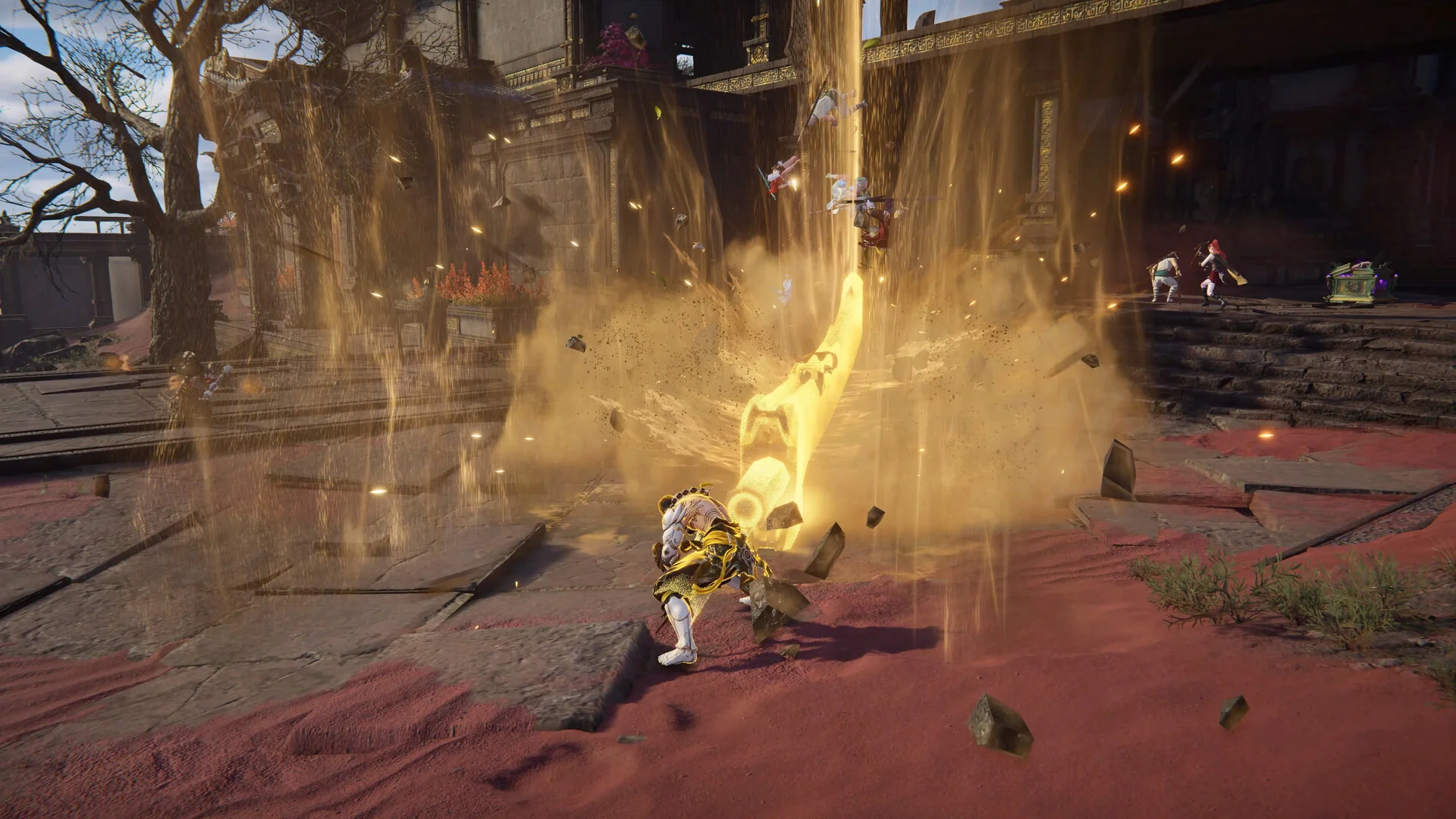
Heroes layer tactical identity on top of the neutral melee kit. Each brings two skills and an ultimate — control, burst, sustain, or transformation — that change how you approach third parties and final circles. Weapons are not cosmetic slots: katanas, longswords, spears, nunchaku, dual halberds, muskets, and seasonal additions like dual flintlocks all carry distinct combo routes and zoning tools. You carry two melee slots plus ranged options, and swapping mid-fight is a skill line of its own.
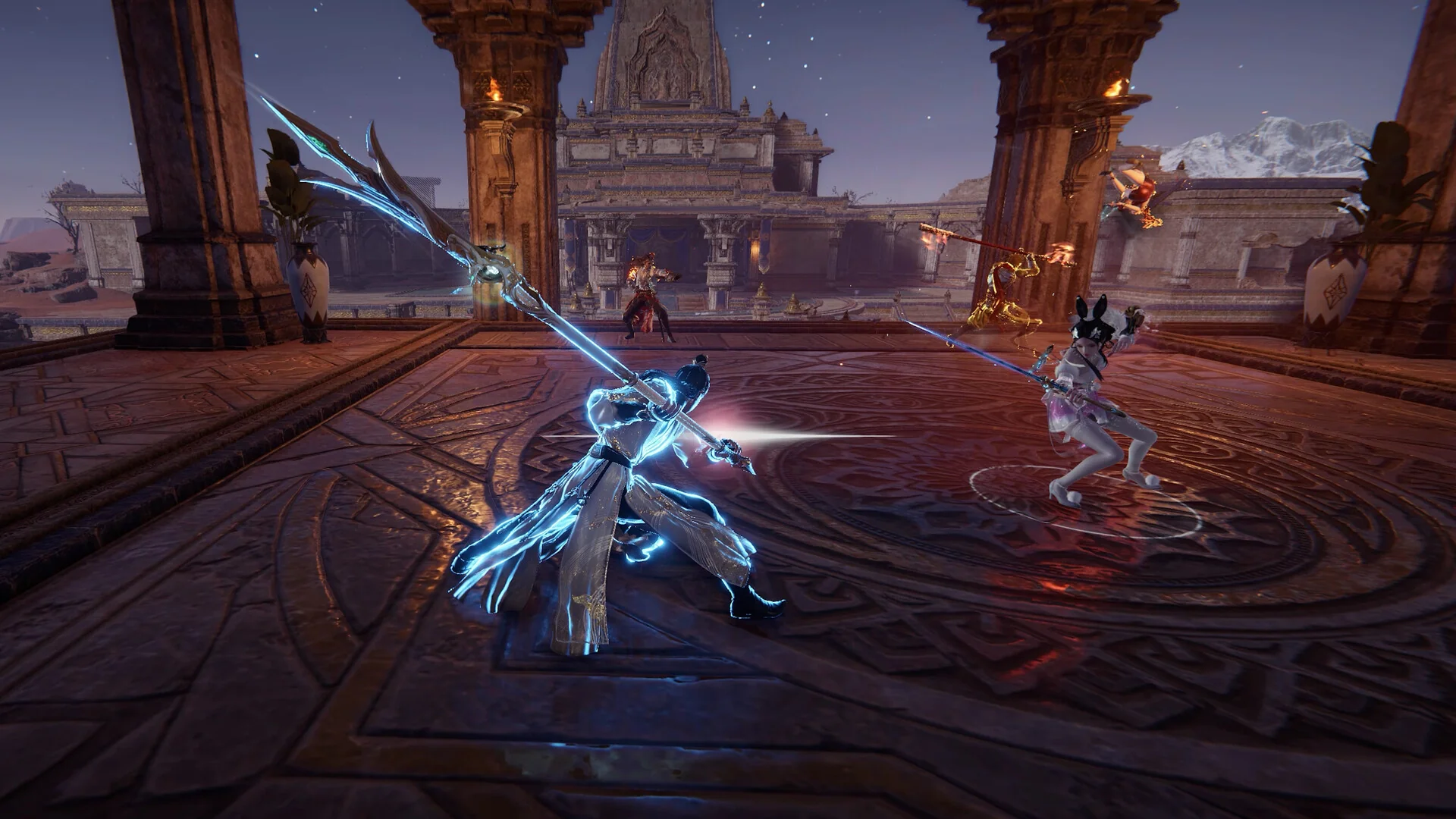
Souljades, Curios, and seasonal systems like Move Souljades add buildcraft between matches. 2026's balance passes are still actively reshaping underused heroes and niche Souljade routes — the meta is healthier than launch year, though patch notes remain required reading for ranked trios. Paid power creep is minimal: gold buys cosmetics and battle-pass tracks, not stat sticks.
Grapples, Rooftops, and Morus
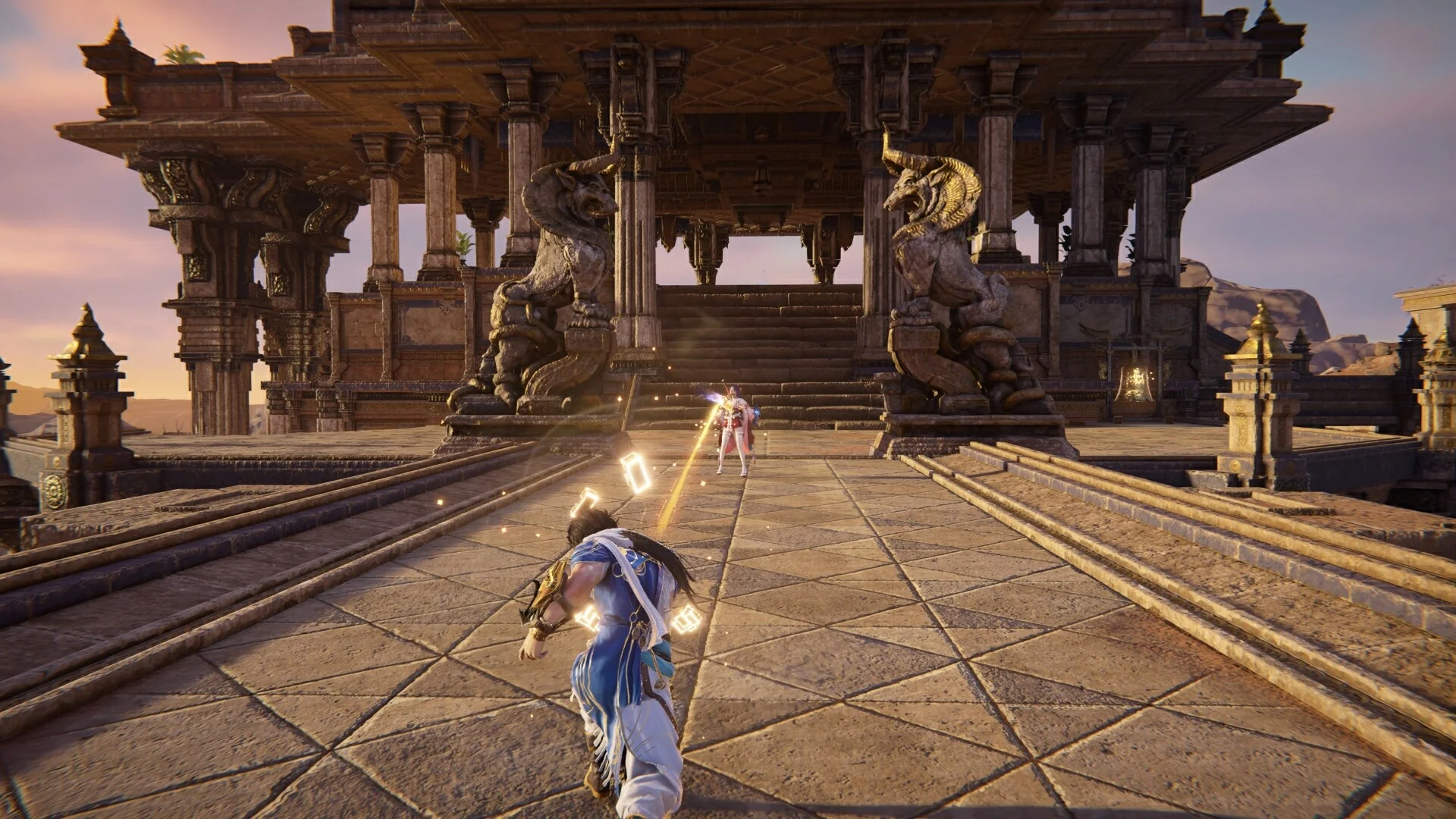
Naraka's other half is movement. The grappling hook turns ridgelines, pagoda roofs, and canyon walls into highways. Chains, wall runs, and slide cancels make vertical third-parties routine — and make "safe" rotation paths a myth. Morus still defines the fantasy: dense temple clusters, open ridgelines, and sightlines that reward map knowledge over pure aim.
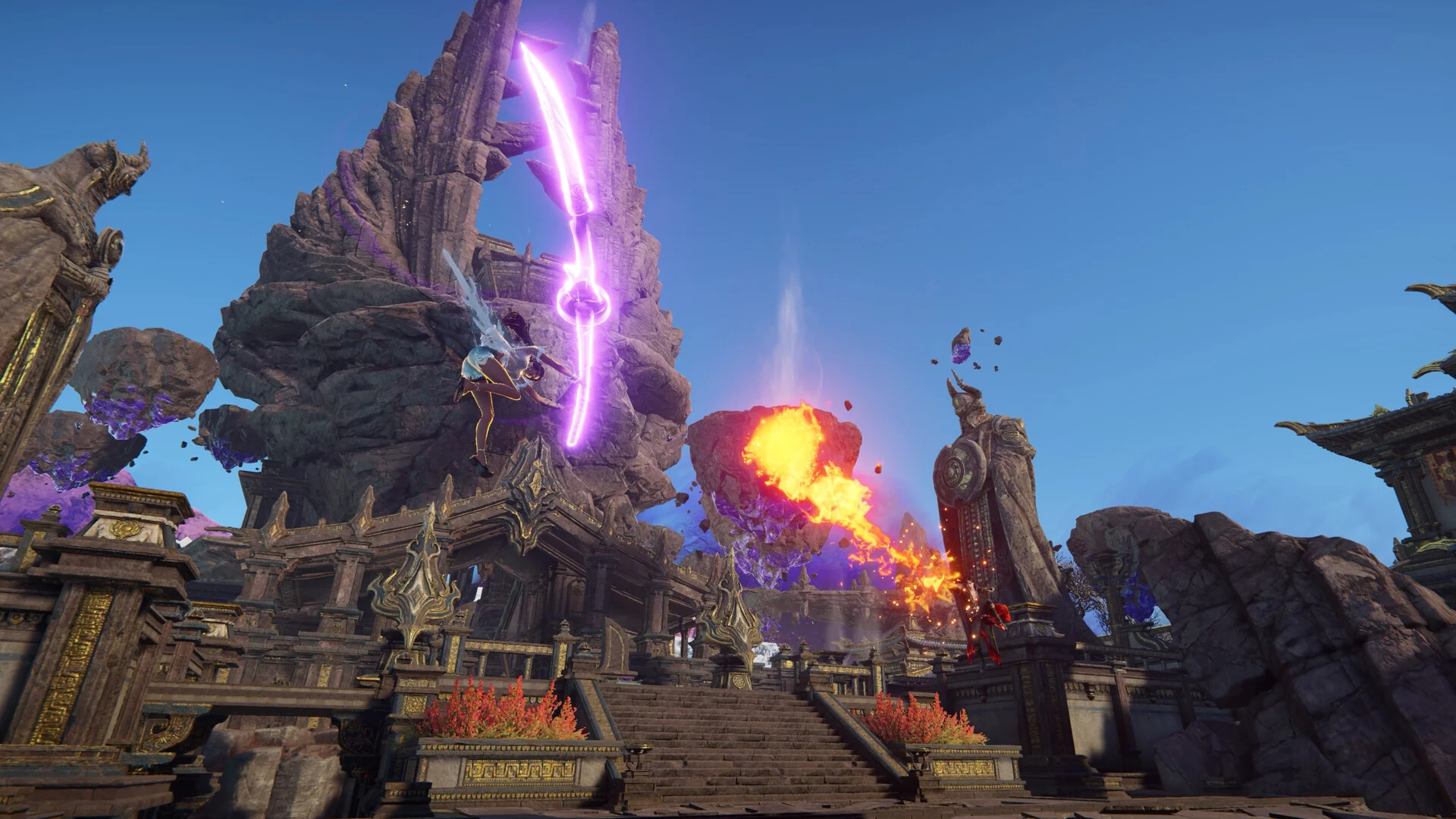
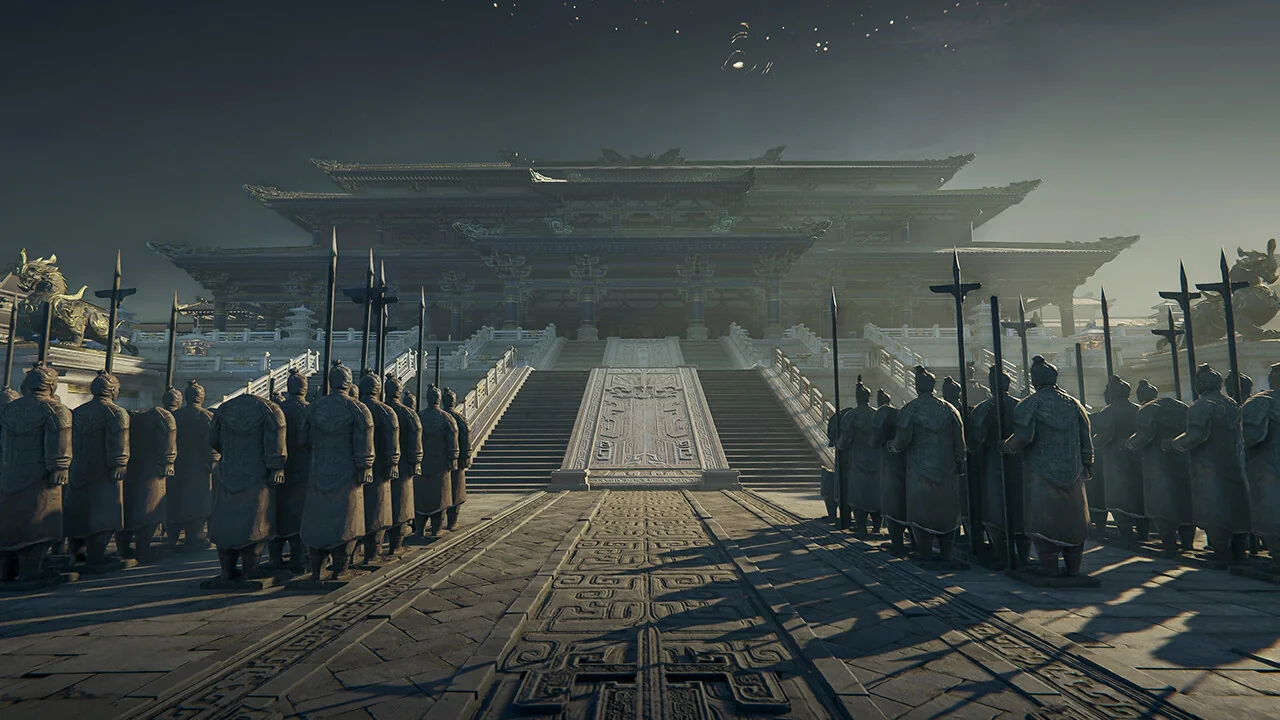
Season 19 introduced The Maelstrom, a shuffle-map format with fragmented boards and Divine Weapon forging — a welcome shake-up for veterans who memorized every Morus rotate. Older zones still sell the wuxia postcard look: stone armies, cherry-blossom courtyards, frozen lakes, and desert outposts that double as sniper lanes for musket players.
Trios, Showdown, and Rift Traversal
Solo BR exists, but Naraka's heartbeat is trios. Resurrection mechanics, assist windows, and coordinated Focus chains make squad voice chat (or disciplined pings) disproportionately valuable. Quick match, ranked, and rotating limited modes keep the playlist from going stale — though solo-queue variance can still feel brutal until you find regular teammates.
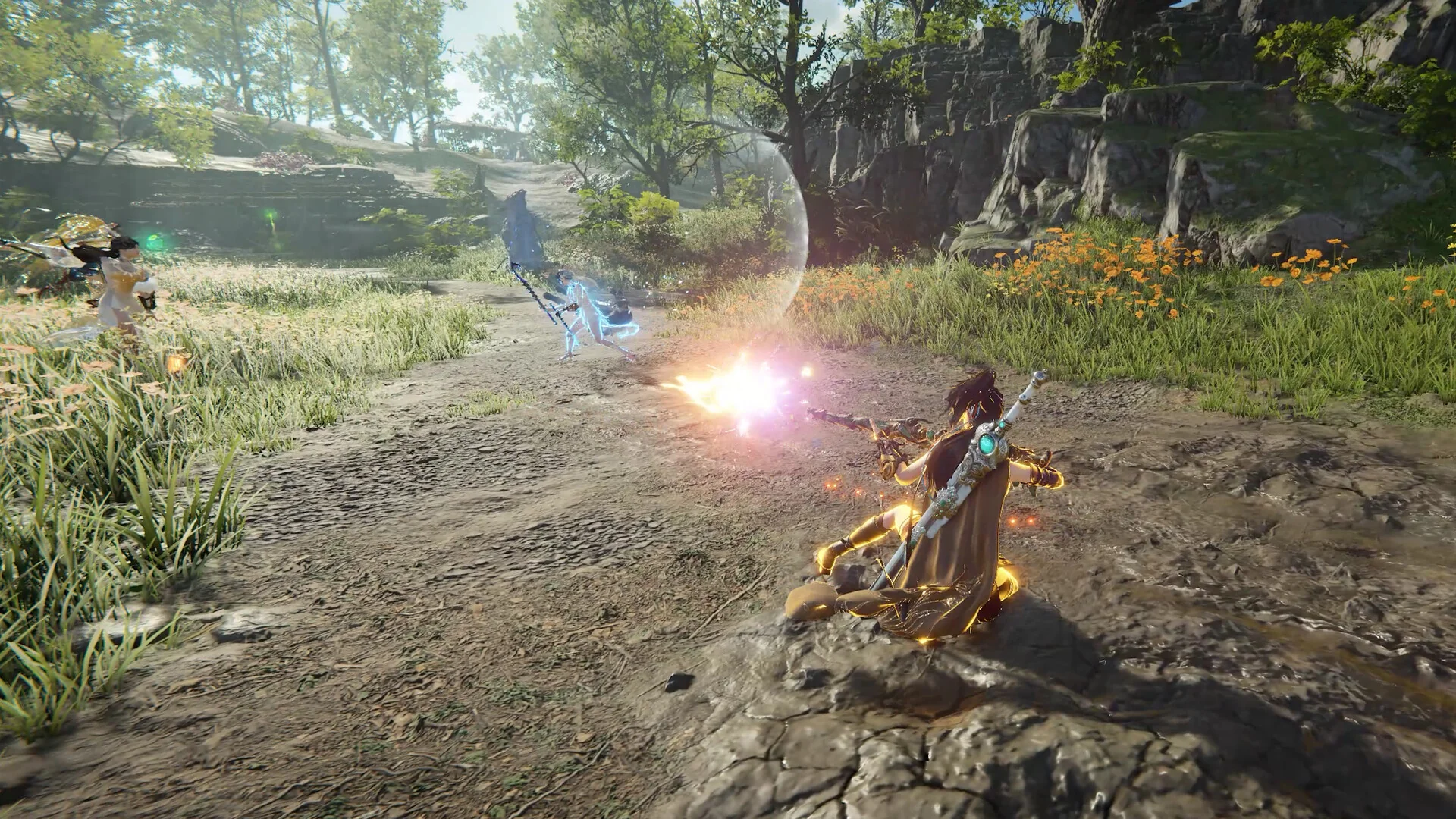
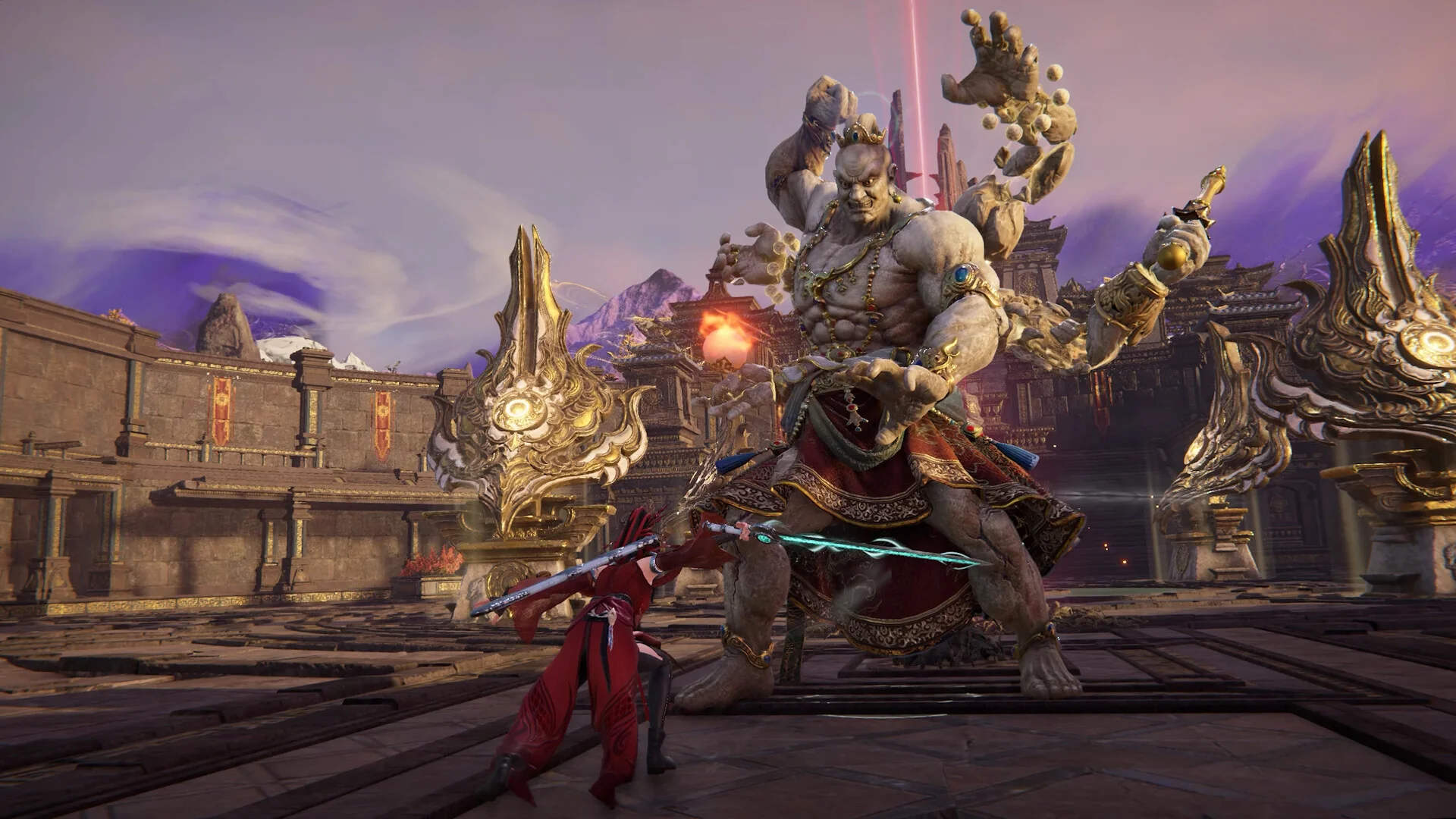
If you bounced off BR friction, 2026's PVE stack is worth a second look. Showdown runs seasonal campaign chapters with boss gauntlets and standardized six-month cadences. Rift Traversal adds tomb-raider style co-op chapters like River Runs Red. These modes will not replace a narrative RPG — story is thin, voice work is serviceable — but they give mechanical veterans a lower-stress place to test builds and heroes.
Free to Play, Expensive to Dress
Naraka's economy is the standard modern F2P bargain: core combat is free, cosmetics are loud, and seasonal passes chase engagement without selling direct power. Gold, silk, and event currencies fund outfits, weapon skins, emotes, and face-sculpt imports — the customization depth is genuinely impressive, bordering on uncanny when the community imports pop-culture likenesses.
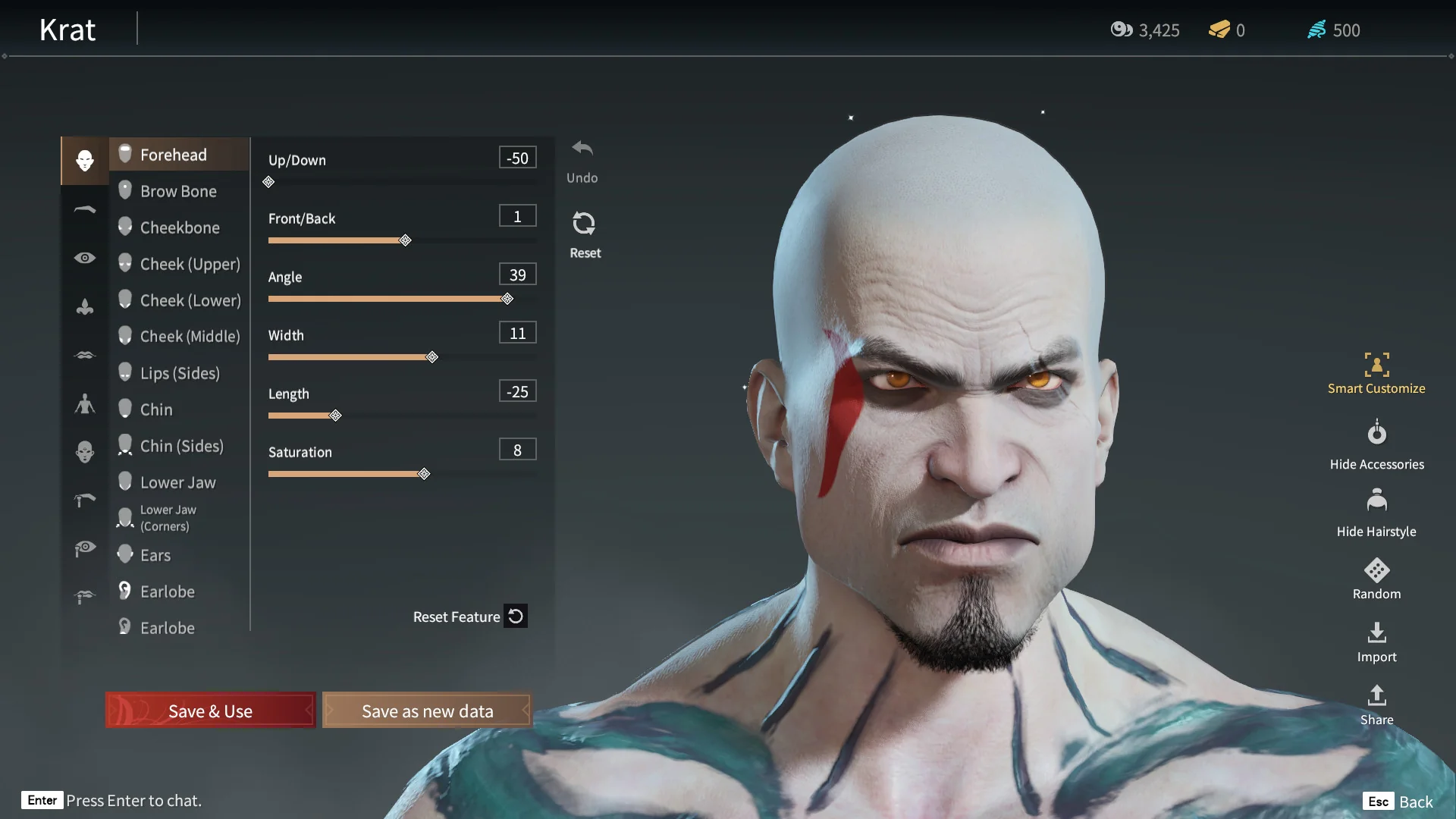
We did not feel pressured to pay to compete in ranked trios. The friction is FOMO and UI noise, not stat bundles. If you hate battle passes on principle, you can still play the full combat sandbox; if you love fashion-hunting, Naraka will happily sell you elaborate crossover skins and weapon trails for years.
Wuxia Spectacle on PC
Naraka's art direction sells Eastern fantasy without looking like a mobile port. Armor sets range from historical lamellar to mecha crossovers, but the environments ground the spectacle — misty bamboo, frozen lakes, star-dome ruins, and bioluminescent caverns all photograph like wuxia concept art come alive. Ultimate effects — Vajra giants, bronze mechs, water avatars — are loud, readable, and streamer-friendly without obscuring hitboxes entirely.
Audio matches the scale: weapon clashes are sharp, ultimate callouts cut through teamfight noise, and map ambience shifts from temple bells to desert wind convincingly. English voice acting is fine; Chinese VO remains the reference track for tonal drama. Neither will carry a story you are here for, but both sell the fantasy once blades are out.
PC Performance and Anti-Cheat Reality
Naraka on PC is mid-demanding UE fare: not a path tracer, but sixty players, particle-heavy ultimates, and shuffle-map streaming still stress mid-range GPUs in final circles. We re-tested on the June 2026 patch line with DLSS Quality enabled at 1440p.
PC notes at a glance (RTX 4070, Ryzen 7 7700, 32 GB RAM, 1440p, DLSS Quality)
Frame rate: High settings averaged high 70s–90 fps in trios BR; dense final-circle ultimates and The Maelstrom shard loads dip into the mid-50s.
1080p / budget GPUs: GTX 1660 Super class hardware can hold 60 fps on Medium with DLSS; expect bigger dips in 60-player endgames.
Loading: NVMe SSD recommended; first-session shader compilation still stutters for the opening hour.
Anti-cheat: NetEase protection is active, but PC ranked still sees periodic cheat and smurf waves — report tools exist; community trust is uneven week to week.
Minimum practical PC spec (1080p / 60 fps, Medium): GTX 1060 6 GB or RX 580, Ryzen 5 2600 / i5-8400, 16 GB RAM, SSD. Recommended PC spec (1440p / High): RTX 3060 Ti or RX 6700 XT, Ryzen 5 5600 / i5-12400, 16 GB RAM, NVMe SSD. Console ports exist on PS5 and Xbox Series X|S; this review reflects PC specifically.
Who Should Play, Wait, or Skip
Play now (free): Fighting-game and action fans who want readable melee outplays, stable trios who will grind the tutorial, and BR veterans bored of gun-only meta. PVE-curious players should sample Showdown once the basic parry loop clicks.
Try but temper expectations: Pure shooter BR mains, narrative-first players, and solo-queue warriors without patience for smurfs or third parties.
Skip: Anyone who hates stamina management PvP, cannot tolerate live-service shop UI, or needs a cheat-free ranked environment at all times.
Naraka: Bladepoint remains the best argument that battle royale can be about mind games instead of mouse sensitivity — held back by a steep onboarding cliff, uneven PC cheat reporting, and the usual F2P seasonal noise. Install it free, live in the training yard until parries feel automatic, and treat Showdown as the bonus track once trios stop feeling unfair. Start at the Game Hub for Steam and Epic links, then decide whether your wardrobe — not your win rate — needs the battle pass.