Review info: Steam build 1.0.x (June 2026) · PC (Steam app 3167020, RTX 4070 / Ryzen 7 7700) · ~40 hours played · Light spoilers (main-quest framing only)
Read this first: Store links, platforms, and tags live on the Game Hub. This review focuses on whether the Steam PC version is worth your money today.
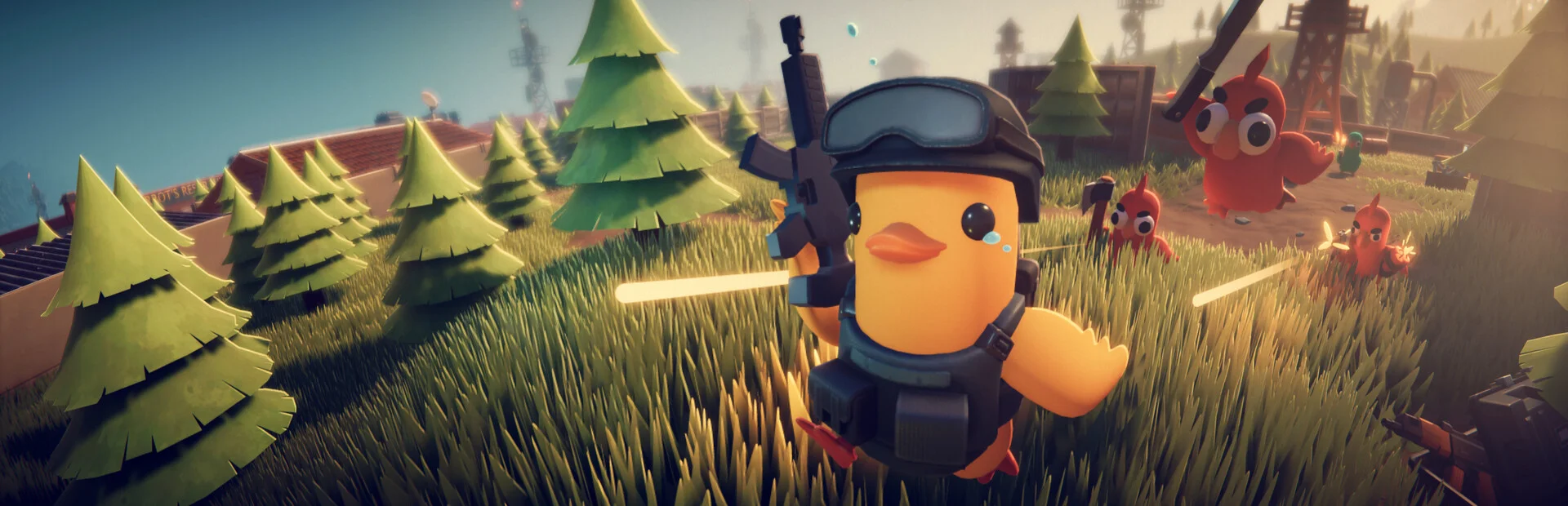
When Escape from Duckov launched in October 2025, the duck jokes sold the trailer — but the numbers tell a different story. Steam peaked above 300,000 concurrent players; Bilibili and Team Soda reported three million units sold within weeks. That is not meme-traffic alone. Under the cartoon aesthetic is a single-player extraction shooter that repackages Tarkov's risk-reward loop for players who will never touch PvP: gear up, raid hostile maps, extract before the timer runs out, and lose your kit if you die. The question in mid-2026 is not whether Duckov is a gag game. It obviously is not. The question is whether you are the kind of player who will enjoy a 40-hour grind with item-loss setbacks, or whether the duck wrapper will pull you in before the repetition pushes you out.
Ducks, Bilibili, and a Real Extraction Shooter
Team Soda is an internal studio at Bilibili, based in China. Escape from Duckov is their premium PC pivot — built in Unity, published globally on October 16, 2025, and sold as a one-time purchase with no microtransactions. The title started as an internal codename; the duck protagonist began as a sketch that the team liked enough to keep. Western players arriving from Escape from Tarkov memes should reset expectations: Duckov is PvE-only, top-down, and quest-driven rather than a hardcore realism sim.
We tested on Steam (app 3167020) with a Ryzen 7 7700, 32 GB RAM, and an RTX 4070 at 1440p. Copy was self-purchased; no review code was provided by the publisher. Premium pricing holds at $17.99 USD on Steam — no season pass, no cosmetic shop, no premium currency. Steam Workshop support is live for mods (including community co-op experiments), but this review covers the base single-player campaign. Full store links: Game Hub.
Extract, Lose, Upgrade, Repeat
Duckov's daily rhythm is the extraction genre distilled for solo play: leave your hideout → scavenge containers and enemies → manage weight and ammo → reach an extract point before time runs out → sell loot and upgrade your base. Death is costly: most of what you carry stays on your corpse until you recover it — if you recover it at all. That tension is the point. Team Soda did not sand down the genre's signature sting; they removed the human griefer who would shoot you in the back while you were already bleeding out.
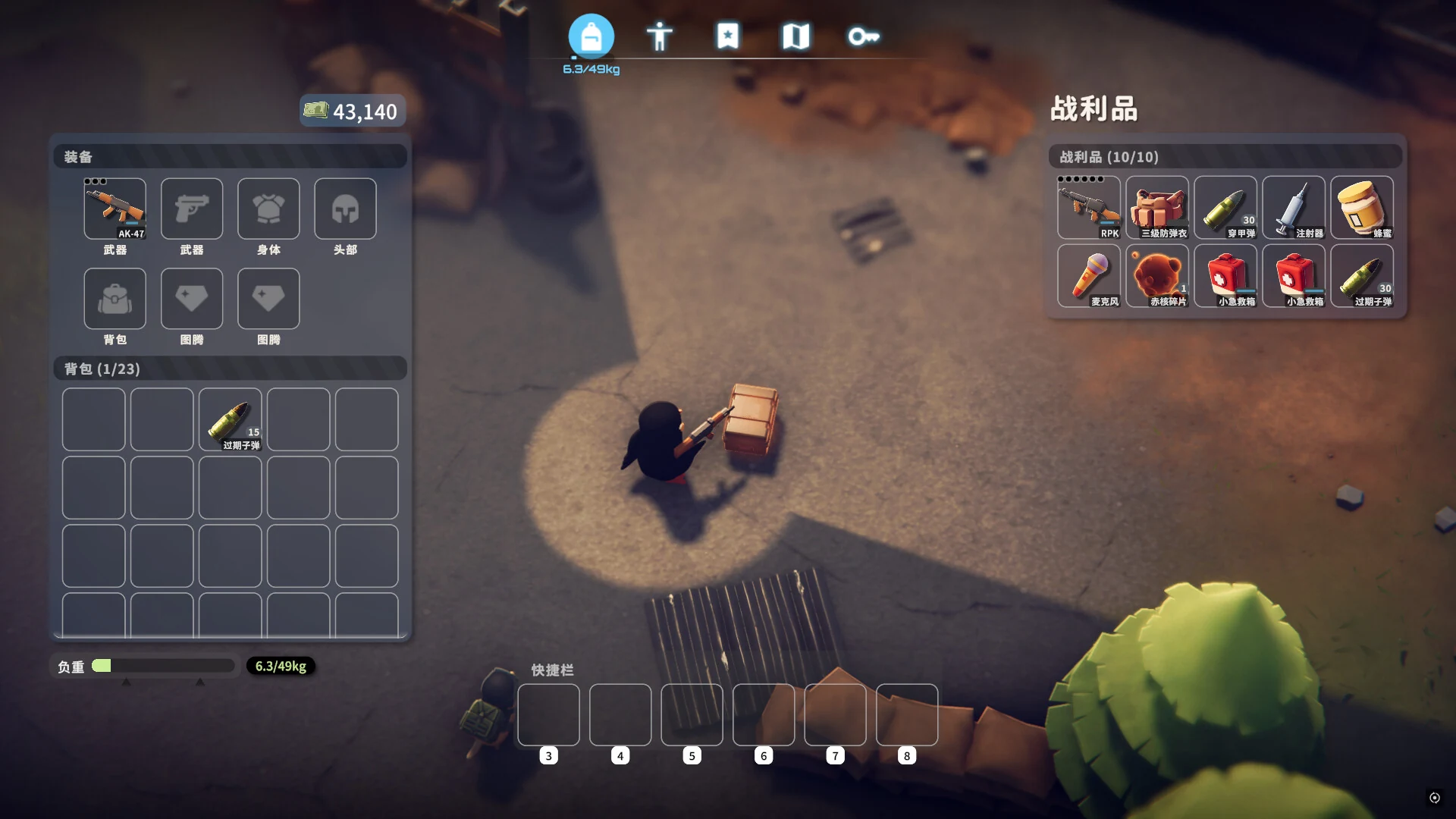
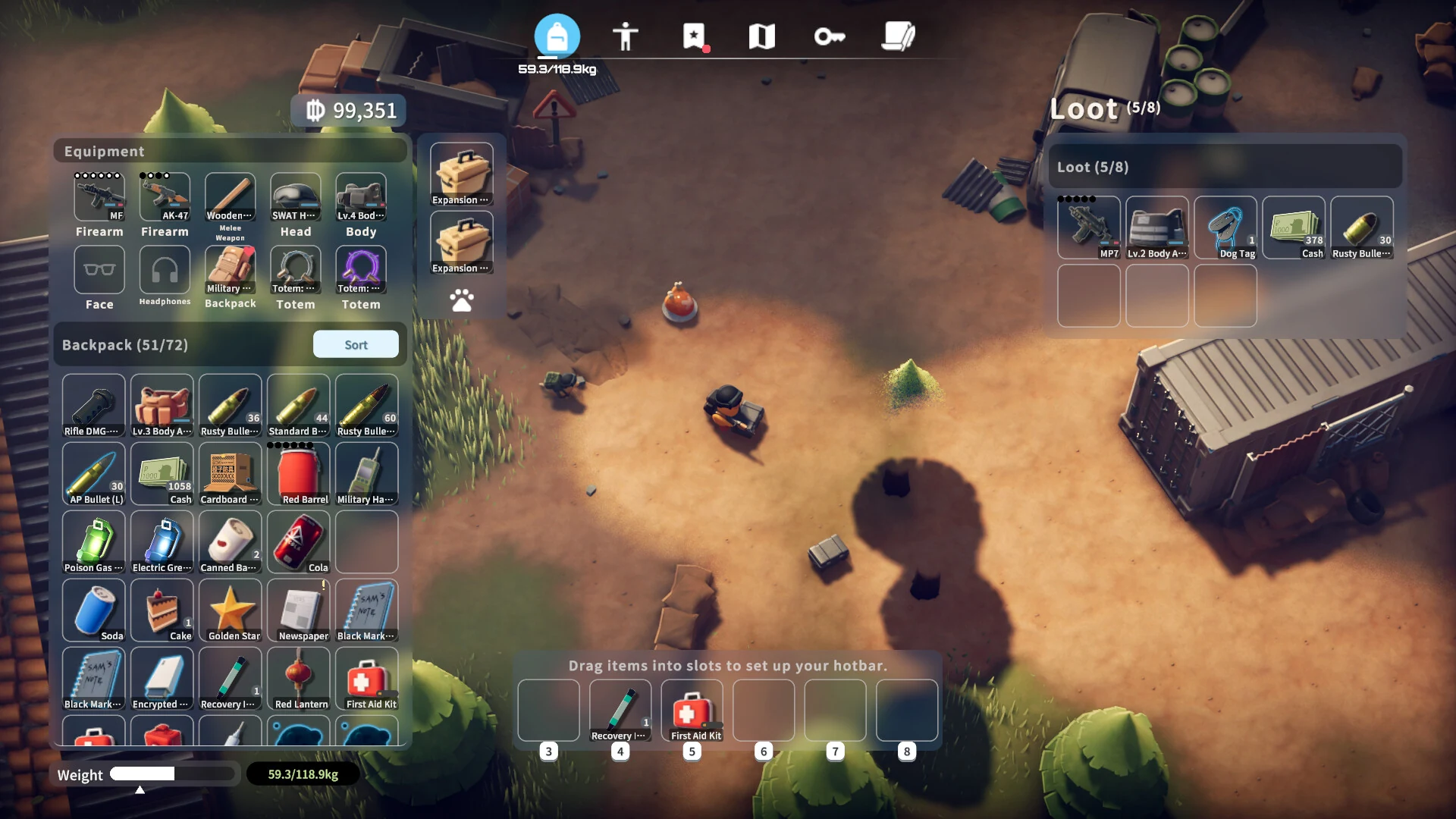
The safe-pocket companion is Duckov's smartest quality-of-life concession. You can stash a handful of high-value finds on your tiny partner so a bad firefight does not zero out an entire evening. It does not trivialize death — bulk loot, weapons, and armor still drop — but it prevents the pure despair spiral that drives many players away from extraction games entirely. Be honest with yourself: if losing an hour of progress to RNG still ruins your night, Duckov will test that boundary repeatedly. If that risk-reward math excites you, the loop is among the best single-player implementations of the formula we have played.
Top-Down Tarkov With a Sight Cone
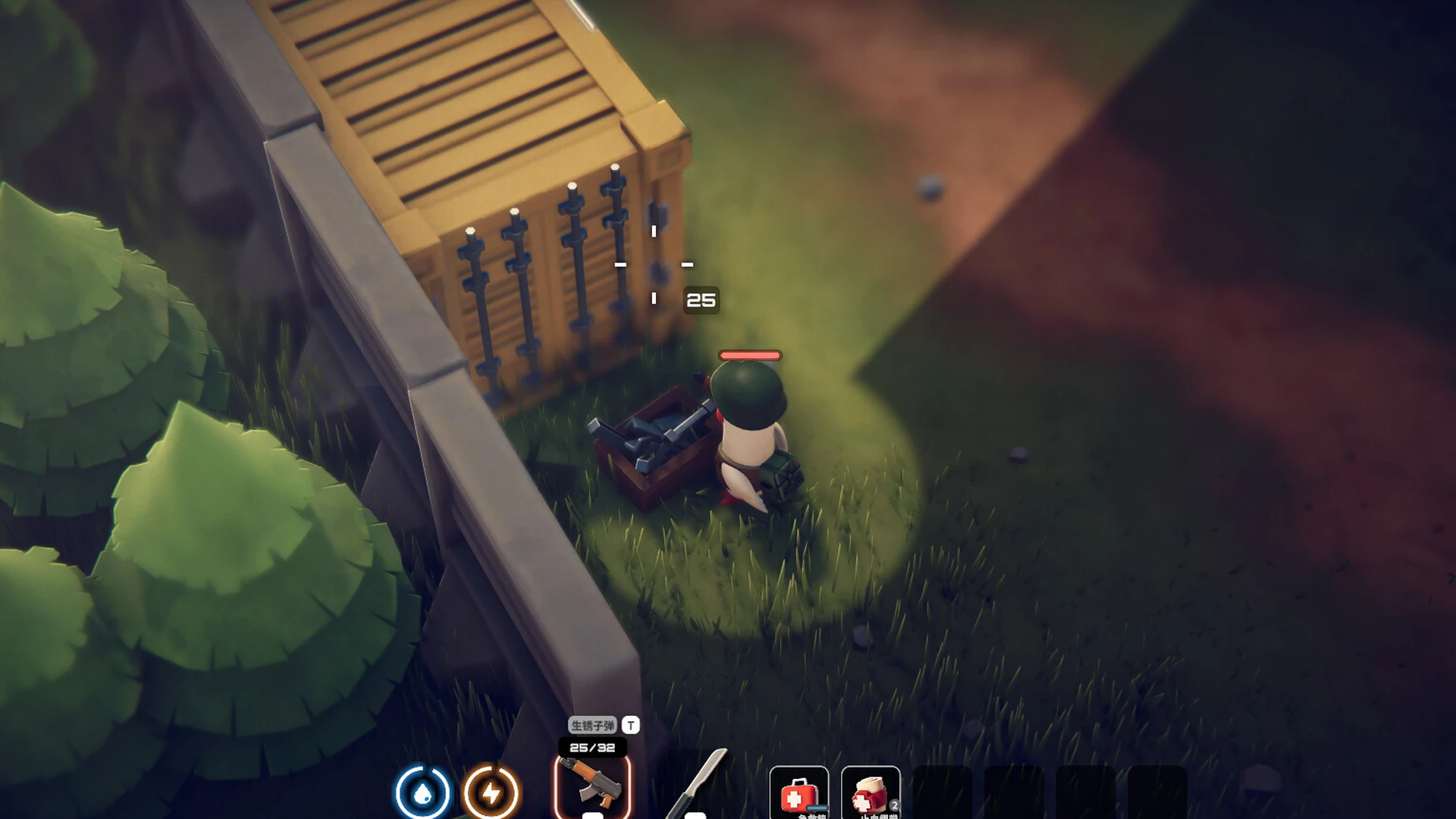
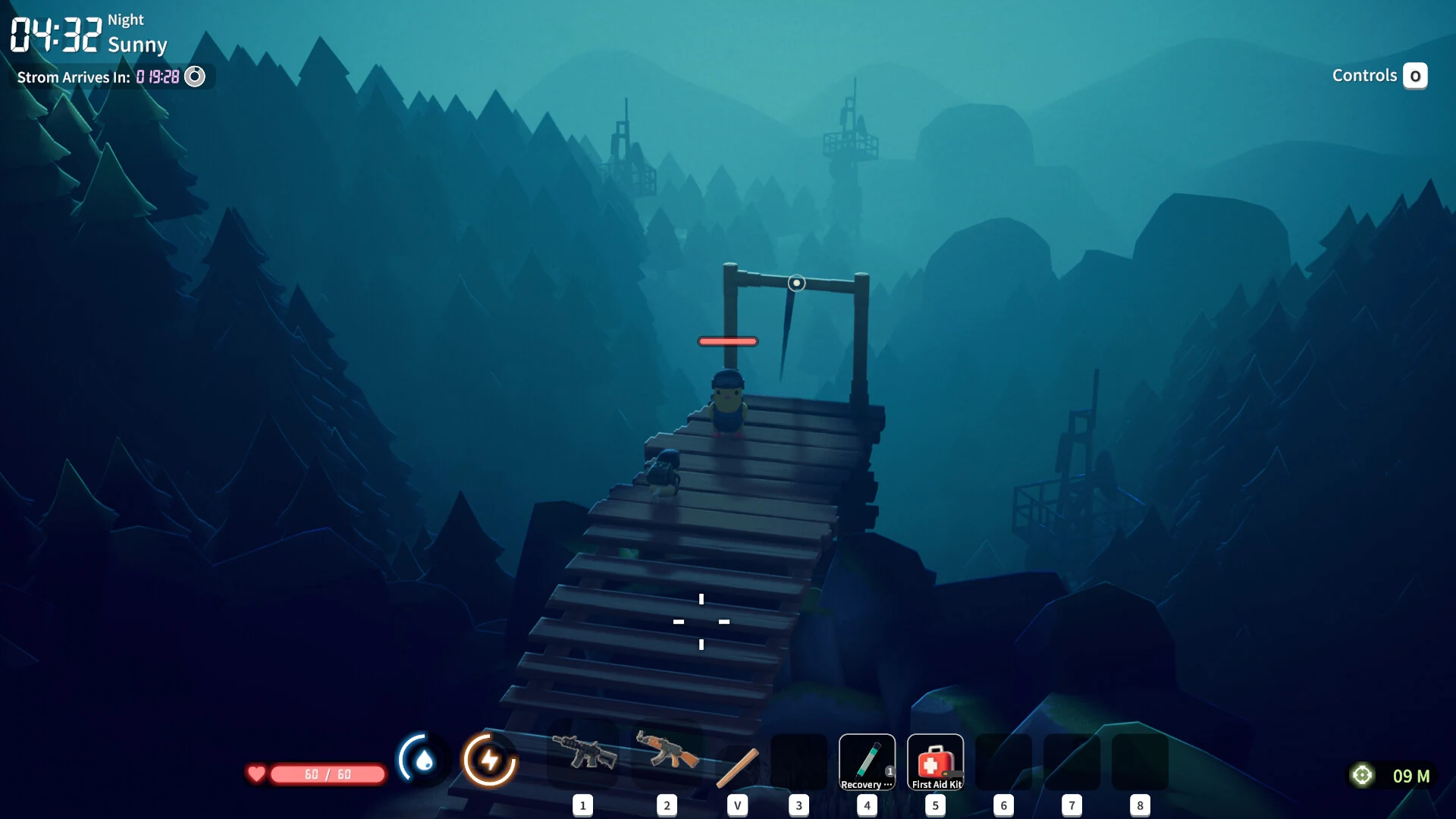
Combat plays from a top-down perspective with a limited forward vision cone. You see clearly in front of your duck; flanks and rear approaches stay hidden until they are dangerously close. Enemies use cover, rush during reload windows, and punish careless sprinting across open ground. Gunplay is meatier than the art style suggests — recoil, ammo types, and weapon handling all matter, and many contemporary first-person shooters offer less readable feedback than this "silly" duck game.
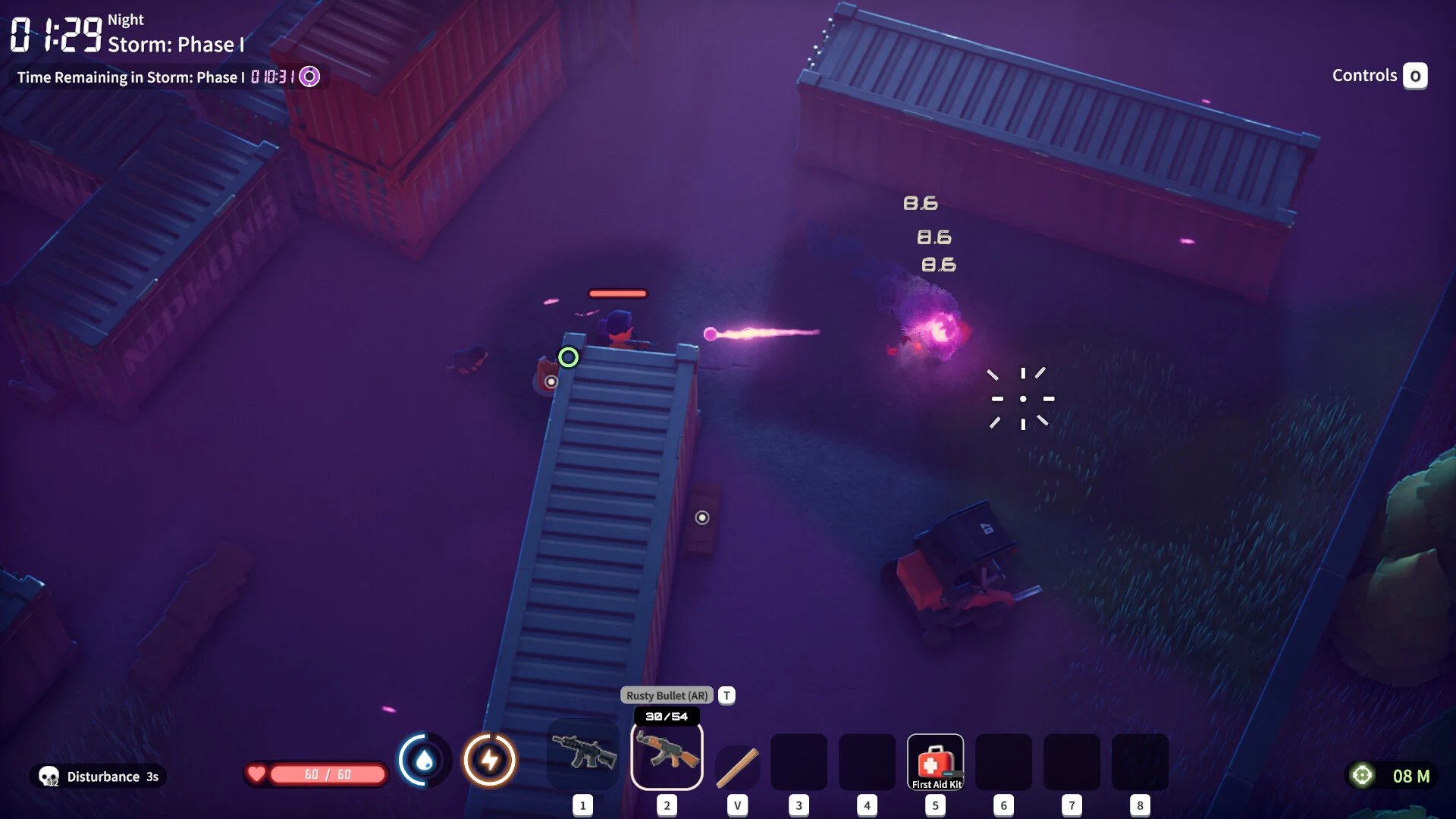
Stealth is viable early; mid-game gear and skill unlocks push you toward louder, faster clears if you want efficiency. Difficulty presets and a custom slider let you tune enemy damage, loot abundance, and death penalties — useful if you want the extraction fantasy without hardcore item loss. Compared to first-person extraction shooters, Duckov feels more arcade in moment-to-moment aim, but the pre-fight preparation and post-fight inventory Tetris are authentically genre-core.
Your Bunker Is Half the Game
Between raids, your hideout is a second game. Workbenches, storage racks, crafting stations, and vendor NPCs turn scavenged junk into upgraded weapons, medical supplies, and base facilities. Quest givers in the bunker assign objectives that gradually introduce new map regions, crafting recipes, and systems — a gentler onboarding ramp than pure sandbox extraction titles offer.
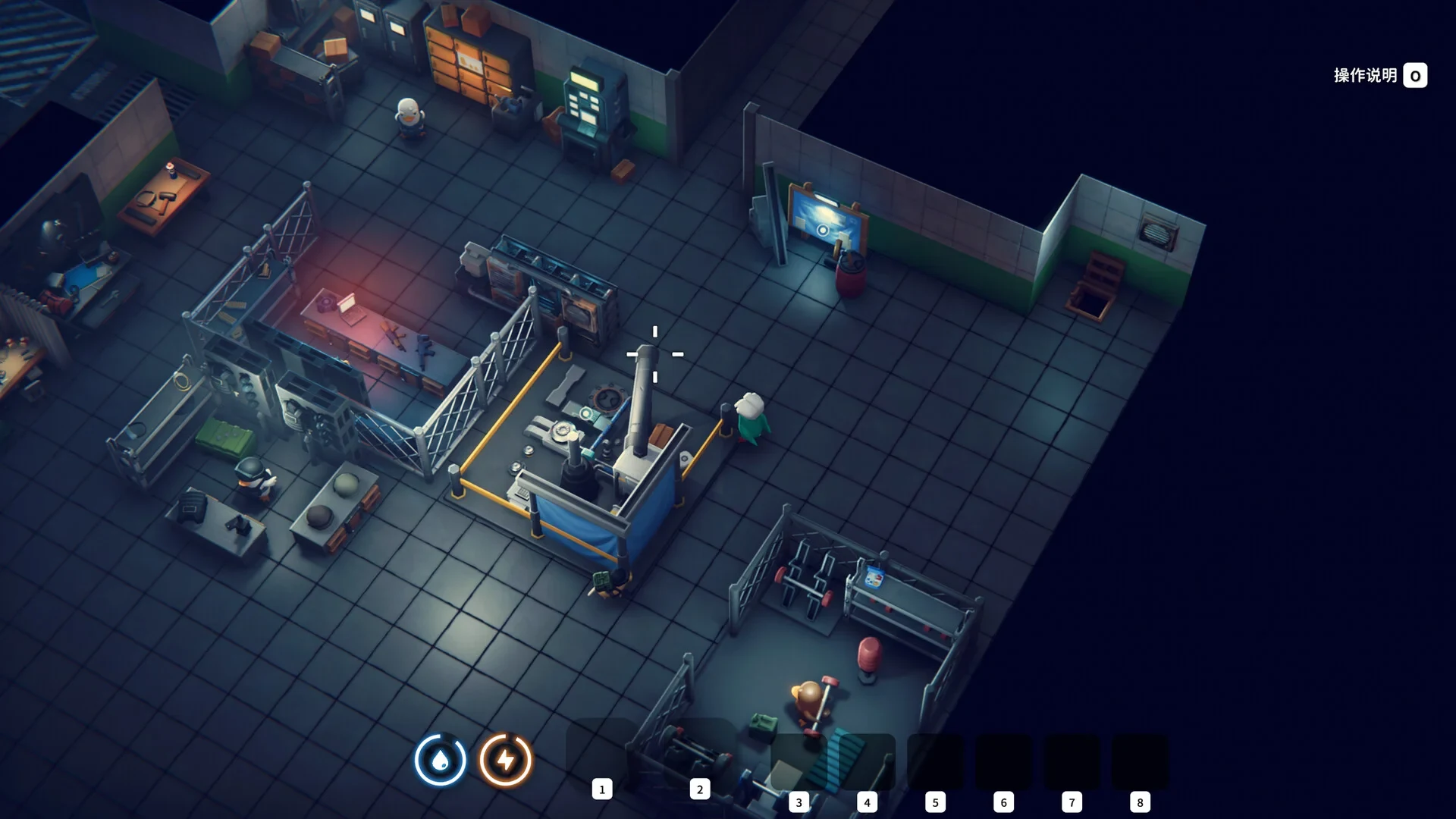
Over 50 weapons span from rusty pipes to fully modded rifles. Skill trees split ranged, melee, and character attributes; blueprints scattered across maps unlock new craftable gear. The mod bench is where average finds become raid-defining loadouts — scopes, grips, magazines, and caliber swaps that change how you approach each map.
Steam Workshop mods extend longevity — community co-op packs and quality-of-life tweaks are popular — but the retail single-player campaign already justifies dozens of hours before you touch addons. Treat Workshop as bonus content, not a requirement.
Silly Ducks, Serious Loop
The macro plot is straightforward without being deep: you wake in Duckov, a cartoon world shaped like a cracking egg, and must scavenge enough resources to build a rocket and escape before the planet collapses. We will not spoil late-chapter twists or the ending beat, but the framing gives your raids a purpose beyond infinite looting. Tone stays light — muscular gym ducks, protein-obsessed NPCs, and quest text that winks at its own absurdity — yet the game never feels like a one-hour joke mod.
Narrative delivery is quest-log functional. Charming characters and occasional lore drops reward attention, but do not expect Disco Elysium-level writing. Duckov sells systems and atmosphere, not dialogue trees. If you need story to justify each raid, look elsewhere. If you need a reason to care about the next weapon blueprint, the rocket escape arc and NPC upgrade chains carry enough momentum through the mid-game slump.
Cartoon Shell, Survival Core
Visually, Duckov commits to a bright, chunky cartoon style that belies the systems underneath. Five large maps rotate loot tables, enemy placements, and weather states so repeat runs are not identical — though mid-game familiarity still sets in before the endgame rocket arc fully pays off. Environmental readability is strong: cover, extract zones, and container types are easy to parse even during hectic firefights.
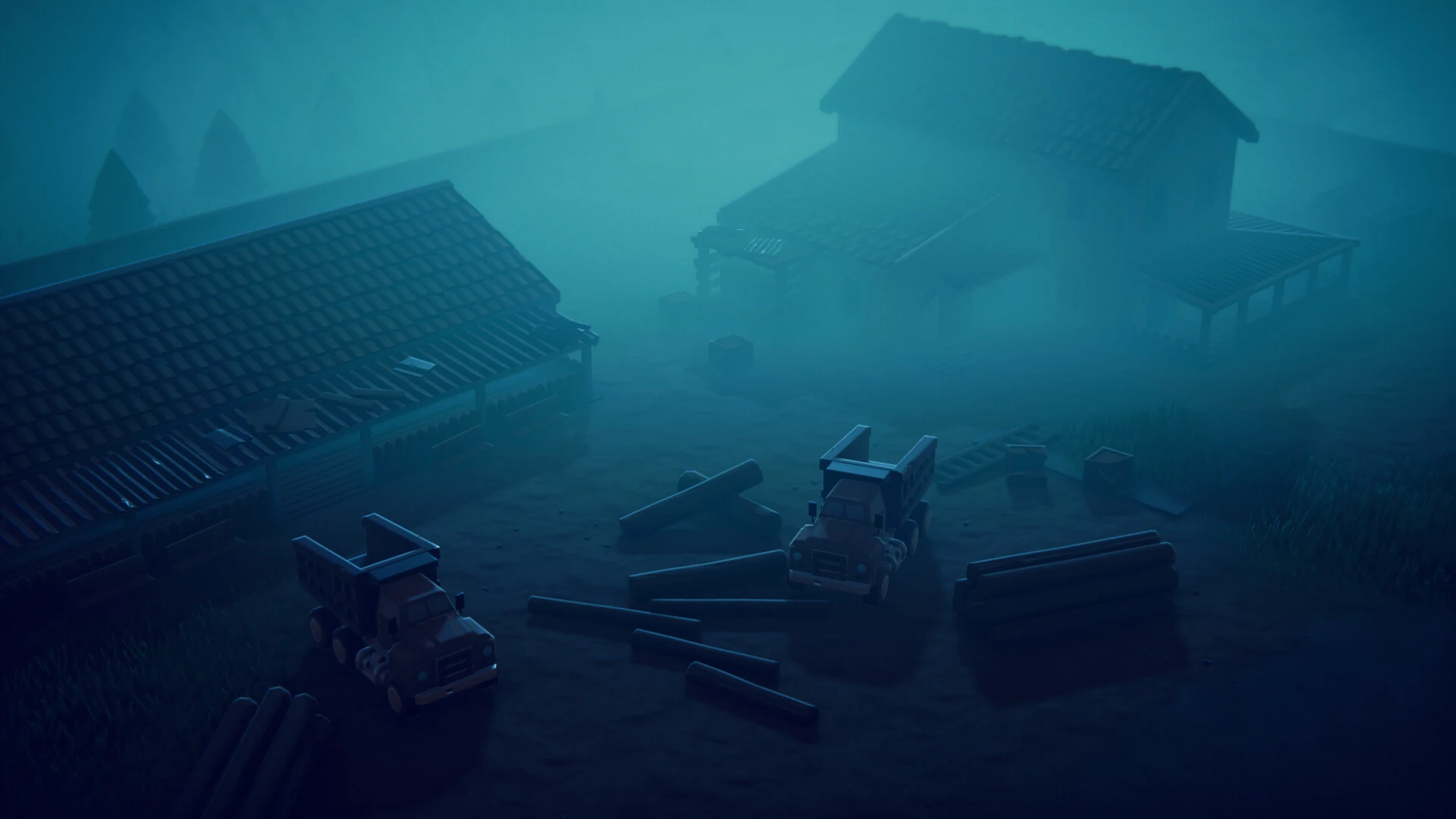
Audio splits cleanly between hideout comfort and field tension. The bunker runs on relaxed lounge instrumentals that make inventory sorting feel almost cozy; raids lean on sharper SFX and sparse music that spikes during contact. Neither soundtrack will top your year-end list, but the contrast reinforces the loop psychologically — home is safe, outside is not. Voice work is minimal; barks and UI chirps do most of the talking.
Steam PC Performance
Unity on PC is well behaved here. We re-tested in June 2026 after several post-launch patches on our RTX 4070 / Ryzen 7 7700 rig at 1440p.
Steam PC at a glance
Frame rate: High settings at 1440p averaged 90–120 fps in hideout and 70–90 fps in dense outdoor raids; 1% lows stayed above 55 fps on our test rig.
1080p / budget GPUs: GTX 1660 Super and RTX 3060-class hardware should hold 60 fps on Medium — Duckov is not a ray-tracing showcase.
Loading: NVMe SSD recommended; map loads typically under 10 seconds. HDD installs work but add noticeable raid startup delay.
Stability: No crash-to-desktop in 40 hours post-patches; occasional pathing oddities and container-interaction hiccups, none progression-breaking.
Input: Mouse-and-keyboard is the intended PC experience; controller support exists and is playable for hideout management-heavy sessions.
Minimum practical spec (1080p / 60 fps, Low–Medium): GTX 1050 Ti or RX 560, Ryzen 5 2600 / i5-8400, 8 GB RAM, 10 GB storage. Steam's listed minimum is slightly lower; treat 16 GB RAM as comfortable for long sessions with browser tabs open.
Recommended spec (1440p / 60+ fps, High): RTX 3060 or RX 6700 XT, Ryzen 5 5600 / i5-12400, 16 GB RAM, SSD. Our RTX 4070 had headroom to spare — this is not a game that demands flagship hardware.
50 Hours, One Price, Infinite Grind
Team Soda advertises 50+ hours for a single playthrough, and our 40-hour mark still had rocket-construction milestones and skill-tree branches unfinished. At $17.99 USD — often discounted on Steam seasonal sales — the hourly value is excellent even if you bail at hour twenty. There is no battle pass, no energy timer, and no premium shop. Completionists chasing 100% maps, fishing side content, and Workshop mods can push well past eighty hours based on community reports.
The flip side is grind fatigue. Item-loss setbacks, blueprint RNG, and repeated map routing can stall momentum for evenings at a time — a design feature for extraction fans, a design flaw for everyone else. Difficulty tuning and the safe-pocket companion mitigate but do not remove the wall. Know which player you are before checkout.
Who Should Buy, Wait, or Skip
Buy now (full price or modest sale): Extraction-curious players who refuse PvP; survival-crafting fans who want combat-forward raids; anyone who bounced off Tarkov's toxicity but likes the loot fantasy; top-down shooter fans who enjoy Hotline Miami-style readability with RPG persistence.
Wait for a deeper sale: Players sensitive to item-loss frustration; buyers who need strong narrative justification for each session; gamers who dislike inventory micromanagement and base busywork.
Skip: Meme-buyers expecting two hours of duck jokes; narrative-first RPG fans; players who hate repetition more than they love progression; anyone unwilling to lose gear to learn a map.
Escape from Duckov is one of 2025's most surprising PC success stories — not because ducks are inherently funny, but because Team Soda built a complete extraction RPG and wrapped it in packaging that lowered the intimidation barrier. The grind is real, the mid-game sags, and the story will not change your life. The loop, gunplay, and hideout progression absolutely can eat a month of evenings if the genre clicks. Start at the Game Hub for Steam links, then decide whether you are extracting for the meme or staying for the systems — the second group is who this game was built for.