
Review info: Steam Early Access build (June 2026, post–Dark Fog updates) · PC (Steam app 1366540, RTX 4070 / Ryzen 7 7700, 1440p) · ~95 hours played (first star system through multi-planet logistics, Dyson Swarm mid-build, Dark Fog defense) · No spoilers · Self-purchased copy
Read this first: Store links, platforms, and tags live on the Game Hub. This review covers the Steam PC Early Access version as it stands today — not a hypothetical 1.0 release.
When Dyson Sphere Program (戴森球计划) hit Steam Early Access in January 2021, Chinese players already knew Youthcat Studio had something special: a factory sim that starts on one muddy planet and ends with a star wrapped in solar sails. Five years of updates later — interstellar logistics, blueprint paste, mecha upgrades, and the Dark Fog combat layer — Western players asking "is it still worth it?" get a clearer yes than the launch-week hype suggested, with one honest caveat: this is still Early Access, and the game asks for hundreds of hours if you let the belt spaghetti win. The question is not whether Dyson Sphere Program is distinctive — one glance at a Dyson shell under construction answers that — but whether you want Factorio-grade ratio math in full 3D, solo, across procedurally generated star systems.
From Chongqing Prototype to Galactic Factory
Youthcat Studio (重庆 Youthcat) ships through Gamera Game, with parallel availability on WeGame in China. The team entered Early Access on January 20, 2021 (Steam app 1366540) and has kept a steady update cadence — logistics QoL, mecha progression, exploration, and the Rise of the Dark Fog combat expansion — without pivoting to live-service monetization. Western coverage often calls the game "Factorio in space." That shorthand is fair on logistics; it undersells the 3D verticality, the procedural universe, and the endgame goal of actually building a Dyson Sphere around your home star.
We tested on Steam (app 1366540) with a Ryzen 7 7700, 32 GB RAM, and an RTX 4070 at 1440p. Copy was self-purchased; no review code was provided by the publisher. Premium pricing holds at $19.99 USD on Steam Early Access — no microtransactions, no battle pass, no premium currency. English, Simplified Chinese, French, German, and Japanese ship on Steam. Full store links: Game Hub.
If you wanted Satisfactory's first-person exploration fantasy with lighter math, adjust expectations. Dyson Sphere Program is closer to Factorio plus orbital mechanics plus a megastructure victory screen — but with Icarus flight between planets and a starmap that treats light-years as a logistics constraint. Our review focuses on whether that hybrid plays as well as the spreadsheet screenshots promise.
The Hour-One Loop: Mine, Smelt, Research
Your first hour is deliberately humble. You land as Icarus, a mecha engineer with a hand-miner, a backpack, and a tech tree that begins at "pick up iron ore." The core loop locks in fast: extract resources → smelt and assemble on belts → feed research matrices → unlock the next tier of buildings → repeat at larger scale. Wind turbines and mining machines give way to assemblers, sorters, and planetary-scale power grids. Unlike pure top-down factory games, you physically walk the factory floor early on — placing belts tile by tile, watching ore crawl toward your first smelters, feeling the curve of the planet under the build grid.
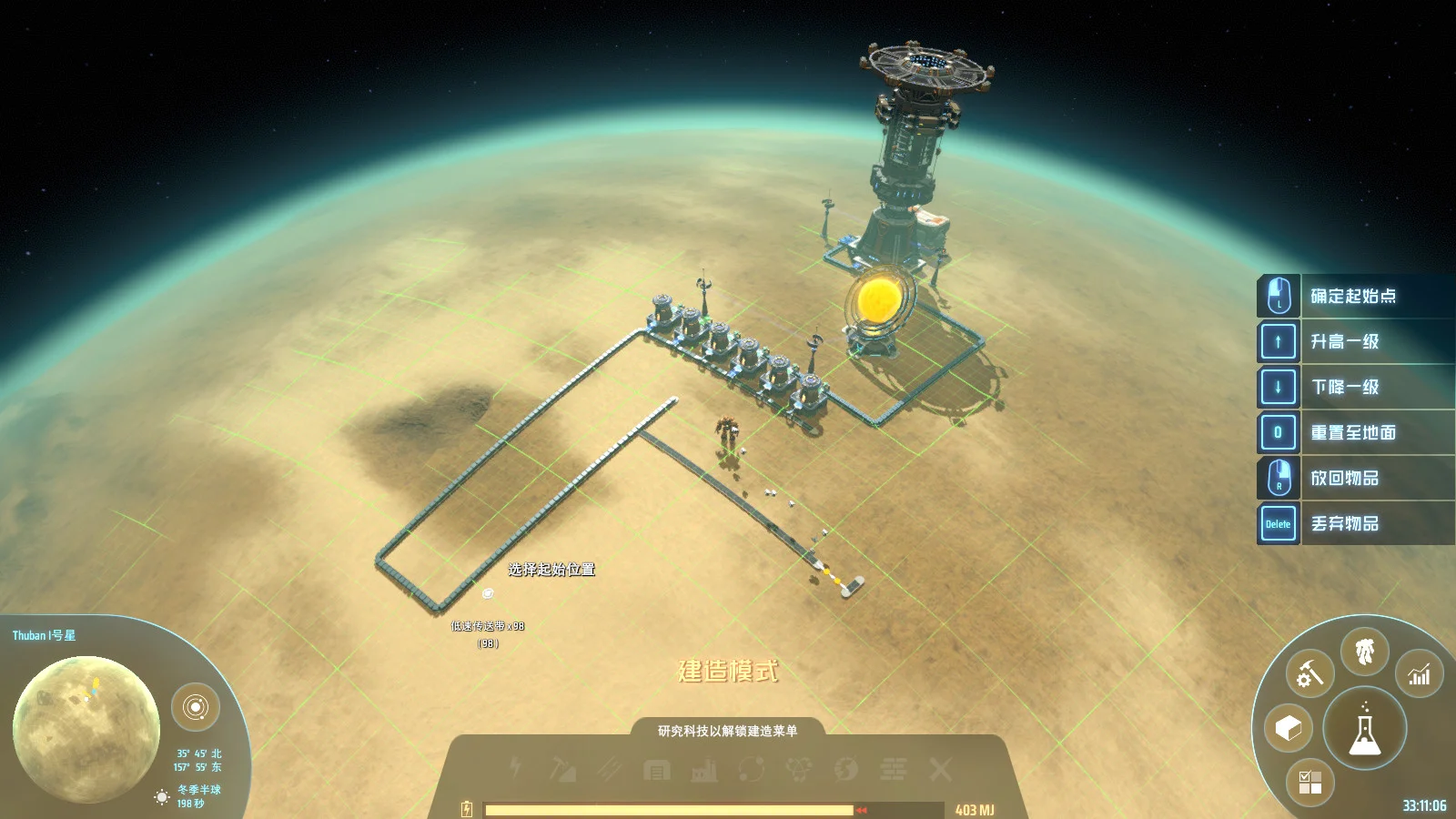
A focused first star-system push — reaching interplanetary logistics and a modest Dyson Swarm — can swallow 40–60 hours for newcomers who enjoy the learning curve. Our save passed 95 hours once we ran multi-planet production, interstellar freight, and a mid-stage shell build while testing Dark Fog defenses. The loop rewards planning: which ore patch feeds which smelter column, when to hand-craft versus belt, and how soon you can stop babysitting research matrices.
Belts, Sorters, and Ratio Anxiety
This is where Factorio veterans feel at home and newcomers feel the wall. Dyson Sphere Program uses stackable belts, programmable sorters, splitters, and priority lanes — the vocabulary of ratio-driven factory design. Sorters can filter by item type, set priorities, and feed dedicated lanes into assemblers that demand precise ingredient counts per minute. Blueprint copy-paste lets you stamp repeatable modules across a continent once you solve the math once.
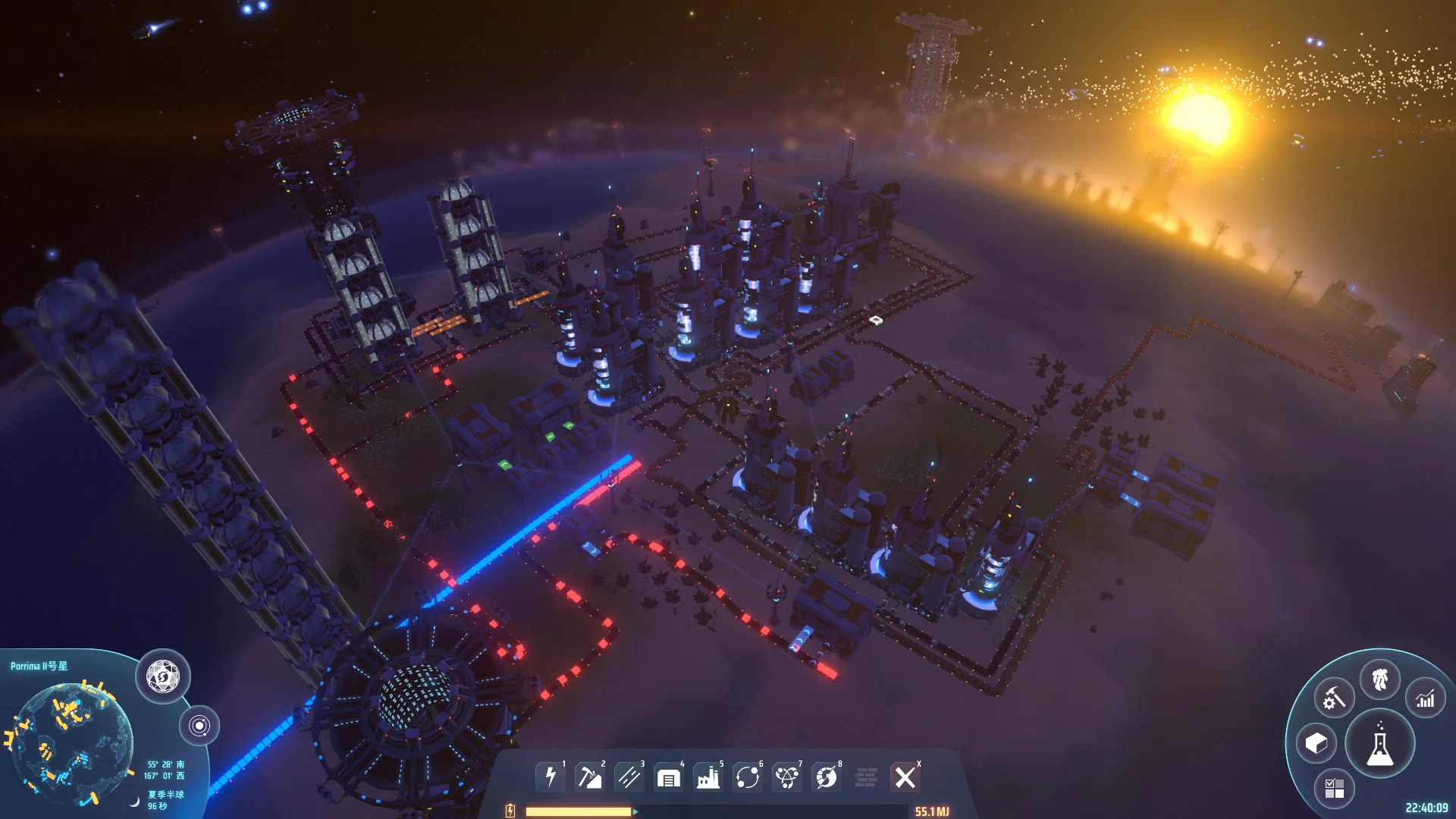
The 3D presentation helps at medium scale: you fly Icarus above a smelting column and see empty lanes immediately. At late scale, the spaghetti risk returns — especially when you forget which hemisphere holds your circuit board sub-factory. You will use external calculators or community ratio sheets; the game assumes that, same as Factorio. What you gain over 2D is spectacle: a working line at night, backlit by a star wearing a golden sail cloud, sells the fantasy better than any spreadsheet.
One Planet, Then a Star Cluster
Your starter planet never has everything. Oil may be absent; titanium lives two systems over; rare veins force you to read the starmap like a procurement document. That constraint is the game's best design lever — it converts "expand the bus" into interstellar supply chain engineering. Planetary logistics stations and orbital collectors feed interstellar logistics stations, which launch transport ships on scheduled routes between stars.
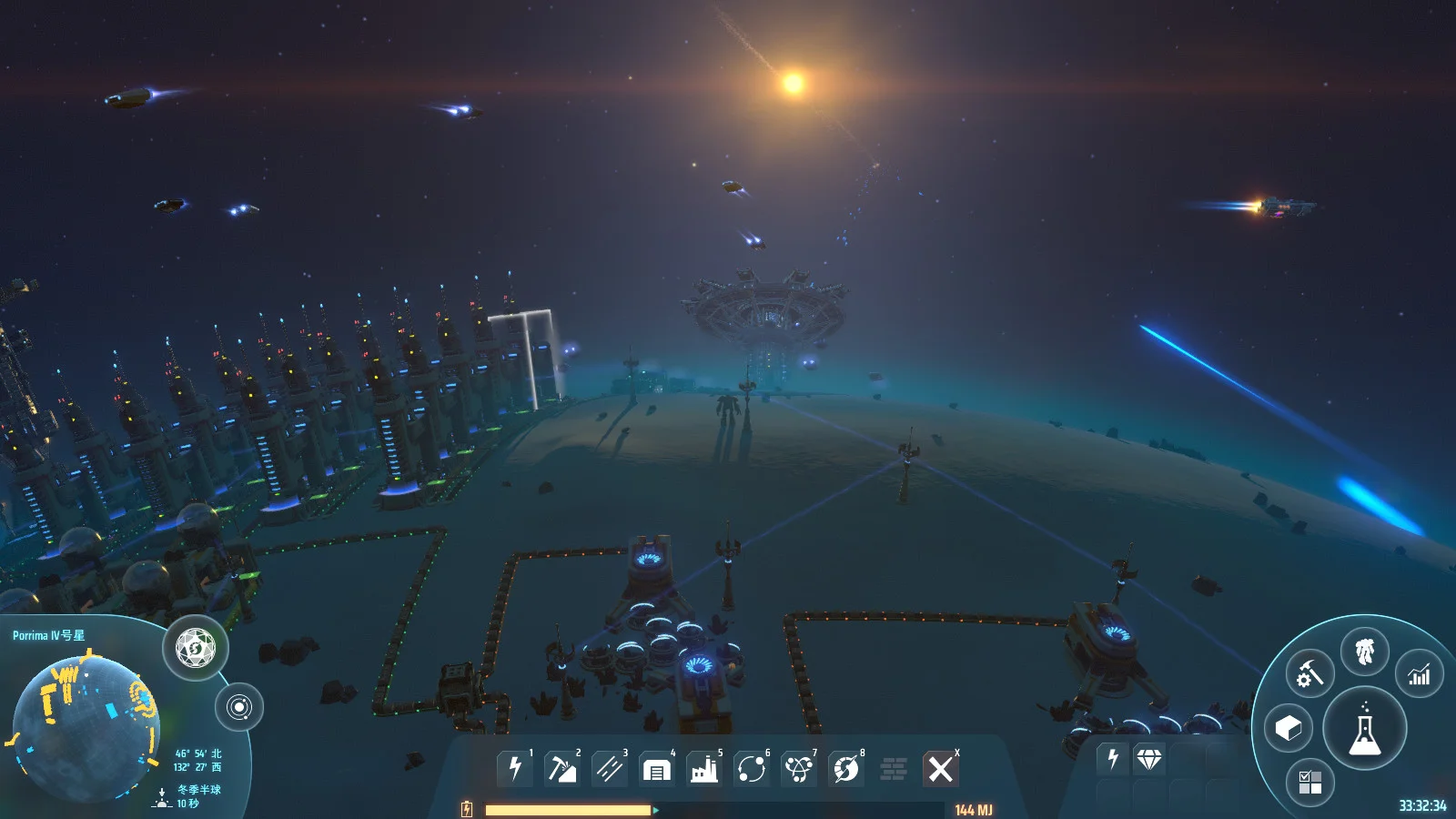
Dedicated factory worlds — one for smelting, one for science, one for rare components — emerge naturally once warp travel unlocks. The game does not hold your hand through that transition; it trusts you to notice your titanium deficit and trace it back to a missing interstellar route.
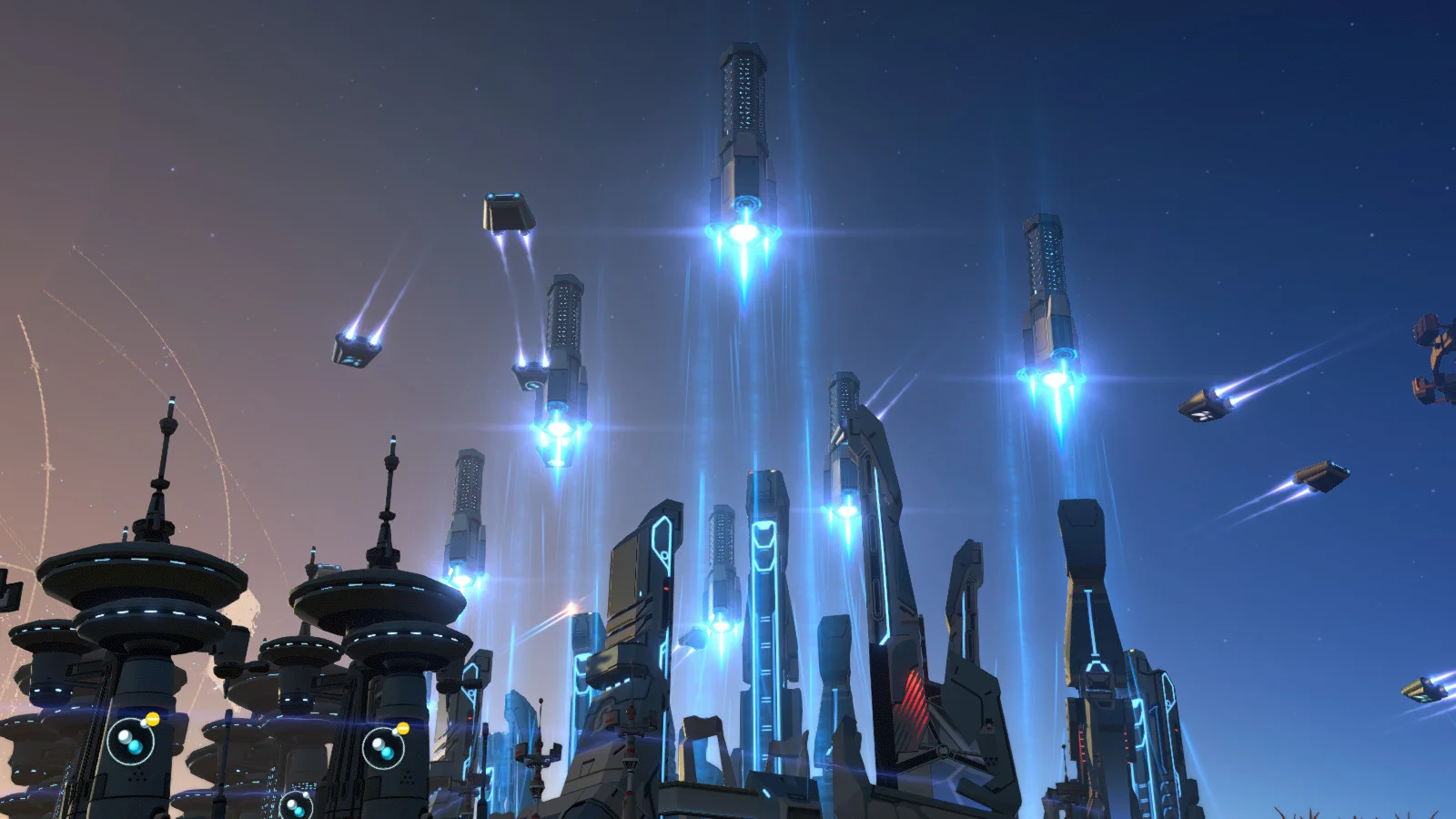
Compared to Satisfactory's planetary pods, DSP's interstellar ships feel more like freight timetables — less whimsical, more operations research. Compared to Factorio's space age mods, the integration is cleaner because star-hopping is the main campaign, not an optional mod layer.
Building the Dyson Sphere
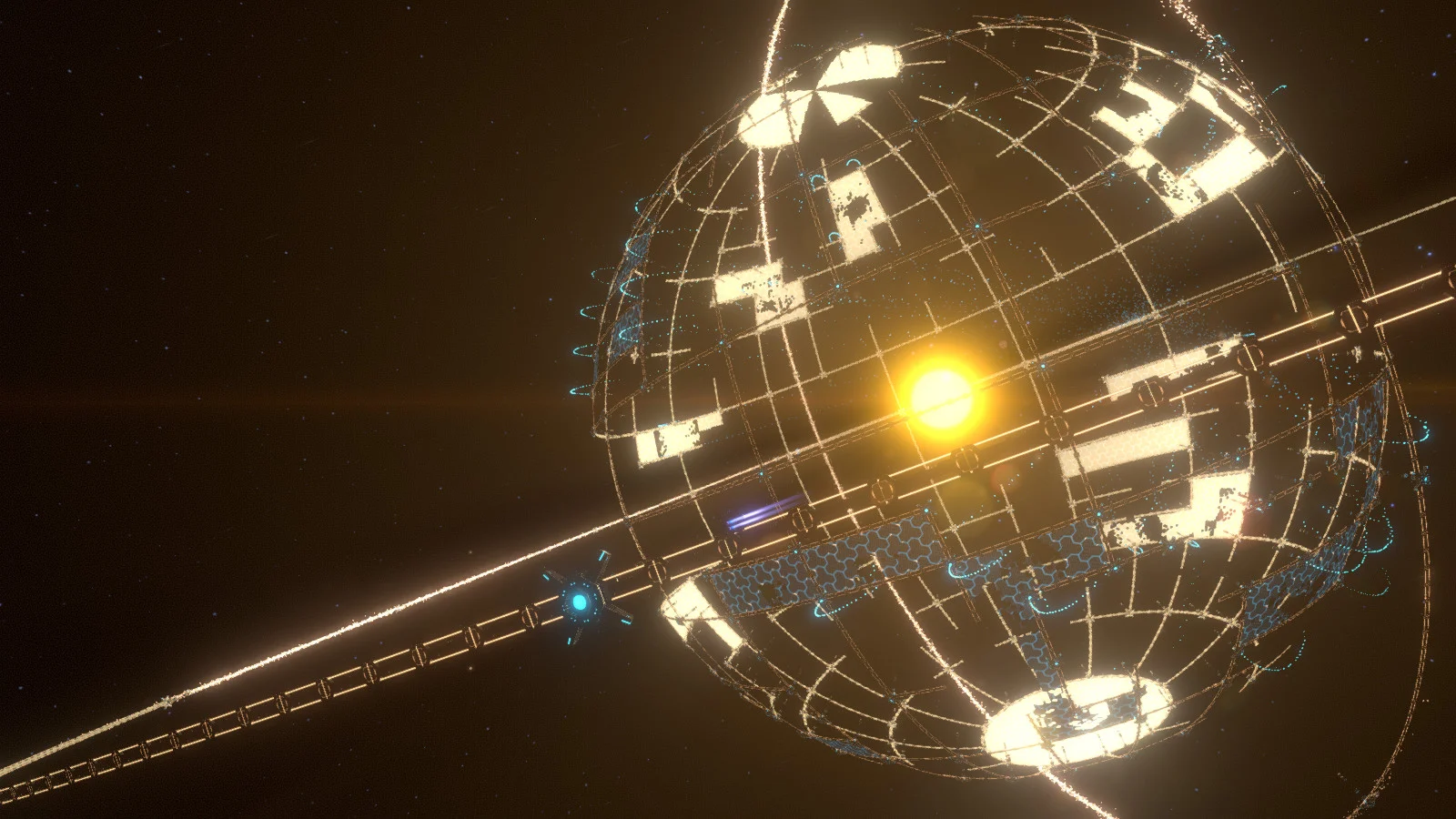
The title is not metaphor. Research milestones unlock solar sails, em-rail ejectors, Dyson sphere nodes, and eventually shell segments that wrap your star in collecting surfaces. The in-game energy statistic becomes your progress bar — watching generated power climb from kilowatts to gigawatts to "most of a star" is the payoff for every belt you ever placed.
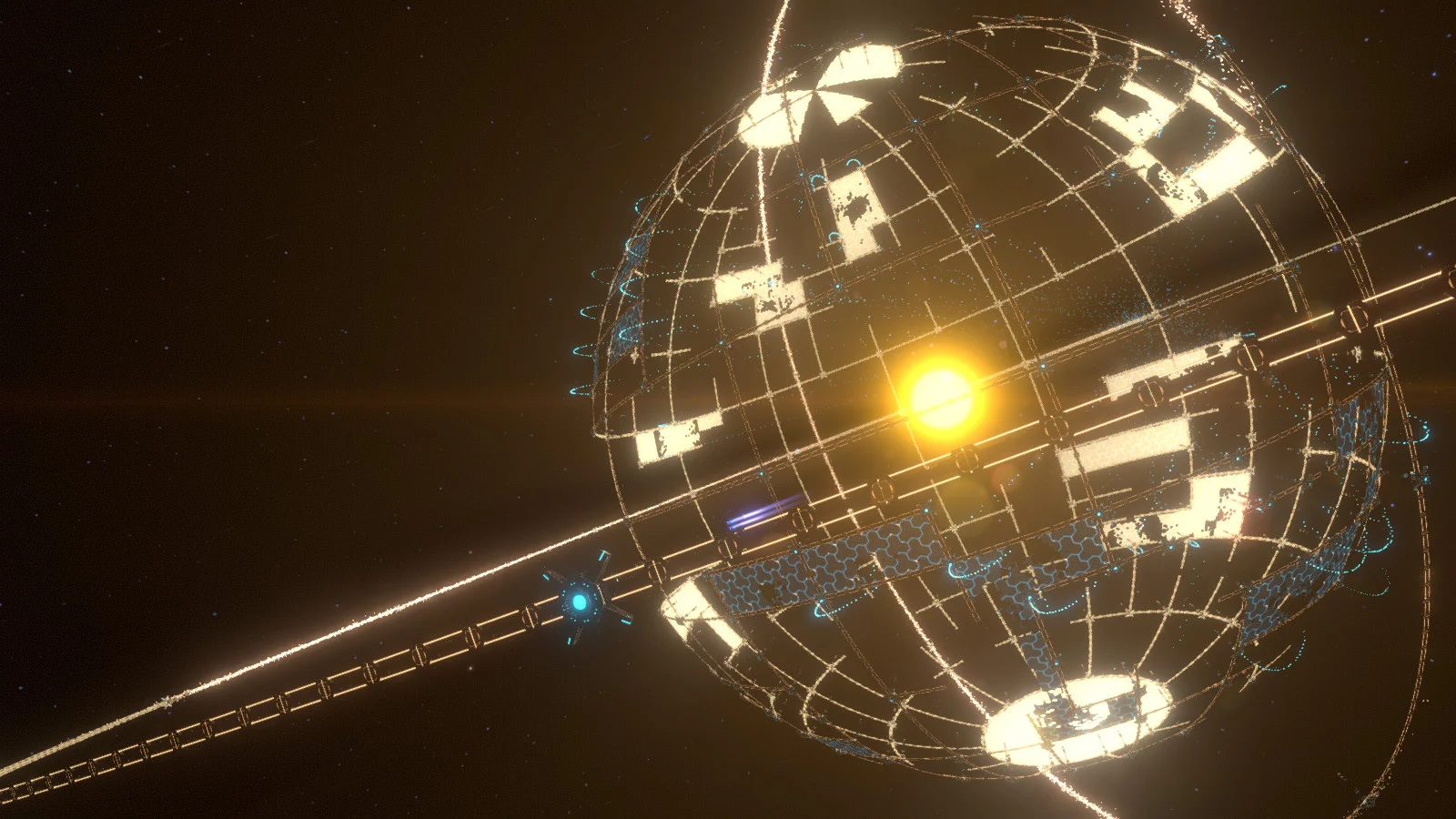
Ray receivers on planets beam that stellar output back to your factory floors, closing the loop between megastructure and smelter row. We reached a mid-stage shell with sails already saturating our home star; full completion remains a long-tail project even after 95 hours — which is exactly what factory die-hards want from an endgame.
Galaxy Map and Exploration
The starmap is not decoration. Procedurally generated clusters spread resource types across stars — hydrogen-rich giants, silicon deserts, oil-free worlds — and the UI exposes orbital periods, vein counts, and warp range limits before you commit a logistics route. Exploration is functional: you fly Icarus between bodies, chart routes, and decide whether a six-hour warp for titanium is worth the opportunity cost of not expanding production at home.
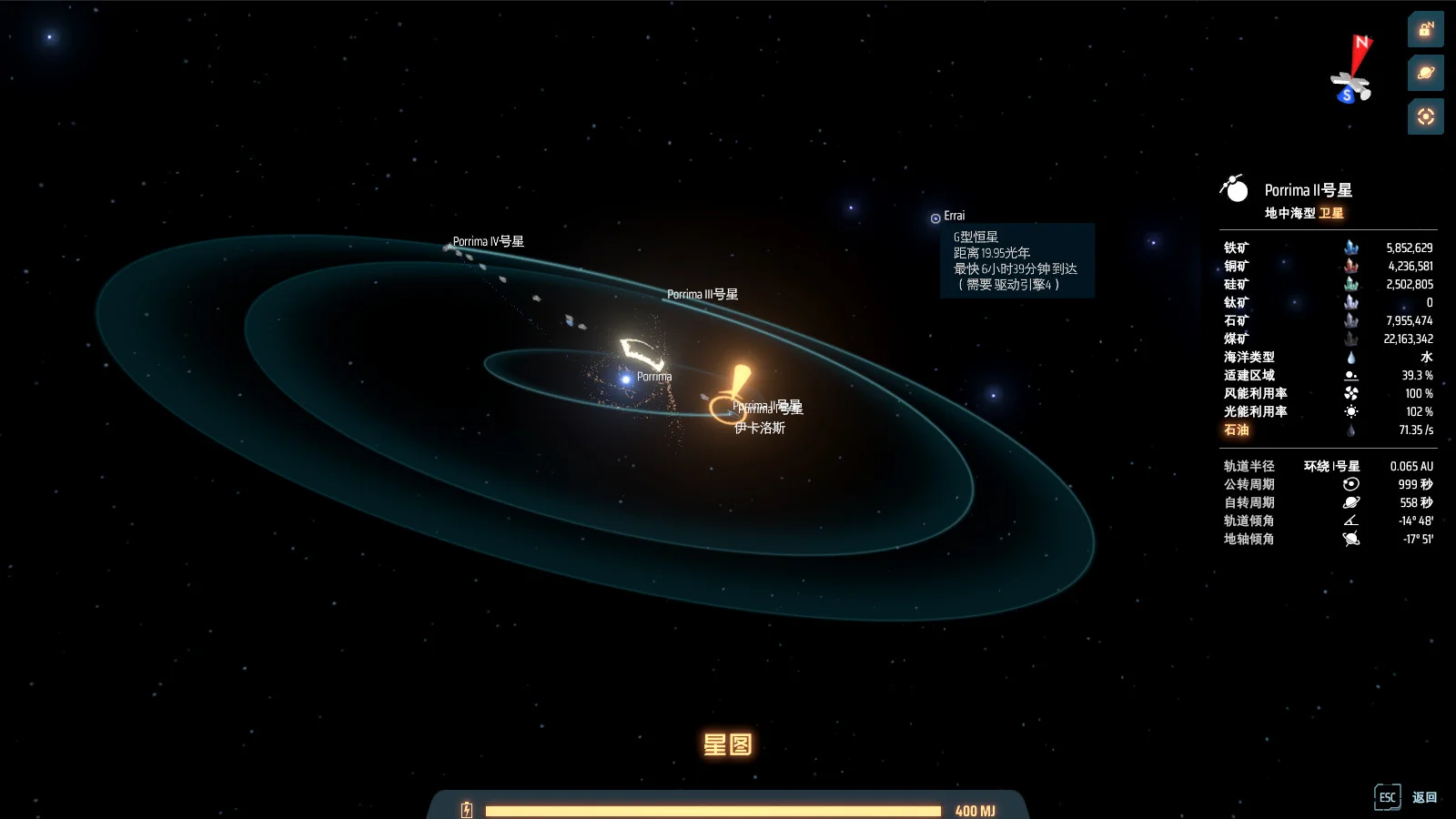
Factory purists may treat flight as transit overhead; players who enjoy Satisfactory's hiking will wish for more on-foot discovery gameplay. DSP lands in the middle — exploration serves logistics, and logistics serves the sphere.
Dark Fog and Defense
The Rise of the Dark Fog update adds an optional hostile faction — swarms that threaten your infrastructure if you enable or escalate the scenario. Turrets, planetary shields, implosion cannons, and mecha weapons join the build menu. Combat is not the main course; it is pressure on an otherwise peaceful optimization sandbox.
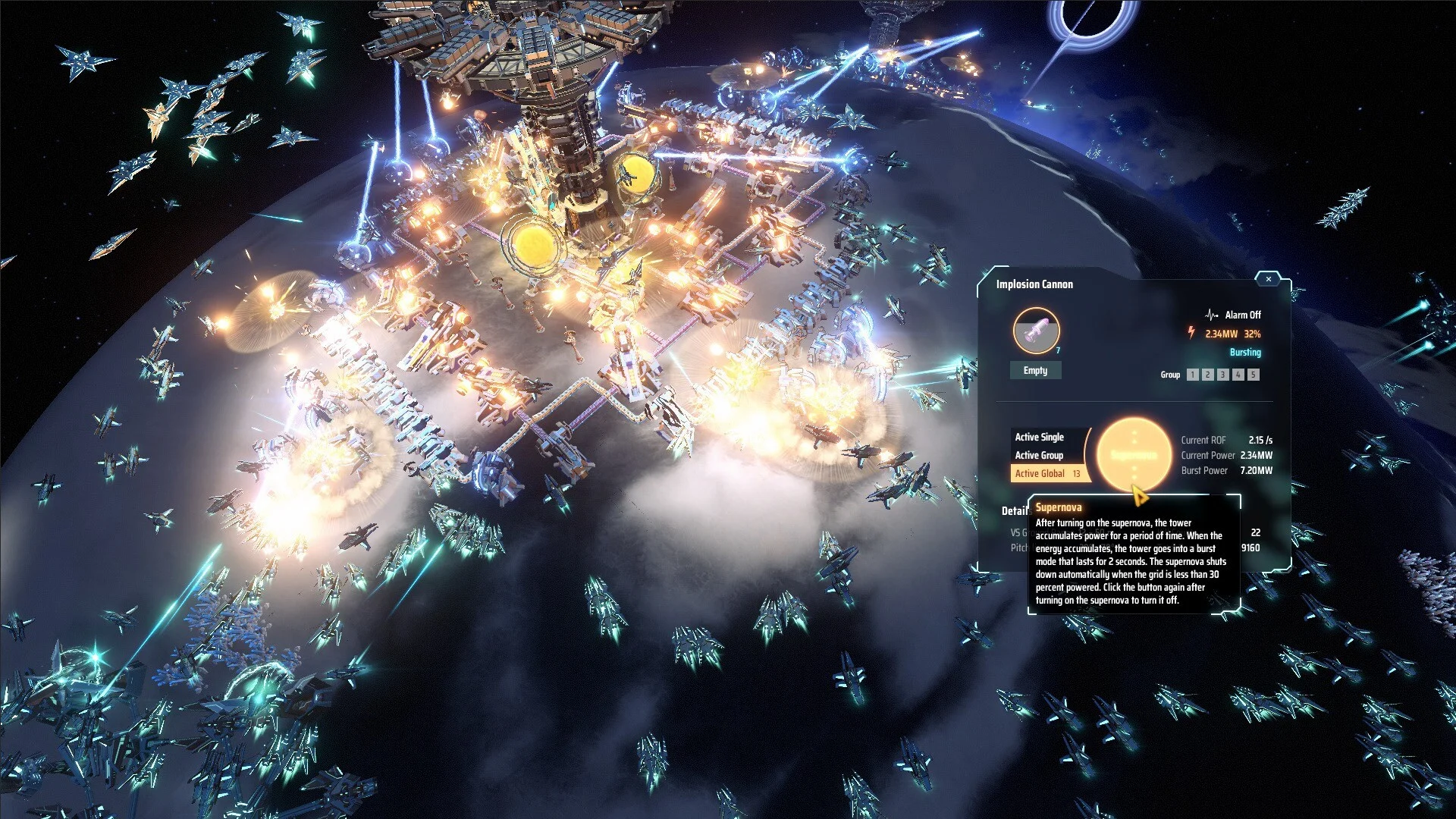
We tested defense on a mature save and found the combat layer competent but tonally different from the rest of the game — more tower-defense spectacle than factory elegance. Logistics purists can treat it as optional spice; action-curious factory fans get a reason to redesign bases with kill zones and power buffers. It does not replace the core fantasy, which keeps the update from feeling like a genre betrayal.
Research Tree and Milestones
Progression runs through a branching tech tree — electromagnetism, automation, interstellar logistics, Dyson structure tiers — fed by colored science matrices produced on dedicated production lines. Milestones gate major beats: warp drive levels, mecha upgrades, sphere components. The tree is readable in English; occasional UI density matches the genre's spreadsheet soul.
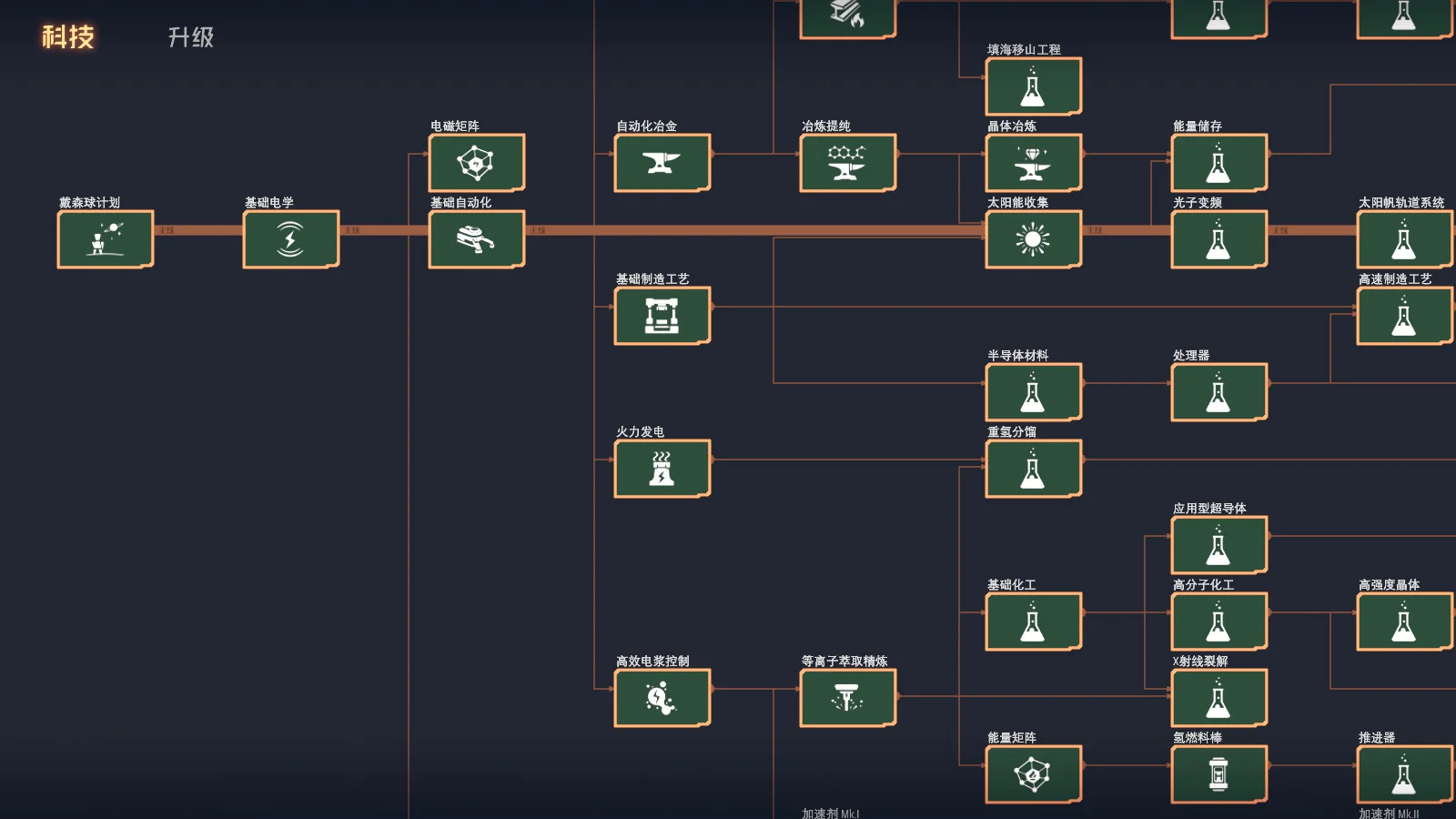
Early Access honesty matters here: the game already contains more endgame than many finished factory titles, but Youthcat has not declared 1.0. Save compatibility has been reasonable across our test period, yet major updates can rebalance recipes or add systems that encourage rebuilds — standard EA risk, not a dealbreaker for veterans, worth noting for cautious buyers.
Visuals and Scale
Presentation is hard sci-fi industrial — less lush biome tourism than Satisfactory, more orbital awe and glowing machine grids. Multi-orbit camera angles, planetary day/night cycles, and night-lit belt traffic create screenshot bait without mod support. Watching a Dyson Swarm glitter around a main-sequence star while freighters leave your night-side smelting world is the visual identity, and it holds up in 2026 against newer 3D factory entrants.
Mecha customization and sail trails add motion; the UI stays functional rather than flashy. English localization is solid on machines and tech names; starmap data panels can feel dense until you learn the vocabulary. Accessibility options are limited — no major font scaling, no color-blind belt modes beyond careful lane design on your part.
Audio
Audio is workmanlike in the best factory-sim sense: ambient space pads, machine whirs, ejector thumps, and combat bass when Dark Fog activates. Nothing here will sell the game alone, but nothing grates across multi-hour sessions — important when "one more belt fix" becomes three more hours. Long-form players may mute for podcasts; the soundscape supports that without losing critical feedback cues on explosions or research completion.
Performance and PC Specs
Factory sim performance is the hidden boss fight. Early single-planet saves ran at a locked 60 fps at 1440p on our RTX 4070 with headroom. Multi-planet belt networks, thousands of in-flight sails, and active combat dropped us into the 45–55 fps range with occasional stutter when panning across dense factory floors — CPU and GPU load together, unlike Factorio's primarily CPU-bound late game.
PC notes at a glance (RTX 4070, Ryzen 7 7700, 32 GB RAM, 1440p)
Early game (one planet, <500 machines): 60 fps locked; load times under 10 seconds on NVMe.
Mid game (two planets + swarm): 55–60 fps; GPU utilization rises with draw distance and sail counts.
Late game (multi-star logistics + shell + combat): 45–55 fps with drops when zooming across mega-bases; 32 GB RAM recommended for comfort.
Storage: ~3 GB installed; saves grow with factory size but stay manageable.
Known issues: Occasional hitch when pasting large blueprints; no game-breaking crashes across 95 hours on our hardware.
Minimum practical PC spec: Matches Steam's floor — GTX 750-class GPU, 4 GB RAM — playable for learning, not for late-game empire dreams. Recommended for DSP specifically: A six-core CPU, 16 GB RAM minimum (32 GB better), and a mid-range GPU if you want 1440p flyovers of Dyson structures without slideshow panning. Factorio still wins raw simulation scale on modest hardware; DSP trades that for 3D beauty and pays on GPU.
Hours, Price, and Early Access Value
Our first interstellar milestone landed around 35 hours; comfortable multi-star automation and a serious swarm project pushed past 95 hours before we stopped counting toward shell completion. At $19.99 USD on Steam Early Access — frequently discounted — the hours-per-dollar math beats most premium titles if you enjoy the genre. There is no multiplayer, no daily login, and no premium currency. Replay value is procedural seeds and self-imposed challenges, not narrative branches.
Compare to Factorio at full release pricing: Factorio remains the maturity and UPS champion. Compare to Satisfactory: Satisfactory is more approachable and co-op friendly; DSP is deeper on interstellar logistics and megastructure endgame. Early Access risk is real — wait for 1.0 if you hate rebuilds after major patches — but five years of Youthcat updates argue the project is not abandoned vapor.
Who Should Buy, Wait, or Skip
Buy now (full price or small discount): Factorio veterans who want 3D, multi-star logistics, and a Dyson Sphere win condition; solo players with hundreds of hours to spend; factory fans curious about Dark Fog combat as optional spice.
Wait for a sale or 1.0: Players who need co-op, strong story, or finished polish; buyers on low-end hardware who cannot tolerate late-game frame dips; anyone allergic to wiki-assisted ratio planning.
Skip: Action-first players who dislike belt math; narrative-driven buyers; multiplayer-only groups — this empire is single-player only.
Dyson Sphere Program lands as the strongest 3D space factory sim on PC — Early Access label and performance caveats included. Youthcat delivered on the fantasy that sold a million copies in weeks: start with a pickaxe, end by eating a star. If that sentence excites you, the belts will take care of the rest. Start at the Game Hub for store links, then budget a weekend you will accidentally extend into a month.